by

Experience the Magic of Applying Science in Transforming Organizations
Thank you for making AI Qonfluence 2025 a success. This year, we deconstructed cutting-edge research
in Agentic AI, GenAI, and industry-focused AI innovation. If you missed it, explore our session recordings to catch up.
October 8 and 9, 2025
Virtual | Global Access
AI Qonfluence 2025: Experience Cutting-edge AI Research
Driving Real-World Impact
At AI Qonfluence, Quantiphi’s premier AI symposium, we bring together innovators, researchers, and enterprise leaders to explore
the breakthrough creating real-world outcomes and driving the next wave of AI-embedded business systems.
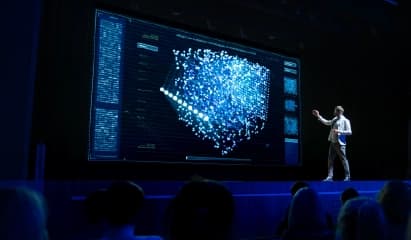
Discover Pioneering Research
Get inspired by innovations in predictive digital twins, agentic workflows, optimization strategies, and domain-specific GenAI.
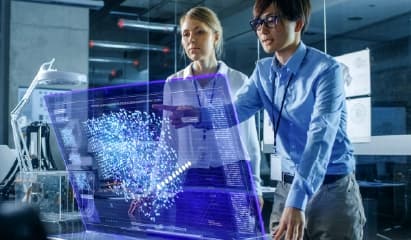
Explore Innovative Use Cases
Agentic systems. GenAI for drug discovery. AI for dynamic workforce scheduling. All explored in real-world, research-backed use cases.
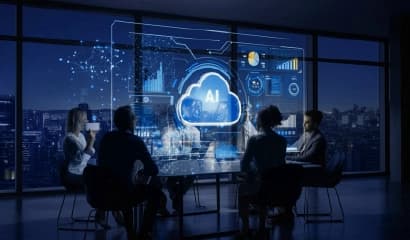
Accelerate Your Transformation Strategy
Gain practical insights into how leading organizations are applying AI to transform operations, product development, and decision-making.
Watch the Recordings to Revisit AI Qonfluence 2025
Agenda - Day 1
(October 8th)
Agenda - Day 2
(October 9th)
| Session Title | Presenter(s) | Time | |
|---|---|---|---|
| Keynote | Asif Hasan (Co-Founder) | 11:00 AM ET 8:30 PM IST | View Recording |
| Multi-Agentic Collaboration for Solving Complex Tasks Unlock new capabilities in intelligent agent systems with our Multi Agentic Qollaboration (MAQ) framework tackling dynamic assembly and orchestration of teams of specialized agents, powered by structured collaboration to solve complex real-world challenges. Also get deeper insights into AgentiQ-Eval - our comprehensive toolkit designed to deeply assess and evaluate agentic systems. | Sai Prakash MV (Research Engineer) Muneeswaran I (Research Engineer) Dr. Zishan Ahmad (Senior Research Engineer) | 11:30 AM ET 9:00 PM IST | View Recording |
| Small Reasoning Models & Agentic-Routing for Optimized Agentic-AI Systems Explore how our Q-Distill framework enables effortless creation of small, yet powerful domain-specific reasoning models from larger LLMs, preserving intelligence while cutting costs. And learn how LLM-Routing and Agentic-Routing optimize task delegation across models and intra-agent components boosting performance and efficiency for multi-agentic AI workflows. | Aasheesh Singh (Senior Research Engineer) Amit Singh Bhatti (Senior Research Engineer) | 12:15 PM ET 9:45 PM IST | View Recording |
| Intelligent Document Processing with Multimodal AI - 2.0 Discover IDPFlow, a no-code agentic platform that empowers business users to automate document workflows. Learn how our DocAnnot and DocGenie solutions solve annotation and data scarcity challenges, together enabling a fully autonomous, self-optimizing Intelligent Document Processing ecosystem. | Dr. Harikrishnan P M (Senior Research Engineer) | 1:45 PM ET 11:15 PM IST | View Recording |
| Responsible AI in the era of Gen-AI Explore how modern AI systems can align with responsible AI principles using the C2V2 desiderata—Control, Consistency, Value, and Veracity. Dive into how this framework guides the design of general-purpose AI to address fairness, safety, transparency and more, enabling effective Responsible-AI risk assessment and management at scale. | Dr. Gourab Kumar Patro (Research Scientist) Himanshu Gharat (Senior Machine Learning Engineer) | 2:15 PM ET 11:45 PM IST | View Recording |
| The Dawn of Multi Agentic Systems - Possibilities and Challenges (Panel Discussion) Join our expert panel as we move beyond single AI models to explore the transformative potential of Multi-Agentic AI Systems. Featuring leaders from core research, enterprise delivery, and industry experts, this discussion aims to demystify MAS and navigate through challenges, best practices, governance and long term strategy. Attendees will leave with actionable insights on harnessing collaborative AI teams to drive transformational business value and innovation. | Santhosh Ladalla (AVP, Data & AI at CNA) Dr. Dagnachew Birru (Global Head - Research and Development) Arunima Gautam (Head - Global FSI GTM and Products) Vishal Vaddina (Principal Architect) | 2:45 PM ET 12:15 AM IST | View Recording |
| Towards Quantum Readiness: Overview, Opportunities & Preparation Quantum computing is moving from theory to early real-world impact and 2025 marks a pivotal year in this transformation. This talk explores why now is the time for business and technology leaders to start thinking about quantum. We’ll highlight the limitations of classical computing and emerging quantum possibilities to overcome them. We examine how today's NISQ-era quantum stack can deliver value and outline a practical exploration lifecycle to prepare for a quantum-enabled future. This session is ideal for those looking to explore how quantum computing could enhance their innovation strategy, and how to start preparing for what’s ahead. | Gopalakrishnan Saisubramaniam (Senior Research Scientist) | 3:30 PM ET 1:00 AM IST | View Recording |
| Session Title | Presenter(s) | Time | |
|---|---|---|---|
| AI-First Predictive Digital Twins for Engineering use cases We introduce advanced AI simulation and predictive frameworks, integrated with LLM agentic workflows and immersive virtual environments. We present physics-informed and graph transformer neural operators for real-time predictions in manufacturing setting. These technologies, along with an agentic digital twin for automated design optimization, are demonstrated within NVIDIA Omniverse for interactive visualization, showcasing a unified approach to high-fidelity simulation and decision support. | Dr. Milad Ramezankhani (Research Scientist) | 11:00 AM ET 8:30 PM IST | View Recording |
| AI-powered Simulation: From Climate to Aerospace (Panel Discussion) The next wave of AI isn't just about data; it's about creating and simulating reality. In this session, our experts from NVIDIA and Quantiphi will provide an exclusive look at how we're using powerful tools like NVIDIA Earth-2 and PhysicsNeMo to build the next generation of AI-powered simulations. We’ll share insights from two real-world projects: forecasting hurricane risk for an insurance client and an advanced digital twin for aerospace manufacturing. This discussion will explore the "why" and "how" behind these technologies, demonstrating their ability to offer unparalleled accuracy and efficiency. You will gain a clear understanding of the innovative applications and tangible business value of AI-driven simulation and digital twins. | Ram Cherukuri (Senior Product Manager at NVIDIA) Siddharth Kotwal (NVIDIA Practice Leader at Quantiphi) Tanmaya Singhal (Research Engineer) Anirudh Deodhar (Quantiphi, Moderator) | 11:30 AM ET 9:00 PM IST | View Recording |
| Optimal Workforce and Resource Scheduling in Retail and Healthcare This session presents advanced optimal workforce scheduling research grounded in real-world industrial applications, addressing customer care, operational efficiency, and employee satisfaction. We showcase our sophisticated genetic algorithm through case studies in nurse staffing and retail personnel allocation, highlighting quantifiable improvements and addressing complex constraints. Our ongoing research integrates AI, including graph neural networks, reinforcement learning, and generative AI, for dynamic and adaptive scheduling solutions, with a demonstration of our nurse assignment scheduler. | Vipul Patel (Senior Machine Learning Engineer) | 12:00 PM ET 9:30 PM IST | View Recording |
| GenAI driven Warehouse Planning Assistant Discover a cutting-edge framework for analyzing warehouse simulation data, combining Knowledge Graphs with LLM-based agents for automated inefficiency diagnosis. This approach transforms unstructured DES output into a semantically rich KG, enabling an LLM agent to perform iterative, self-correcting reasoning on natural language queries. We demonstrate its superior accuracy in identifying bottlenecks and its advanced diagnostic capabilities for complex operational issues. | Anirudh Deodhar (Principal Architect) | 12:30 PM ET 10:00 PM IST | View Recording |
| Drug Discovery Copilot - Molecular Design with Human-in-the-Loop Drug design is a complex multi-stage process, the lead candidates that are designed can fail at different stages making the whole process a time and resource intensive process where a handful of lead candidates make it to clinical trials. Using generative models for molecule design is seeing a lot of interest with different generative models tackling the design problem from different angles. Our team has designed a multi-objective approach with an ensemble of generative models and flexible objective functions that can be tuned to design novel scaffolds, redesign known scaffolds, optimize the scaffolds for different properties. This multi-objective approach is flexible so that the chemists can use it in their process to combine expert knowledge with the sampling and scale capabilities of AI. | Tehemton Khairabadi (Research Scientist) | 1:30 PM ET 11:00 PM IST | View Recording |
| Engineering efficient proteins, one property at a time Proteins are the intricate molecular machinery orchestrating every biological process. From muscle contractions to immune responses, their astonishing precision makes them indispensable tools. This fundamental importance was highlighted by the Nobel Prize recognition in 2024 for advances in protein structure and design. Understanding the function of proteins and their behavior is a key research area. Proteins are also studied to optimize their properties for their use in industrial and therapeutic applications. One such property is thermostability, a protein’s ability to withstand higher temperatures make it a favorable candidate in industrial applications. With the rise in the use of generative models in biology, protein design using AI is an exciting area of research. | Meghana Veeramalla (Senior Machine Learning Engineer) | 2:00 PM ET 11:30 PM IST | View Recording |
| Neoepitope prediction at a whole genome scale Neoantigens/neoepitopes, have particularly garnered a lot of interest in markets as they’re very promising therapeutic targets for a host of precision oncology therapies. As cancer cells go through mutations, these mutations lead to proteins that can be precisely targeted. Neoepitopes are new, "mutated" ID badges that appear specifically on the surface of cancer cells but are NOT present on healthy cells. Creating a scalable approach that is cloud agnostic and can run fast is an attractive option to identify neoantigens from whole genome data, this makes precision therapies for cancer a reality. Specialized models are needed to identify mutations and predict which of these mutations can be targeted for precision therapy. | Anasuya Chatterjee (Research Engineer) | 2:30 PM ET 12:00 AM IST | View Recording |
The Minds Behind the Magic at AI Qonfluence
Meet the leaders and industry experts who brought a wealth of expertise and insights into the future of AI at the symposium.

Asif Hasan
Co-Founder

Dr. Dagnachew Birru
Global Head of R&D

Sai Prakash MV
Research Engineer

Muneeswaran I
Research Engineer

Dr. Zishan Ahmad
Senior Research Engineer

Aasheesh Singh
Senior Research Engineer

Amit Singh Bhatti
Senior Research Engineer

Dr. Harikrishnan P M
Senior Research Engineer

Dr. Gourab Kumar Patro
Research Scientist

Himanshu Gharat
Senior Machine Learning Engineer
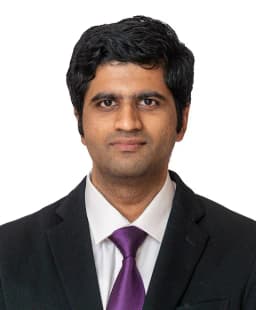
Gopalakrishnan Saisubramaniam
Senior Research Scientist

Anirudh Deodhar
Principal Architect

Dr. Milad Ramezankhani
Research Scientist

Vipul Patel
Senior Machine Learning Engineer

Tehemton Khairabadi
Senior Research Engineer

Dr. Pooja Kesari
Senior Research Engineer
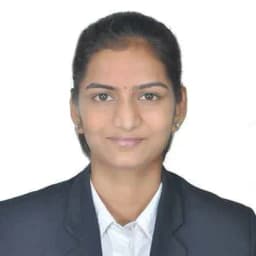
Meghana Veeramalla
Senior Machine Learning Engineer

Anasuya Chatterjee
Research Engineer

Ram Cherukuri
Senior Product Manager at NVIDIA

Arunima Gautam
Head - Global FSI GTM and Products

Tanmaya Singhal
Research Engineer

Siddharth Kotwal
NVIDIA Practice Leader at Quantiphi
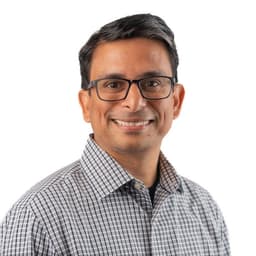
Santhosh Ladalla
AVP, Data & AI at CNA
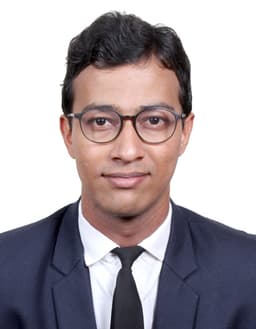
Varun V
Lead Program Manager - R&D