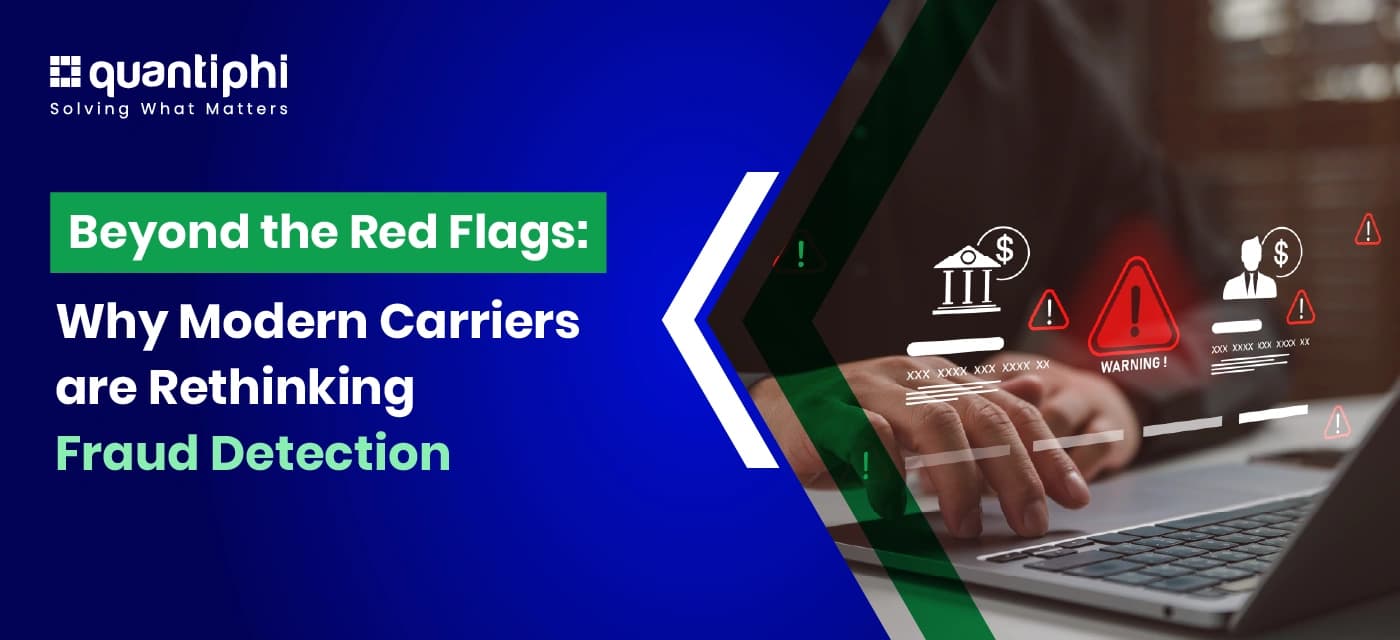
Beyond the Red Flags: Why Modern Carriers are Rethinking Fraud Detection

The insurance landscape is currently undergoing a stress test. As legal representation costs in claims rise and minimum liability limits shift in major markets, carriers are seeing loss ratios climb in ways that traditional actuarial models struggle to predict. Simultaneously, the industry has seen that “bad actors” aren’t just filing fake claims—they are targeting the very data that fuels underwriting.
For many mid-sized and large carriers, the “old way” of detecting fraud—relying on manual adjuster intuition or basic rules-based flags—is proving insufficient against two emerging threats: organized fraud rings and cyber-centric identity theft.
The High Cost of the “Detection Gap”
In recent cycles, several major players in the auto and life sectors have faced significant setbacks. We’ve seen instances where data security incidents led to multi-million dollar settlements, not just because of the breach itself, but because of the subsequent fraud and identity theft exposure for millions of policyholders.
Furthermore, in states where regulatory changes have increased liability limits, carriers have seen “attorney-represented” claims skyrocket. Without a high-velocity fraud detection system, these complex, high-severity claims can sit in the “pending” pile for too long, leading to increased BI (Bodily Injury) severity and eroding profitability.
Transitioning from Reactive to Predictive
To close these gaps, the industry is moving toward AI-native fraud ecosystems. Here is how modern solutions are solving the pain points that traditional systems miss:
-
Unifying Siloed Data
Many carriers struggle with fragmented data across different lines of business or legacy systems acquired through mergers. Modern platforms unify first-party data with a host of external sources—social media, public records, and shared industry databases—to create a 360-degree view of the claimant.
-
Advanced Pattern Recognition (Beyond the Rules)
Traditional “red flags” (like a claim filed shortly after a policy starts) are easy for professional fraudsters to circumvent. Our AI-driven approach utilizes unsupervised machine learning to detect anomalies that humans can’t see, such as identical invoice templates from different “independent” contractors or suspicious clusters of claims in specific geographic footprints.
-
Accelerating the SIU Workflow
The goal isn’t just to find fraud; it’s to clear legitimate claims faster. By providing Special Investigation Units (SIU) with 100% explainability—meaning the AI explains why a claim was flagged—adjusters can triage cases with 60% more efficiency. This directly mitigates the rising cost of “loss of time” and prevents the backlogs that often lead to regulatory scrutiny.
Proven Impact: Real-Time Fraud Mitigation
The power of this approach is best seen in action. Quantiphi recently partnered with a leading North American specialty insurer processing over 13 million claims annually. The carrier faced a massive influx of unlabeled data that made consistent fraud detection a bottleneck.
The Solution: We deployed an end-to-end Claim Adjudication and Fraud Detection Platform. By automating the ingestion of claims notes and ISO match data via advanced OCR and assigning real-time “Fraud Risk Scores,” the carrier moved from reactive searching to predictive auditing.
The Results:
- Quantifiable Savings: Identified 335+ suspicious claims and confirmed 20+ immediate fraud cases during the initial rollout.
- Operational Velocity: The SIU gained the ability to gauge fraud risk in real-time, preventing high-severity BI files from lingering.
- Reduced LAE: Automating low-value manual checks allowed the team to focus exclusively on high-impact investigations.
Securing the Future
The shift from being a “reactive” insurer to a “tech-forward” carrier requires more than just new software; it requires a partner who understands the nuances of non-standard auto, life, and commercial risks. By automating the “low-value” manual checks, your team is freed to focus on high-impact investigations and restore the profitability levels that shareholders expect.
The gap between a fraudulent claim and a payout is where your margin lives. Isn’t it time to close it?