Infrastructure Reimagined: Fueling AI Agent Led Development and Modernization

Executive Summary
Agentic AI marks a decisive shift in enterprise software from task specific automation to intelligent systems capable of interpreting intent, orchestrating multi-step workflows and executing end-to-end processes with minimal human intervention. As organizations accelerate from experimental pilots to production grade agentic deployments, a new set of infrastructure requirements has emerged that legacy architectures are fundamentally incapable to meet.
Today’s enterprise infrastructure was designed for predictability: static resource allocation, synchronous API gateways and stateless compute. When autonomous AI agents begin independently spawning subtasks, iterating over complex reasoning chains, querying heterogeneous data silos and continuously adapting to real time signals, that infrastructure becomes a critical bottleneck.
This paper presents a structured path for organizations navigating this inflection point. Drawing on AWS’s cloud-native capabilities and Quantiphi’s deep expertise in AI engineering and infrastructure modernization, we outline the Stabilize-Align-Evolve (SAE) Framework , a phased approach to build an AI ready infrastructure. We also present Quantiphi’s 5 layer reference architecture that operationalizes this framework at enterprise scale with prescriptive AWS service mappings, engineering patterns and business outcomes at each layer.
What Is AI Ready Infrastructure ?
AI Ready Infrastructure is a modern cloud foundation designed to support the compute, data and operational needs of AI and Agentic AI workloads at scale. Unlike traditional infrastructure built for static applications, it enables dynamic access to enterprise data, elastic high-performance compute for training and inference, scalable data and vector storage required for autonomous AI systems.It is secure and platform driven, delivering a seamless and consistent experience for both users and developers while enabling rapid deployment, governance and scaling of AI workloads.
The Agentic Shift: Why Traditional Infrastructure Falls Short
Enterprise infrastructure was built for a world of synchronous and human initiated requests. The emergence of agentic AI systems that plan, reason and act autonomously over extended timeframes violates every assumption that world was built on.
1.1 What Makes Agentic Workloads Fundamentally Different
Traditional microservices and API driven architectures optimize for:
- Short lived, stateless request/response cycles
- Predictable compute and memory footprints
- Human-triggered, sequential task execution
- Centralized access control with well-defined trust boundaries
Agentic systems invert these assumptions. Consider a single enterprise AI agent orchestrating a procurement workflow: it may simultaneously spawn autonomous sub agents for vendor research, policy verification and approval routing.
Traditional Infrastructure vs Agentic Infrastructure
| Traditional Infrastructure | Agentic Infrastructure | |
| Primary Purpose | Run static applications and transactional systems | Enable autonomous AI agents and dynamic workflows |
| Workload Pattern | Predictable request-response | Non-deterministic, event-driven and multi-step reasoning and orchestration |
| Compute Model | Fixed provisioning | Elastic, on-demand compute optimized for accelerated AI workloads |
| Integration Model | Point-to-point integrations with tightly coupled systems | API-first, event-driven and loosely coupled agent ecosystems |
| Security & Governance | Perimeter-based, static IAM policies | Policy-as-code, identity-aware agents, continuous governance |
| Architecture Style | Tiered monoliths or basic microservices | Distributed Agentic Mesh with orchestration layers |
1.2 The Three Infrastructure Fault Lines
Technical Debt and Architectural Inertia
Monolithic legacy systems and brittle data pipelines create significant inertia. Gartner estimates global technical debt at $1.52 trillion. Recurring patterns impacting agentic readiness include: monolithic EC2 stacks without containerization, data architectures without vector search support, and overly permissive IAM configurations.
Stateless Architectures vs. Stateful Agent Workloads
Traditional AWS architectures optimize for stateless request-response interactions. Agentic systems require persistent context, long-lived memory, and execution state tracking across asynchronous workflows , creating a fundamental infrastructure gap.
Fragmented IT and Ecosystem Complexity
Enterprise IT landscapes remain fragmented across on-premises, multi-cloud, and edge environments. Agentic workflows demand seamless orchestration across all tiers, requiring deliberate architectural planning beyond governance alone.
The SAE Framework: A Phased Path to AI Ready Infrastructure
Sustainable modernization is achieved through a phased, disciplined approach. The Stabilize-Align-Evolve (SAE) Framework, developed by Quantiphi in collaboration with AWS, provides a structured roadmap for infrastructure modernization.
What is the SAE Framework?
At a high level, SAE framework provides a progressive maturity model for infrastructure transformation, ensuring that organizations first establish a secure and operationally stable foundation, then optimize and synchronize data and compute layers for AI workloads and finally evolve toward decentralized, autonomous agent-driven systems. The framework is built on three core principles:
-
Sequential Maturity:
Each phase is dependent on the successful completion of the previous one ensuring foundational readiness before introducing advanced capabilities.
-
Control and Governance First:
Security, identity, cost controls and operational observability are embedded from the earliest phase to ensure AI systems remain compliant and predictable as they scale.
-
Progressive Intelligence Enablement:
Infrastructure evolves from being workload hosting centric to data enabling and finally to autonomy enabler where AI agents can independently reason, execute and adapt.
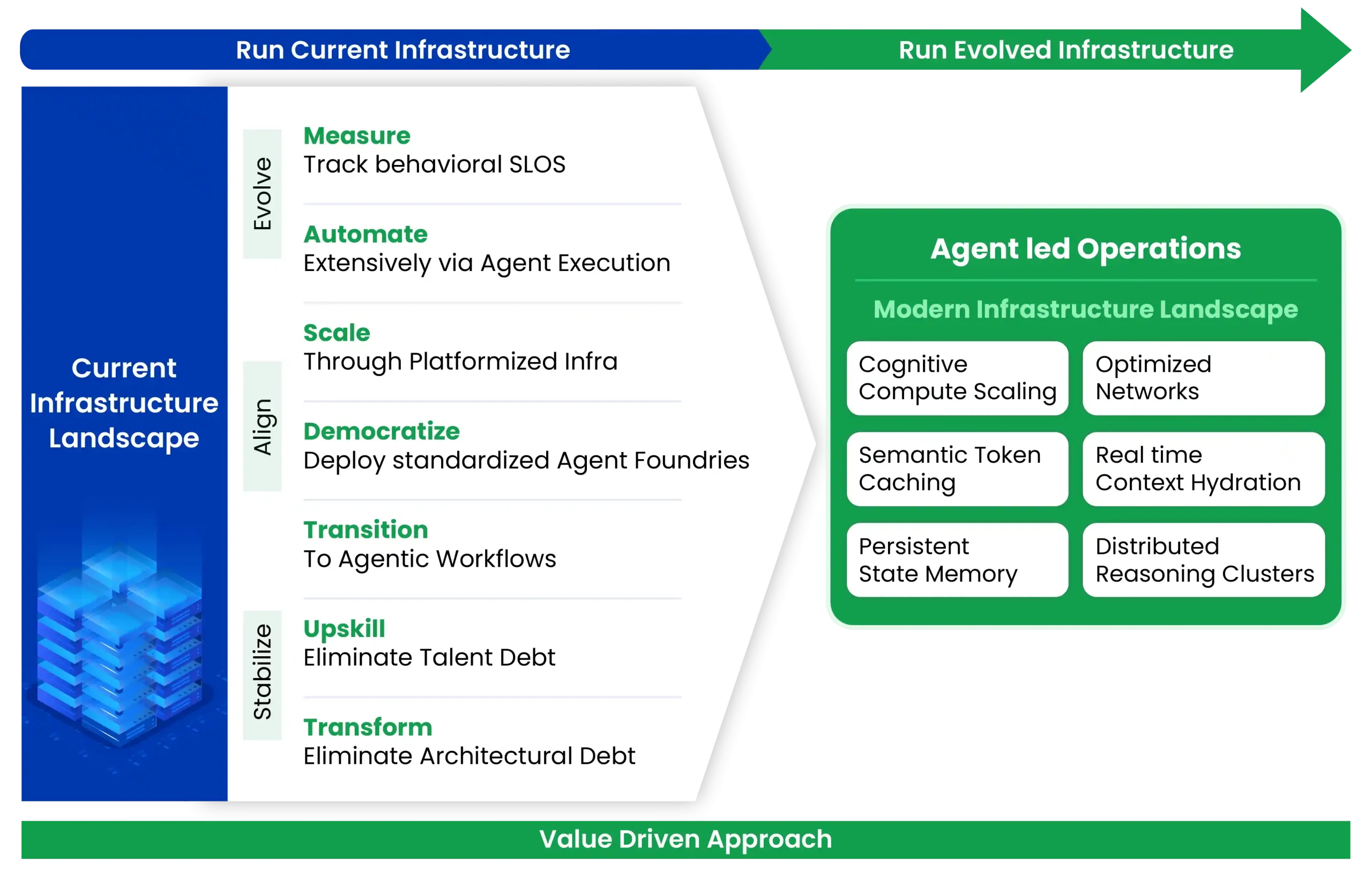
Figure 1: Quantiphi’s SAE Framework for Agentic AI ready Infrastructure
Phase 1: Stabilize: Build a Governed AWS Infrastructure Baseline
Focuses on establishing a secure, scalable AWS foundation before autonomous agents are deployed at scale.
Multi-Account Governance: Quantiphi implements a dedicated agent execution account structure using AWS Control Tower and AWS Organizations, with separate accounts for dev/sandbox, pre-production, production (with strict SCPs), and shared services.
Orchestrating AI Compute at Scale: A tiered compute architecture on Amazon EKS:
- EKS with Karpenter: Heterogeneous node groups (GPU p4d/p5/g5 + Graviton3)
- KubeRay on EKS: Distributed multi-agent reasoning across Ray clusters
- EC2 UltraClusters coupled with EFA: Sub-millisecond inter-node communication for distributed inference
Centralized LLM Routing and Guardrails via Amazon Bedrock:
- Guardrails blocking prompt injection, PII leakage, and topic violations
- Model Evaluation for benchmarking before production
- Cross-Region Inference Profiles for high-availability failover
| AWS Service / Pattern | Role in Agentic Architecture | Business Value |
| Amazon EKS + Karpenter | Dynamic GPU provisioning for bursty agent inference workloads | Up to 60% reduction in idle GPU costs vs. static node groups |
| Amazon Bedrock + Guardrails | Governed LLM access with enterprise safety policies enforced at infrastructure level | Eliminates PII leakage risk; single control plane for all model access |
| AWS Control Tower + Organizations | Multi-account isolation for agent execution environments | Reduces blast radius of agent incidents; enables team autonomy with guardrails |
| AWS Transit Gateway + VPC Lattice | High throughput networking between agents and internal microservices | Supports thousands of concurrent agent API calls with low latency |
| EC2 UltraClusters + EFA | Sub-millisecond inter-node communication for distributed multi-agent clusters | Enables enterprise-scale multi-agent reasoning without WAN bottlenecks |
Phase 2: Align: Synchronize Data, Context and Cost Controls
Transforms the infrastructure baseline into an intelligent data and context delivery system.
Scalable Vector and Knowledge Infrastructure:
- Vector Engine for Amazon OpenSearch Serverless: Auto-scaling vector search with k-NN indexing
- Amazon Neptune Analytics: GraphRAG for complex relational enterprise data.
- Amazon Bedrock Knowledge Bases: Managed RAG pipeline
Real-Time Context Hydration: Amazon MSK (Managed Kafka) continuously delivers real-time operational events into agent context windows, ensuring agents always act on the freshest data.
Semantic Caching and Token Cost Optimization:
- ElastiCache for Redis (Semantic Cache): Reduces token spend by 30–50% for repetitive agentic patterns.
- Amazon Bedrock Prompt Caching: Reduces costs on long-context requests.
- AWS Budgets with automated Budget Actions: Throttles runaway agentic loops before uncontrolled spend.
Model Serving Efficiency via Amazon SageMaker Inference: Multi-model endpoints, AWS Deep Learning Containers (vLLM, TGI, TensorRT-LLM) and SageMaker Inference Recommender for optimal instance selection.
| AWS Service / Pattern | Role in Agentic Architecture | Business Value |
| Amazon OpenSearch Serverless (Vector Engine) | Managed vector search for RAG pipelines with auto-scaling | Eliminates vector DB capacity planning; sub-10ms retrieval at enterprise scale |
| Amazon Neptune Analytics (GraphRAG) | Graph based retrieval for relational enterprise knowledge | Enables agents to navigate complex entity relationships beyond keyword/vector search |
| Amazon MSK (Managed Kafka) | Real time event streaming to continuously hydrate agent context | Prevents agent decisions on stale data; supports event-driven agentic architectures |
| ElastiCache for Redis (Semantic Cache) | Caches agent reasoning paths to avoid redundant LLM calls | 30-50% reduction in Bedrock token costs for production agentic workloads |
| Amazon Bedrock Knowledge Bases | Managed RAG pipeline: ingestion, chunking, embedding, retrieval | Reduces RAG engineering effort by 60-70% vs. custom pipeline development |
Phase 3: Evolve: Decentralized, Autonomous and Edge Ready Architecture
Transitions organizations to a fully decentralized architecture with cryptographic agent identities, secure code execution, cognitive autoscaling and edge deployment.
Secure Serverless Sandboxing:
- AWS Lambda (VPC-isolated): Ephemeral environments for agent-generated code with minimum-permission IAM roles.
- AWS Fargate on ECS: Serverless containers for longer-running agent tasks.
- Amazon CodeGuru Security: Scans agent-generated code for vulnerabilities before execution.
Cryptographic Agent Identity with Zero Trust:
- AWS IAM Identity Center: Federated identity with ABAC policies for human operators.
- IAM Roles Anywhere: Enables agents outside AWS to authenticate via X.509 certificates
- AWS Secrets Manager: Automatic rotation for unavoidable static credentials.
Cognitive Autoscaling: Custom CloudWatch metrics reflecting true agent demand , pending reasoning steps, active tool call depth, and token throughput backpressure — replacing lagging CPU/memory signals.
| AWS Service / Pattern | Role in Agentic Architecture | Business Value |
| AWS Lambda + Fargate (Sandboxing) | Isolated runtime environments for agent-generated code execution | Prevents agent code from compromising host infrastructure; enables safe code-gen agents |
| IAM Roles Anywhere + Identity Center | Cryptographic, short-lived credentials for every autonomous agent | Eliminates static credential risk; zero-trust security model for agent fleets |
| Amazon CloudWatch (Custom Metrics) | Cognitive demand signals driving infrastructure autoscaling | Scales compute based on actual agent workload vs. lagging CPU/memory metrics |
| AWS IoT Greengrass | Edge deployment of quantized agent models for local inference | Enables sub-10ms agent decisions at the point of operations with no WAN dependency |
| Amazon CodeGuru Security | Security scanning of agent-generated code before execution | Critical control for organizations with code governance and compliance requirements |
Business Benefits of AI-Ready Infrastructure
Below are five key business benefits of AI-ready infrastructure
-
Faster Time to Value for AI Initiatives:
AI-ready infrastructure provides pre-integrated compute, data, and platform services enabling organizations to rapidly deploy and scale Agentic AI solutions without lengthy re-architecture cycles.
-
Improved Operational Efficiency and Automation:
By leveraging policy-as-code and intelligent automation organizations reduce manual intervention, streamline operations and improve system reliability at scale.
-
Scalable Innovation Across the Enterprise:
A unified platform driven foundation enables consistent deployment of AI workloads supporting rapid experimentation and enterprise wide innovation.
-
Enhanced Decision Making:
Real time data access combined with AI driven insights enables context aware decisions improving customer experience, operational performance and revenue outcomes.
Quantiphi Reference Architecture for Agentic Systems
The SAE Framework defines what must be built. The reference architecture defines how it is organized into an enterprise grade operating model. Each layer maps directly to SAE phases and AWS services, creating a unified architecture that is simultaneously scalable, governed, and operationally transparent.
The high-performance EKS clusters and EFA networking from the Stabilize phase form the bedrock of the Infrastructure Layer. The Amazon MSK event streams and Bedrock Guardrails map to the Management and AI Resilience Layers. The zero-trust identity patterns from the Evolve phase anchor the Agent Governance Layer. Together, they host the Agentic Layer where business value is delivered.
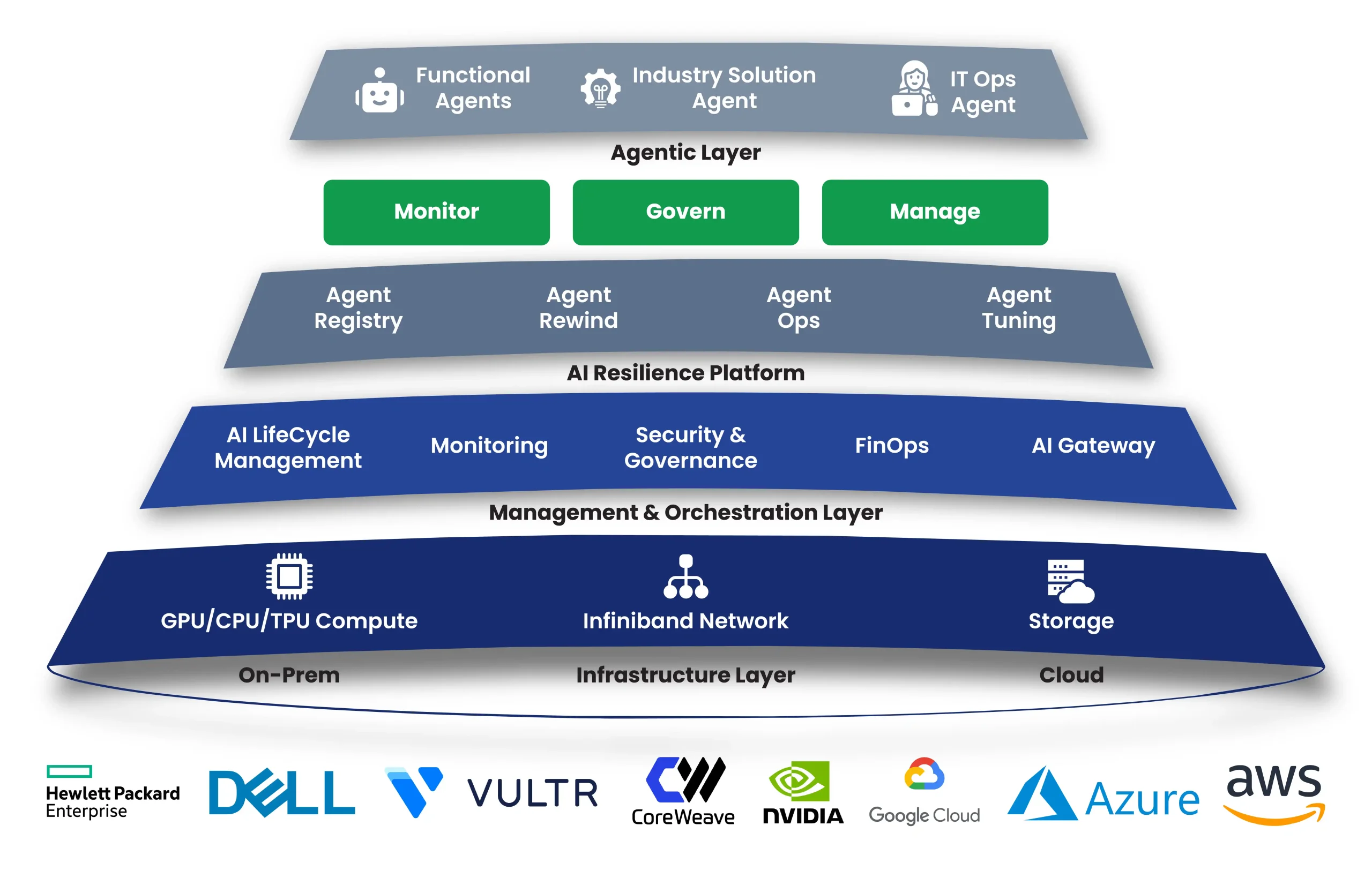
Figure 2: Quantiphi AI Factory Layered Reference Architecture for Agentic Systems
| Layer | Purpose | Key AWS Services | Quantiphi Capabilities |
| Infrastructure Layer | Establishes the foundational AI infrastructure across cloud and hybrid environments with high performance compute and networking | Amazon EKS + KarpenterEC2 P4d/P5 (GPU)AWS Graviton3AWS UltraClusters + EFAAWS OutpostsAmazon FSx for LustreAWS Transit GatewayAWS Direct Connect | GPU cluster design & sizingEKS platform engineeringHybrid cloud architectureFinOps optimized compute provisioningHPC networking design |
| Management & Orchestration Layer | Transforms infrastructure into an enterprise ready, governed AI platform with full operational control | AWS Control TowerAWS OrganizationsAWS ConfigAWS CloudTrailAmazon CloudWatchAWS Systems ManagerAWS Service CatalogAmazon EventBridge | Multi-account governance blueprintsIaC templates (Terraform/CDK)FinOps dashboardSRE operating models,Automated remediation runbooks |
| AI Resilience & Governance Layer | Provides centralized visibility, risk monitoring and recovery for AI and agent ecosystems | Amazon Bedrock GuardrailsAWS MacieAmazon InspectorAWS Security Hub Amazon DetectiveAWS BackupAmazon Route 53 ARCAWS Resilience Hub | AI safety policy designPrompt injection defense patterns Compliance automation (SOC2/HIPAA) Chaos engineeringBCDR runbooks for AI workloads |
| Agent Governance & Operations Layer | Applies continuous governance, permissions management and audit controls across agent fleets | AWS IAM Identity CenterIAM Roles AnywhereAWS IAM Access AnalyzerAmazon CognitoAWS Secrets ManagerAWS Audit ManagerAmazon Security Lake | Zero trust agent identity frameworksPolicy as code pipelines (OPA/Cedar)Agent risk scoring modelsPrivileged access governanceAudit trail automation |
| Agentic Layer | Hosts business, industry and IT agents executing enterprise workflows at scale | Amazon Bedrock Agents, AWS Step FunctionsAmazon MWAA (Airflow)AWS LambdaAWS FargateAmazon SageMakerAmazon Bedrock Knowledge BasesAWS IoT Greengrass | Agent foundry & CI/CD pipelinesMulti agent orchestration designIndustry specific agent development LLMOps lifecycle managementEdge agent deployment |
Essential Engineering Patterns for Production Grade Agents
Modern infrastructure is necessary but not sufficient. True production scale requires rigorous engineering discipline applied consistently across agent development, deployment and operations. Quantiphi has codified three foundational patterns that separate resilient agentic platforms from fragile bot networks.
4.1 Repeatable Orchestration via Agent Foundries
Quantiphi’s Agent Foundry accelerator provides: standardized agent project templates (deployable in hours), multi-framework orchestration support (Bedrock Agents, Step Functions, LangGraph, CrewAI), automated agent testing pipelines with CI/CD, and integrated pre-deployment token cost projections.
4.2 SLO-Driven Operating Models for Agent Fleets
Agentic SLOs must capture behavioral dimensions beyond latency and availability:
- Task completion rate: % of tasks completed within defined scope
- Reasoning chain depth limit: Maximum iterations before human escalation
- Tool call accuracy SLO: Minimum precision for tool selection
- Hallucination rate threshold: Maximum acceptable factual error rate
4.3 DevSecOps and Policy-as-Code for Autonomous Workloads
Autonomous workloads must inherit the same rigorous security and operational discipline as the rest of the enterprise IT estate. Quantiphi embeds governance directly into the agent development lifecycle through three mechanisms:
- Policy-as-Code with AWS Cedar and OPA: Agent permissions, trust boundaries and data access policies are expressed as code in version controlled repositories reviewed via pull requests and automatically deployed alongside agent updates.
- Continuous telemetry with Amazon Security Lake: Agent API calls, IAM credential usage and Bedrock invocation logs are streamed into Amazon Security Lake for centralized threat detection and compliance reporting across the entire agent fleet.
- Automated compliance reporting with AWS Audit Manager: Quantiphi configures pre built assessment frameworks for SOC 2, HIPAA, and custom enterprise policies automatically collecting evidence from CloudTrail, Config and Bedrock audit logs to support agent governance reviews
Why Quantiphi is a preferred partner for AI ready Infrastructure Modernization
Quantiphi brings a differentiated, end-to-end approach to building and operationalizing Agentic AI ready infrastructure on AWS, combining deep engineering expertise with a structured modernization framework (SAE) to ensure secure outcomes.
-
Deep AWS-native engineering expertise:
Strong proficiency across AWS services such as Amazon Bedrock, Amazon EKS, Amazon OpenSearch Serverless and AWS networking/security services to design and implement scalable agentic architectures.
-
End-to-end Agentic AI architecture capability:
Ability to design the full stack required for autonomous systems including data pipelines, vector and graph stores, orchestration layers, compute fabric and observability frameworks.
-
Security and governance built-in by design:
Strong focus on enterprise grade controls using policy-as-code, zero-trust identity models, multi-account governance and continuous compliance mechanisms for safe agent execution.
Business Outcomes and Why This Matters Now
The infrastructure patterns described in this paper are not theoretical,they are the architecture of competitive advantage.
Quantifiable Business Impact Across the SAE Journey
| SAE Phase | Infrastructure Investment | Business Outcome | Typical Timeline |
| Stabilize | Multi-account governanceEKS AI computeBedrock guardrails | Secure agent development environmentReduction in infrastructure related agent incidents | 4-8 weeks |
| Align | Vector databasesStreaming pipelinesSemantic caching | 30-50% reduction in token costsAgents operating on real-time data | 6-10 weeks |
| Evolve | Serverless sandboxingZero trust identityCognitive autoscaling | Production agent fleets with full auditabilityEdge capable AI for field operations | 8-16 weeks |
Case Study: Operationalizing SAE Framework for Agentic Readiness
The client, a leading global energy services provider operating across 75+ countries, designs and stress tests complex oil and gas drilling equipment. Their core R&D environment was severely bottlenecked by massive technical debt: 330 Windows Server VMs running across 60 bare metal physical hypervisors.
Phase 1 Stabilize: Quantiphi deployed AWS MGN to replicate 330 VMs to EC2 with near-zero cutover windows. A multi-account structure with strict SCPs isolated legacy R&D workloads, establishing secure containment from day one.
Phase 2 Align: MS SQL Server workloads migrated to memory-optimized EC2 r6i instances for sub-millisecond storage latency. R&D testing software was containerized on Amazon EKS with Karpenter enabling just-in-time provisioning of hundreds of heterogeneous nodes on demand.
Phase 3 Evolve: Autonomous testing agents built on Amazon Bedrock were deployed. When an engineer submits a new equipment specification, a master agent interprets intent, queries the OpenSearch Vector Engine for historical baselines, and provisions a dedicated simulation environment on EKS. If a simulation fails, the agent autonomously spins up a Lambda sandbox, writes and executes a diagnostic script, adjusts parameters, and restarts the job — fully automating the debugging lifecycle.
Conclusion: Infrastructure as a Strategic Asset for the Agentic Era
The transition to agentic AI is not primarily a model selection decision, it is an infrastructure decision. The organizations that will lead in the agentic era are those that treat their AWS environments not as utility cost centers but as strategic platforms engineered for autonomous intelligence.
Next Steps
Quantiphi’s AI Infrastructure Readiness Assessment evaluates your current AWS environment against the SAE framework across 40+ dimensions, identifying the highest-priority gaps and a prescriptive remediation roadmap. Engagements deliver an actionable 90-day infrastructure modernization plan with AWS service recommendations, cost projections, and governance blueprints tailored to your industry and compliance requirements.