Multi-Agent Systems in Agentic AI: Architecture, Coordination, and Communication

The landscape of artificial intelligence is rapidly evolving beyond single-agent systems toward sophisticated multi-agent architectures that mirror how human teams collaborate to solve complex problems. As organizations seek to implement more capable and scalable AI solutions, understanding multi-agent systems has become essential for technical leaders, business executives, and developers alike.This comprehensive blog explores the architecture, coordination mechanisms, and communication protocols that make multi-agent systems a cornerstone of modern agentic AI implementations.
What Is a Multi-Agent System in Agentic AI?
Definition of Multi-Agent Systems (MAS)
A multi-agent system (MAS) is a framework where multiple autonomous AI agents work together within a shared environment to achieve a common objective or a set of complex goals. Unlike a single AI model that processes a request and provides a response, these systems distribute tasks among specialized agents that can communicate, coordinate, and even negotiate with one another. This collaborative approach allows them to tackle complex, multi-step problems that are often beyond the capability of a single agent, enabling more sophisticated and robust solutions for enterprise-level challenges.
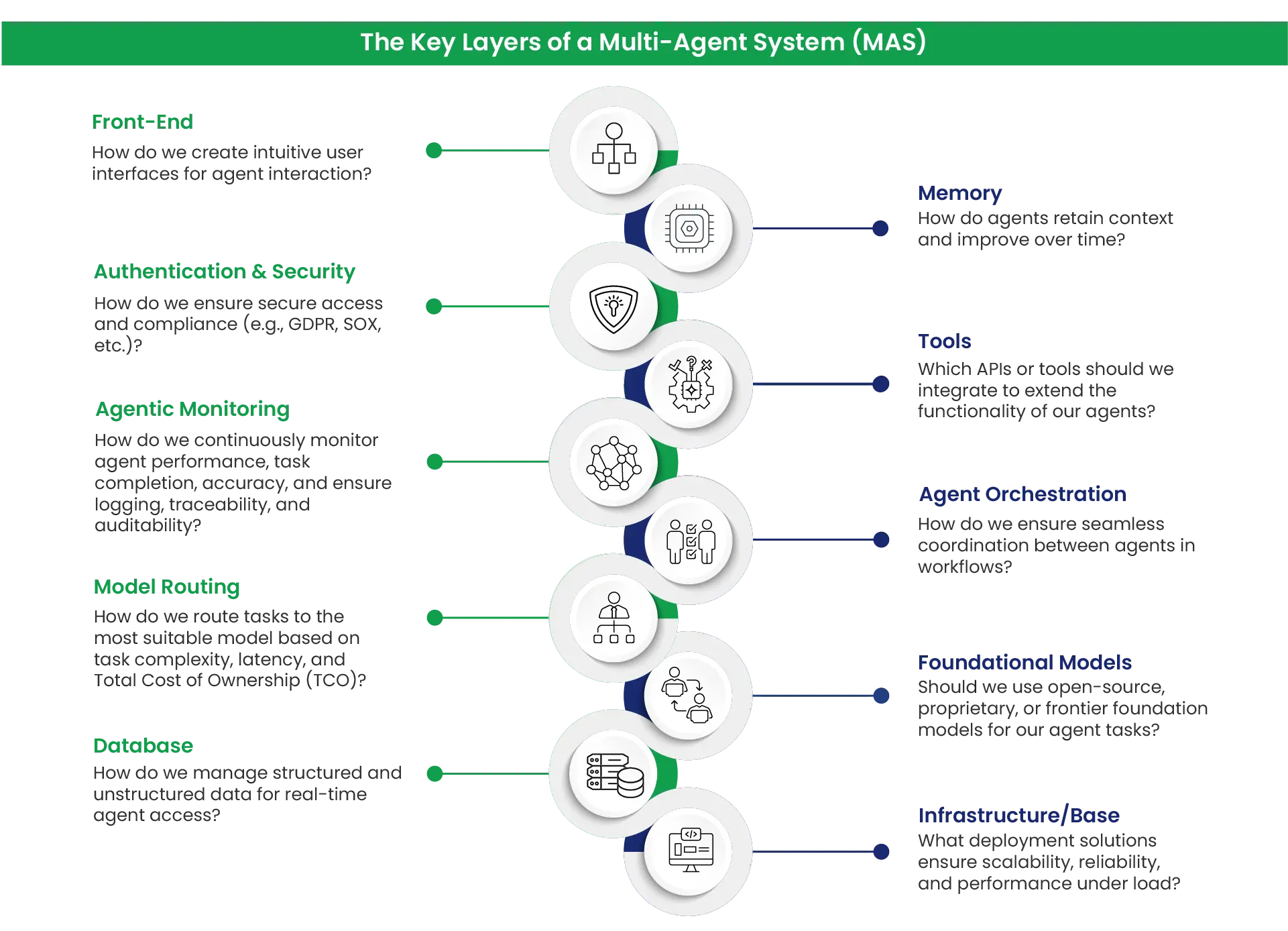
An MAS functions as a sophisticated ecosystem that requires thoughtful decisions across multiple architectural layers to ensure optimal performance, scalability, and regulatory compliance. Each layer plays a distinct role in enabling the system’s effectiveness. Before building a MAS, here are the key questions to consider at each layer:
Multiple AI Agents Working Collaboratively
In collaborative multi-agent environments, each agent maintains its own decision-making processes while participating in coordinated activities. These agents can range from simple reactive components that respond to environmental changes to sophisticated reasoning agents capable of planning, learning, and adapting their behavior based on interactions with other agents and environmental feedback.
Role in Complex Problem Solving
Multi-agent systems excel at decomposing complex problems into manageable subtasks that can be distributed across specialized agents. This approach enables parallel processing, reduces computational bottlenecks, and allows for more robust solutions through redundancy and diverse problem-solving approaches. The collaborative nature of MAS makes them particularly effective for handling dynamic, uncertain, or large-scale challenges.
How Do Multi-Agent Systems Work in Agentic AI?
Multi-agent systems in agentic AI operate through a sophisticated orchestration process that transforms complex problems into manageable, distributed workflows. Rather than relying on a single AI agent to handle entire tasks, these systems leverage the collective intelligence of specialized agents working together to deliver superior results.
The operational framework follows a structured four-stage process that maximizes efficiency and accuracy. This systematic approach ensures that each agent contributes its unique expertise while maintaining seamless coordination across the entire system. Understanding this workflow is essential for organizations looking to implement robust agentic AI solutions that can scale with their business needs.

Stage 1: Task Distribution Across Agents
Step 1: Problem Analysis and Decomposition
The system begins by analyzing the incoming problem or request, breaking it down into discrete subtasks that can be handled by different specialized agents. This decomposition considers factors such as task complexity, required expertise, available resources, and interdependencies between subtasks.
Step 2: Agent Selection and Assignment
Based on the decomposed tasks, the system identifies the most suitable agents for each subtask. This selection process considers agent capabilities, current workload, performance history, and availability. The assignment mechanism ensures optimal resource utilization while maintaining system responsiveness.
Step 3: Parallel Task Execution
Once tasks are assigned, agents begin working on their respective subtasks simultaneously. This parallel execution significantly reduces overall processing time compared to sequential approaches, while allowing each agent to apply its specialized knowledge and tools to the specific problem domain.
Stage 2: Communication Between Agents
Step 1: Information Exchange
Agents continuously share relevant information, intermediate results, and status updates through established communication channels. This exchange ensures that all agents have access to the context and data needed for their specific tasks while maintaining awareness of overall system progress.
Step 2: Coordination Protocols
Structured communication protocols govern how agents request assistance, share resources, resolve conflicts, and synchronize their activities. These protocols prevent communication overhead while ensuring that critical information flows efficiently throughout the system.
Stage 3: Coordination and Execution Flow
Step 1: Progress Monitoring
The system continuously monitors the progress of individual agents and the overall task completion status. This monitoring enables dynamic adjustments to task assignments, resource allocation, and coordination strategies based on real-time performance data.
Step 2: Result Integration
As agents complete their subtasks, their outputs are collected and integrated into a coherent final result. This integration process handles potential conflicts, validates consistency, and ensures that the combined output meets the original requirements.
Stage 4: Feedback Loops Across Agents
Step 1: Performance Evaluation and Learning
The system evaluates the effectiveness of task distribution, agent performance, and coordination strategies. This feedback enables continuous improvement of agent selection algorithms, communication protocols, and overall system architecture for future tasks.
What Are the Key Components of a Multi-Agent System?
Individual Agents
-
Autonomous Decision-Making Units:
Each agent operates independently with its own reasoning capabilities, knowledge base, and decision-making processes.
-
Specialized Capabilities:
Agents are designed with specific expertise areas, tools, and functions that contribute to the overall system capability.
-
Learning and Adaptation:
Individual agents can improve their performance over time through experience and feedback from their interactions.
Communication Mechanisms
-
Message Passing Infrastructure:
Standardized protocols and channels that enable agents to exchange information, requests, and responses.
-
Data Sharing Protocols:
Mechanisms for sharing datasets, intermediate results, and contextual information across the agent network.
-
Event Notification Systems:
Real-time alerting capabilities that keep agents informed about relevant changes in the system state or environment.
Coordination and Orchestration
-
Task Assignment Logic:
Algorithms and rules that determine how work is distributed among available agents based on capabilities and current load.
-
Workflow Management:
Systems that manage dependencies, sequencing, and synchronization of tasks across multiple agents.
-
Conflict Resolution:
Mechanisms for handling disagreements, resource conflicts, and inconsistencies between agent outputs.
Shared Environment
-
Common Knowledge Base:
Centralized or distributed repositories of information that all agents can access and contribute.
-
Resource Management:
Systems for managing computational resources, data access, and tool availability across the agent network.
-
Monitoring and Logging:
Infrastructure for tracking system performance, agent behavior, and overall health of the multi-agent system.
What Are the Different Types of Multi-Agent Systems?
Multi-agent systems can be categorized based on how the agents interact with one another to achieve their goals.
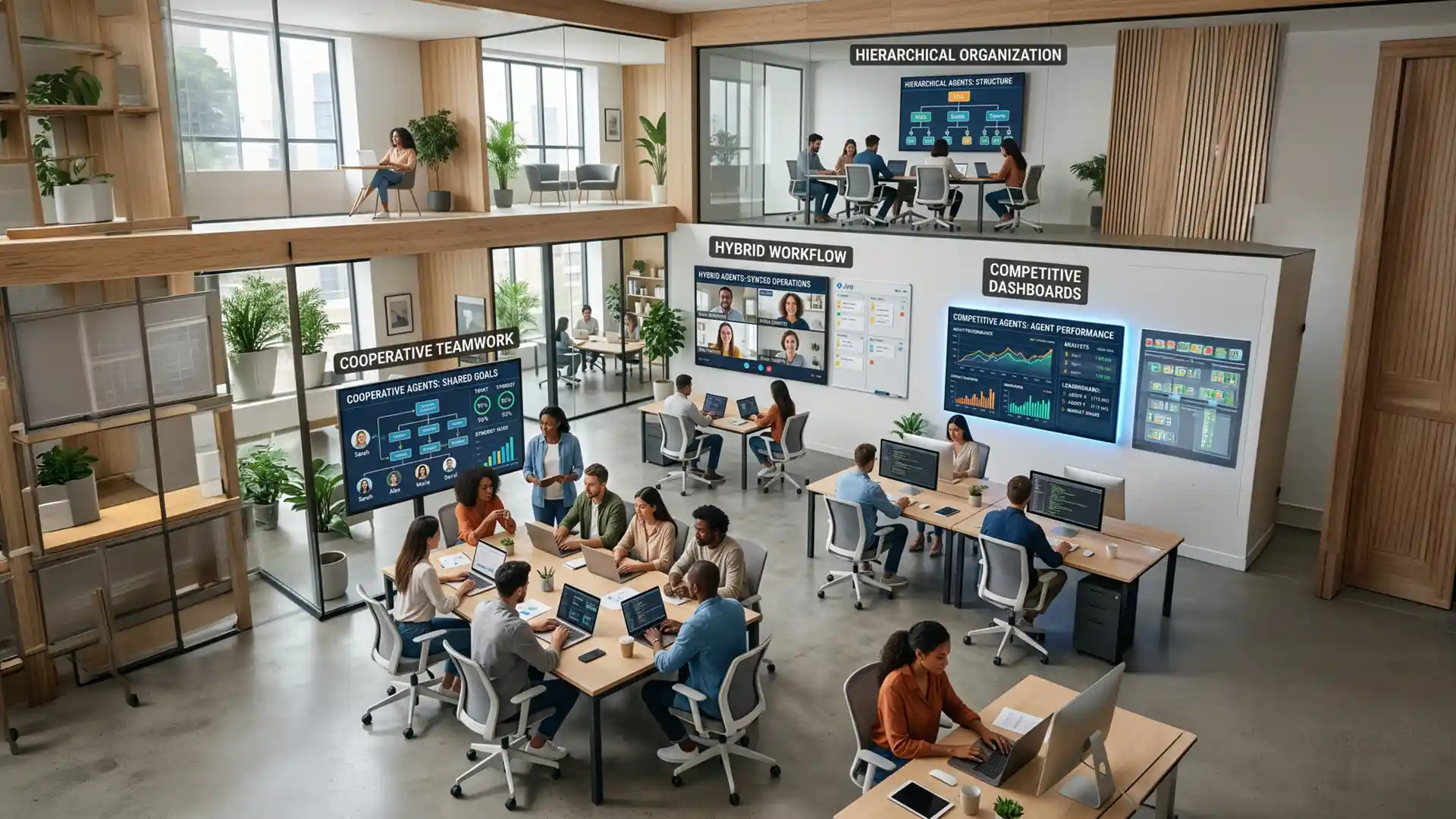
Cooperative Systems
-
Shared Objectives:
All agents work toward common goals with aligned incentives and collaborative behavior patterns.
-
Information Sharing:
Agents freely exchange information, resources, and capabilities to maximize collective performance.
-
Mutual Support:
Agents assist each other when needed, providing backup capabilities and redundancy for critical tasks.
Competitive Systems
-
Individual Goals:
Each agent pursues its own objectives, which may conflict with or compete against other agents’ goals.
-
Strategic Behavior:
Agents may withhold information or resources to maintain competitive advantages over other agents.
-
Market-Based Mechanisms:
Resource allocation and task assignment often follow auction-based or bidding mechanisms.
Hybrid Systems
-
Mixed Cooperation and Competition:
Agents may cooperate on some tasks while competing on others, depending on the specific context and objectives.
-
Dynamic Alliances:
Temporary partnerships form between agents for specific tasks, with relationships changing based on current needs.
-
Balanced Incentives:
System design balances individual agent incentives with collective performance requirements.
Hierarchical Agent Systems
-
Layered Authority:
Agents are organized in hierarchical structures with clear command and control relationships.
-
Specialized Roles:
Different hierarchy levels handle different types of decisions, from strategic planning to tactical execution.
-
Scalable Management:
Hierarchical organization enables effective management of large numbers of agents through structured delegation.
What Is a Cooperative vs Competitive Multi-Agent System?
The fundamental difference between cooperative and competitive systems lies in the agents’ objectives and behaviors.
| Aspect | Cooperative Systems | Competitive Systems |
| Primary Goal | Maximize collective performance and shared outcomes | Optimize individual agent performance and objectives |
| Information Sharing | Open and transparent sharing of data and insights | Strategic information sharing with potential withholding |
| Resource Allocation | Collaborative resource sharing based on system needs | Market-based or auction mechanisms for resource access |
| Decision Making | Consensus-building and collaborative planning | Independent decision-making with strategic considerations |
| Performance Metrics | System-wide success measures and collective KPIs | Individual agent performance and competitive rankings |
| Conflict Resolution | Negotiation and compromise for mutual benefit | Winner-takes-all or market-based conflict resolution |
| Use Case Examples | Enterprise workflow automation, research collaboration | Trading systems, resource bidding, competitive analysis |
| Scalability | High scalability through shared infrastructure | Scalability limited by competitive overhead and complexity |
| Robustness | High redundancy and mutual support capabilities | Robustness through diversity and competitive pressure |
How Do Agents Communicate in Multi-Agent Systems?
Message Passing
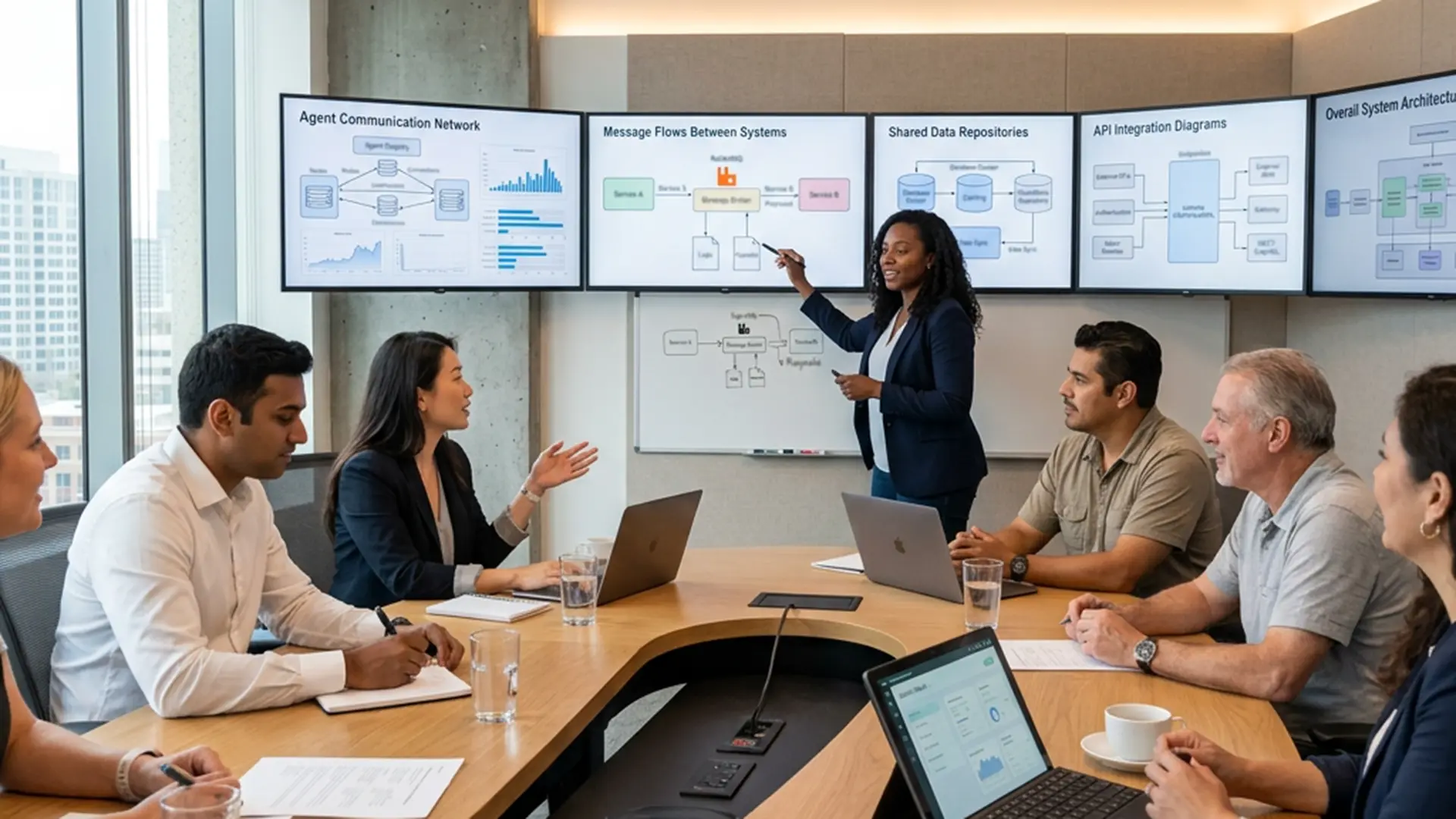
Message passing represents the most fundamental communication mechanism in multi-agent systems, where agents exchange structured information through standardized protocols. This approach enables asynchronous communication, allowing agents to send requests, share data, and coordinate activities without requiring simultaneous availability. For example, a data analysis agent might send a message to a visualization agent requesting a specific chart format, including the dataset and formatting parameters needed to complete the task.
Shared Memory and State
Shared memory systems provide agents with access to common data repositories where they can read and write information that other agents need. This approach reduces communication overhead for frequently accessed data while ensuring consistency across the agent network. Agents can update shared state information about task progress, resource availability, or environmental changes that affect the entire system.
APIs and Tool-Based Communication
Modern multi-agent systems increasingly rely on API-based communication, where agents interact through well-defined interfaces and tool calls. This approach enables agents to request services from other agents, access external systems, and coordinate complex workflows through standardized function calls. Tool-based communication also facilitates integration with existing enterprise systems and external services.
How Do Multi-Agent Systems Coordinate Tasks?
Effective task coordination is the backbone of successful multi-agent systems, determining how well distributed AI agents can work together to achieve complex objectives. Unlike traditional single-agent approaches, multi-agent coordination requires sophisticated orchestration mechanisms that can dynamically manage task distribution, resource allocation, and inter-agent dependencies in real-time.
The coordination process operates through a structured framework that transforms complex workflows into manageable, distributed operations. This systematic approach ensures that each agent contributes optimally while maintaining system-wide coherence and preventing conflicts that could compromise overall performance. Understanding these coordination mechanisms is crucial for implementing multi-agent systems that can scale efficiently and adapt to changing operational demands.
Stage 1: Task Decomposition
Step 1: Requirement Analysis
The coordination system begins by analyzing the incoming task or problem, identifying its scope, complexity, and resource requirements. This analysis determines whether the task can benefit from multi-agent processing and how it should be broken down into manageable components.
Step 2: Subtask Identification
Complex tasks are decomposed into smaller, more focused subtasks that can be handled independently or with minimal interdependencies. This decomposition considers the available agent capabilities, required expertise, and optimal parallelization opportunities.
Step 3: Dependency Mapping
The system identifies relationships and dependencies between subtasks, creating a workflow map that ensures proper sequencing and coordination. This mapping prevents conflicts and ensures that prerequisite tasks are completed before dependent tasks begin.
Stage 2: Role Assignment
Step 1: Agent Capability Assessment
The coordination system evaluates available agents based on their specialized capabilities, current workload, performance history, and suitability for specific subtasks. This assessment ensures optimal matching between task requirements and agent strengths.
Step 2: Dynamic Assignment
Tasks are assigned to agents using algorithms that consider multiple factors including agent availability, expertise level, current performance, and overall system load balancing. The assignment process can adapt dynamically as conditions change during task execution.
Stage 3: Sequential vs Parallel Execution
Step 1: Execution Strategy Selection
Based on task dependencies and resource availability, the system determines whether subtasks should be executed sequentially, in parallel, or in a hybrid approach that combines both strategies for optimal performance.
Step 2: Synchronization Management
For tasks requiring coordination between parallel processes, the system implements synchronization mechanisms that ensure proper timing and data consistency across agent activities.
Stage 3: Conflict Resolution
Step 1: Conflict Detection
The coordination system continuously monitors for potential conflicts including resource contention, contradictory outputs, or scheduling conflicts between agents working on related tasks.
Step 2: Resolution Mechanisms
When conflicts arise, the system applies predefined resolution strategies such as priority-based arbitration, consensus-building protocols, or escalation to higher-level coordination agents for complex disputes.
What Are the Benefits of Multi-Agent Systems?

Parallel Task Execution
-
Simultaneous Processing:
Multiple agents can work on different aspects of a problem simultaneously, dramatically reducing overall completion time compared to sequential processing approaches.
-
Resource Optimization:
Parallel execution maximizes utilization of available computational resources, preventing bottlenecks that occur in single-agent systems.
-
Improved Throughput:
Systems can handle multiple requests concurrently, increasing overall system capacity and responsiveness.
Scalability
-
Horizontal Scaling:
Additional agents can be added to the system to handle increased workload without requiring fundamental architectural changes.
-
Elastic Resource Management:
Agent networks can dynamically expand or contract based on current demand, optimizing resource costs and performance.
-
Distributed Processing:
Workload can be distributed across multiple computing environments, enabling systems to scale beyond single-machine limitations.
Specialization of Agents
-
Domain Expertise:
Each agent can be optimized for specific tasks or knowledge domains, resulting in higher quality outputs than generalist approaches.
-
Tool Integration:
Specialized agents can integrate with specific tools, APIs, or systems, providing focused capabilities that enhance overall system functionality.
-
Continuous Improvement:
Agents can be individually updated and improved without affecting the entire system, enabling targeted optimization.
Improved Problem Solving
-
Diverse Perspectives:
Multiple agents can approach problems from different angles, increasing the likelihood of finding optimal solutions.
-
Redundancy and Reliability:
Multiple agents can provide backup capabilities and cross-validation, improving system reliability and output quality.
-
Complex Task Handling:
Problems that are too complex for single agents become manageable through collaborative multi-agent approaches.
What Are the Challenges in Multi-Agent Systems?
Multi-agent systems offer scalability, autonomy, and parallel task execution, but they also introduce operational and architectural challenges. As the number of interacting agents increases, organizations must manage coordination complexity, communication overhead, error handling, and infrastructure costs to maintain system reliability and performance.

Coordination Complexity
-
Increased Management Overhead:
Coordinating multiple agents requires sophisticated orchestration mechanisms that add complexity to system design and maintenance.
-
Synchronization Challenges:
Ensuring proper timing and sequencing across multiple parallel processes becomes increasingly difficult as the number of agents grows.
-
Dependency Management:
Complex interdependencies between agent tasks can create bottlenecks and coordination failures if not properly managed.
Communication Overhead
-
Network Traffic:
Frequent communication between agents can create significant network overhead, potentially offsetting performance gains from parallel processing.
-
Protocol Complexity:
Standardizing communication protocols across diverse agent types requires careful design and ongoing maintenance.
-
Information Consistency:
Ensuring that all agents have access to current and consistent information becomes challenging in distributed environments.
Error Propagation
-
Cascading Failures:
Errors in one agent can propagate through the system, potentially causing widespread failures if proper isolation mechanisms are not in place.
-
Debugging Complexity:
Identifying the source of errors in multi-agent systems is more challenging than in single-agent architectures.
-
Quality Control:
Ensuring consistent output quality across multiple agents requires robust validation and quality assurance mechanisms.
Cost and Latency Issues
-
Resource Multiplication:
Running multiple agents simultaneously increases computational costs and resource requirements compared to single-agent solutions.
-
Communication Latency:
Time spent on inter-agent communication can offset performance gains, particularly in geographically distributed systems.
-
Infrastructure Complexity:
Multi-agent systems require more sophisticated infrastructure for monitoring, management, and coordination.
What Are Real-World Examples of Multi-Agent Systems?
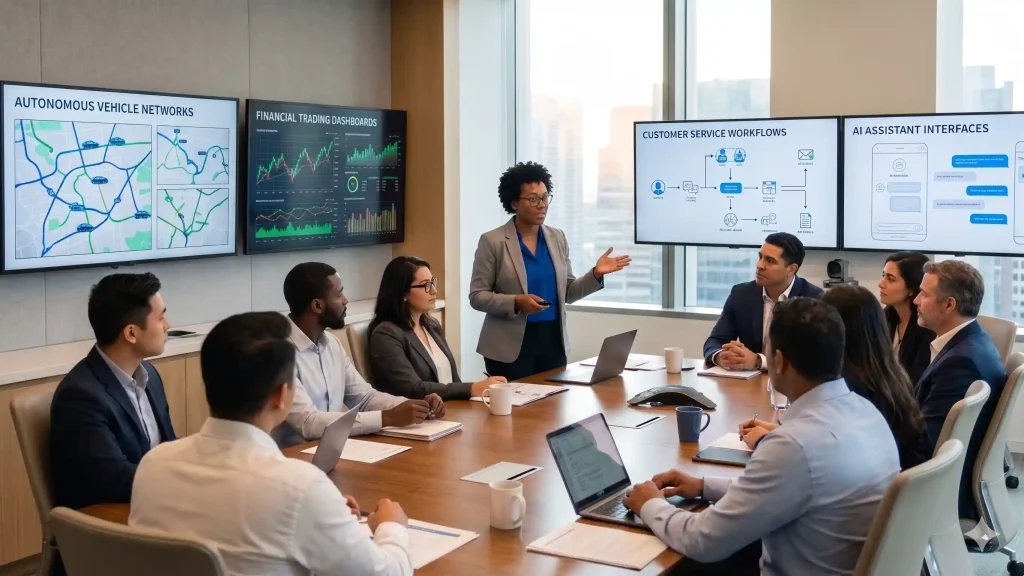
Autonomous Vehicles Coordination
Traffic Management:
Multiple vehicle agents coordinate to optimize traffic flow, reduce congestion, and improve safety through real-time communication and collaborative decision-making.
Trading Systems
Market Analysis:
Specialized agents handle different aspects of trading including market analysis, risk assessment, order execution, and portfolio management in coordinated financial systems.
Customer Support Orchestration
Multi-Channel Support:
Different agents handle various communication channels, escalation levels, and specialized knowledge domains to provide comprehensive customer service.
AI Copilots with Multiple Agents
Productivity Enhancement:
Specialized agents handle different aspects of user assistance including research, writing, analysis, and task management within integrated productivity platforms.
How Do Multi-Agent Systems Impact Cost and Performance?

Increased Compute Usage
Multi-agent systems typically require more computational resources than single-agent alternatives due to the overhead of running multiple concurrent processes. Each agent consumes memory, processing power, and storage resources, while coordination mechanisms add additional computational overhead. Organizations must carefully balance the performance benefits against increased infrastructure costs when implementing multi-agent architectures.
Parallel Execution Benefits
The ability to process multiple tasks simultaneously often provides significant performance improvements that justify the additional resource costs. Parallel execution can reduce overall task completion time by orders of magnitude for complex problems, enabling real-time responses to user requests that would be impossible with sequential processing. This performance improvement often translates to better user experiences and increased system capacity.
Trade-off Between Speed and Cost
Organizations must evaluate the cost-benefit relationship of multi-agent systems based on their specific use cases and performance requirements. While multi-agent systems can provide faster results and handle more complex tasks, they also require more sophisticated infrastructure and ongoing management. The optimal approach depends on factors such as task complexity, performance requirements, available resources, and business priorities.
What Are Best Practices for Designing Multi-Agent Systems?
Designing effective multi-agent systems requires careful planning and proven architectural principles. As organizations adopt AI-driven solutions with multiple autonomous agents, coordination and communication complexity grows exponentially. Without proper foundations, these systems become inefficient, hard to maintain, and prone to cascading failures.
Successful multi-agent systems rely on four fundamental pillars ensuring scalability, reliability, and performance. These principles tackle common development challenges: role confusion, communication bottlenecks, tight coupling, and poor system visibility. Following these best practices enables organizations to build robust architectures that deliver consistent results while adapting to evolving business needs.
Define Clear Agent Roles
-
Establish Specific Responsibilities:
Each agent should have clearly defined tasks and capabilities to prevent overlap and confusion.
-
Document Agent Interfaces:
Create comprehensive documentation of how agents interact with each other and external systems.
-
Set Performance Expectations:
Define measurable performance criteria and success metrics for each agent type.
-
Plan for Specialization:
Design agents with focused expertise rather than trying to create generalist agents that handle everything.
Minimize Communication Overhead
-
Optimize Message Frequency:
Reduce unnecessary communication by batching messages and using efficient protocols.
-
Implement Caching Strategies:
Use shared memory and caching to reduce repetitive data requests between agents.
-
Design Asynchronous Patterns:
Enable agents to work independently without waiting for constant synchronization.
-
Establish Communication Standards:
Use consistent message formats and protocols across all agents.
Use Modular Design
-
Create Interchangeable Components:
Design agents as modular components that can be easily replaced or upgraded.
-
Implement Standard Interfaces:
Use consistent APIs and interfaces to enable seamless integration between different agent types.
-
Plan for Scalability:
Design the system architecture to accommodate additional agents without major restructuring.
-
Enable Independent Development:
Allow different teams to work on different agents without tight coupling dependencies.
Implement Monitoring and Evaluation
-
Track Performance Metrics:
Monitor agent performance, system throughput, and resource utilization continuously.
-
Implement Error Handling:
Create robust error detection and recovery mechanisms for individual agents and the overall system.
-
Enable Debugging Capabilities:
Provide tools and logging mechanisms that facilitate troubleshooting and optimization.
-
Plan for Continuous Improvement:
Establish processes for analyzing performance data and implementing system improvements.
What is the Future of Multi-Agent Systems in Agentic AI?
The evolution toward more sophisticated multi-agent systems represents a fundamental shift in how we approach complex problem-solving with AI. As these systems become more autonomous and capable, they will enable new levels of efficiency, scalability, and intelligence that transform how organizations operate and compete in the digital economy.
Autonomous Collaboration
-
Self-Organizing Networks:
Future multi-agent systems will feature agents that can automatically discover, connect with, and collaborate with other agents without human intervention.
-
Dynamic Team Formation:
Agents will form temporary teams based on current tasks and objectives, dissolving and reforming as needs change.
-
Emergent Intelligence:
Collaborative behaviors will emerge from agent interactions, creating system-level intelligence that exceeds the capabilities of individual components.
Self-Organizing Agents
-
Adaptive Architecture:
Agent networks will automatically reconfigure themselves based on workload patterns, performance requirements, and available resources.
-
Learning-Based Optimization:
Agents will continuously learn from their interactions and experiences to improve coordination and performance over time.
-
Autonomous Resource Management:
Systems will automatically allocate and reallocate resources among agents based on real-time needs and priorities.
Enterprise-Scale Orchestration
-
Cross-System Integration:
Multi-agent systems will seamlessly integrate with existing enterprise systems, creating unified intelligent automation across entire organizations.
-
Scalable Governance:
New frameworks will emerge for managing and governing large-scale agent networks while maintaining security, compliance, and performance standards.
-
Business Process Automation:
Entire business workflows will be managed by coordinated agent teams that can adapt to changing requirements and exceptions.
Real-Time Adaptive Systems
-
Dynamic Response Capabilities:
Future systems will adapt their behavior in real-time based on changing conditions, user needs, and environmental factors.
-
Predictive Coordination:
Agents will anticipate future needs and proactively coordinate resources and activities to prevent bottlenecks and optimize performance.
-
Context-Aware Collaboration:
Systems will understand and adapt to different contexts, automatically adjusting their coordination strategies based on current situations and objectives.
How Does Quantiphi Build Multi-Agent Systems?
Quantiphi brings end-to-end expertise in building production-grade Multi-Agent Systems tailored for cross-industry use cases. We combine technical depth with compliance knowledge to help organizations realize measurable outcomes. Leveraging advanced frameworks we enable seamless model integration, agent coordination, workflow optimization, and interoperability with external tools and systems.
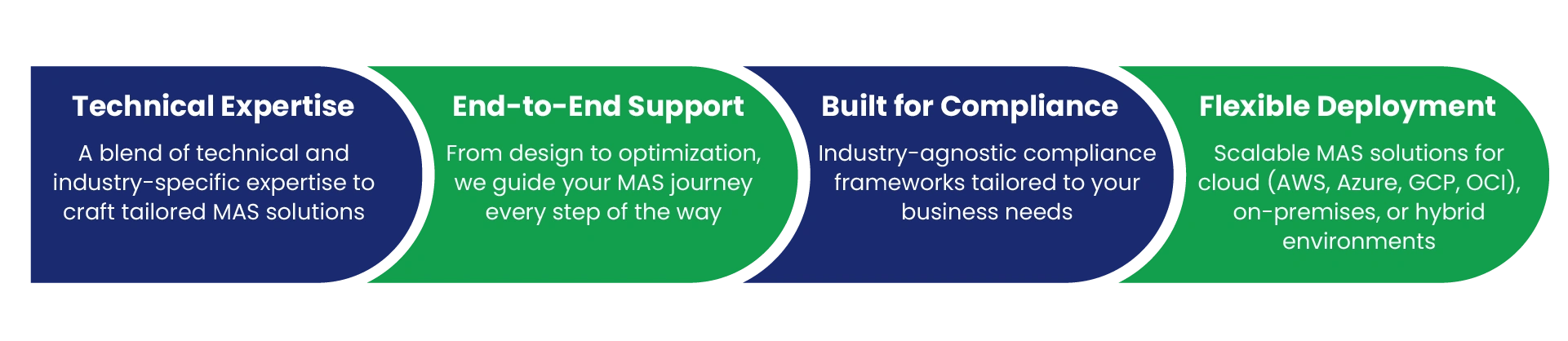
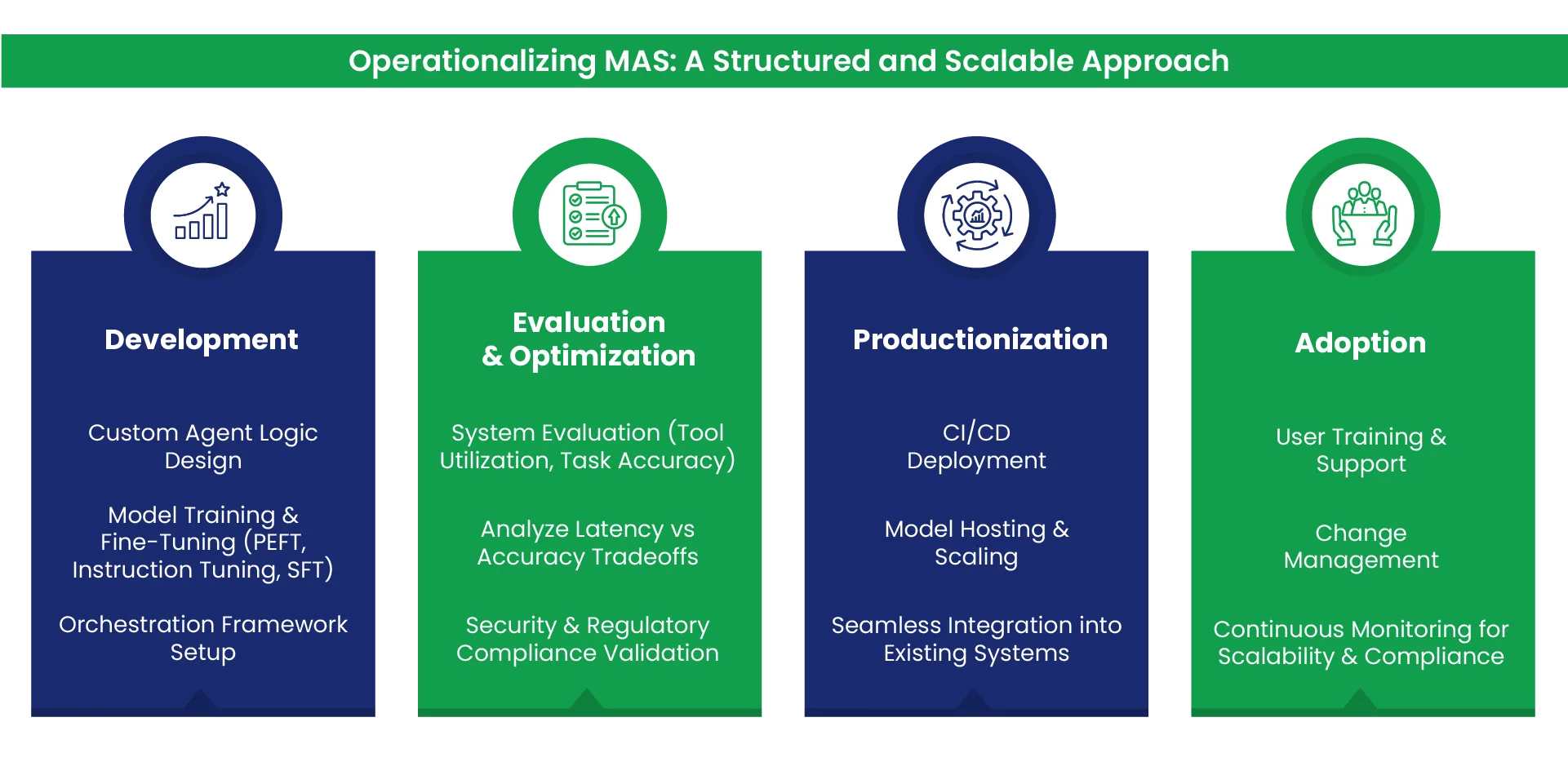
To ensure a successful MAS implementation, Quantiphi takes a structured, phased approach that aligns with these four critical pillars of MAS deployment. These pillars guide the journey from development to adoption, ensuring that the system is scalable, efficient, secure, and integrated into the existing technology ecosystem.
Multi-agent systems represent a significant evolution in artificial intelligence architecture, offering unprecedented capabilities for handling complex, distributed problems through collaborative intelligence. As organizations continue to face increasingly sophisticated challenges, the ability to deploy coordinated teams of specialized AI agents becomes not just advantageous but essential for maintaining competitive advantage. The future belongs to systems that can seamlessly blend human expertise with multi-agent AI capabilities, creating new possibilities for innovation, efficiency, and problem-solving across every industry and application domain.