Rethinking Healthcare Contact Centers with AI-Powered Automation

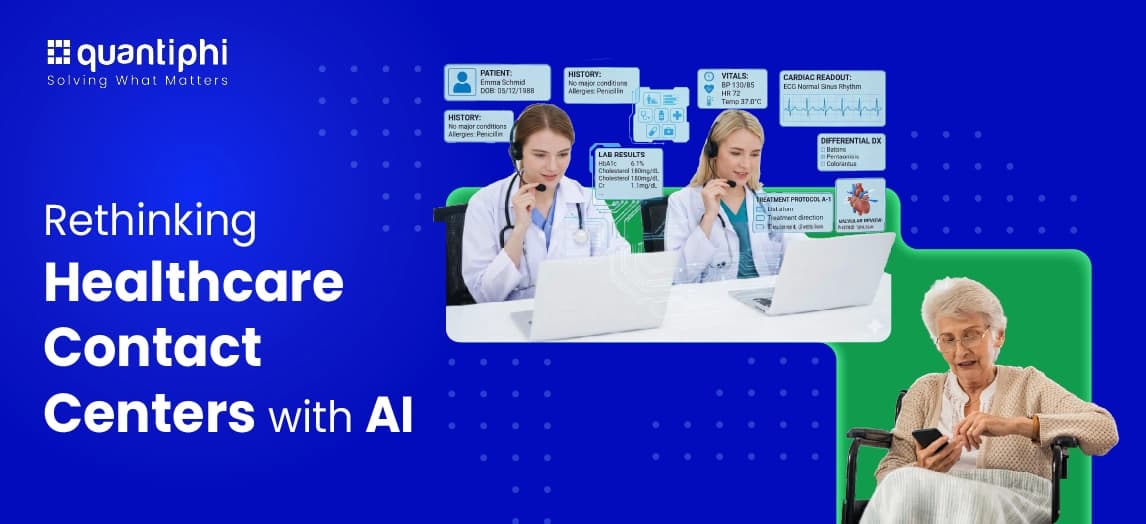
For healthcare organizations, contact centers are more than a service channel—they’re often the first line of patient interaction. Yet, many still rely on outdated systems that struggle to keep pace with rising expectations, staffing limitations, and the push for always-on care. Long wait times, disconnected systems, and manually handled routine inquiries are creating a cycle of inefficiency and frustration for both patients and the teams who serve them.
But what if the answer isn’t simply hiring more agents, but empowering them to do more?
A Smarter Contact Center Model with AI
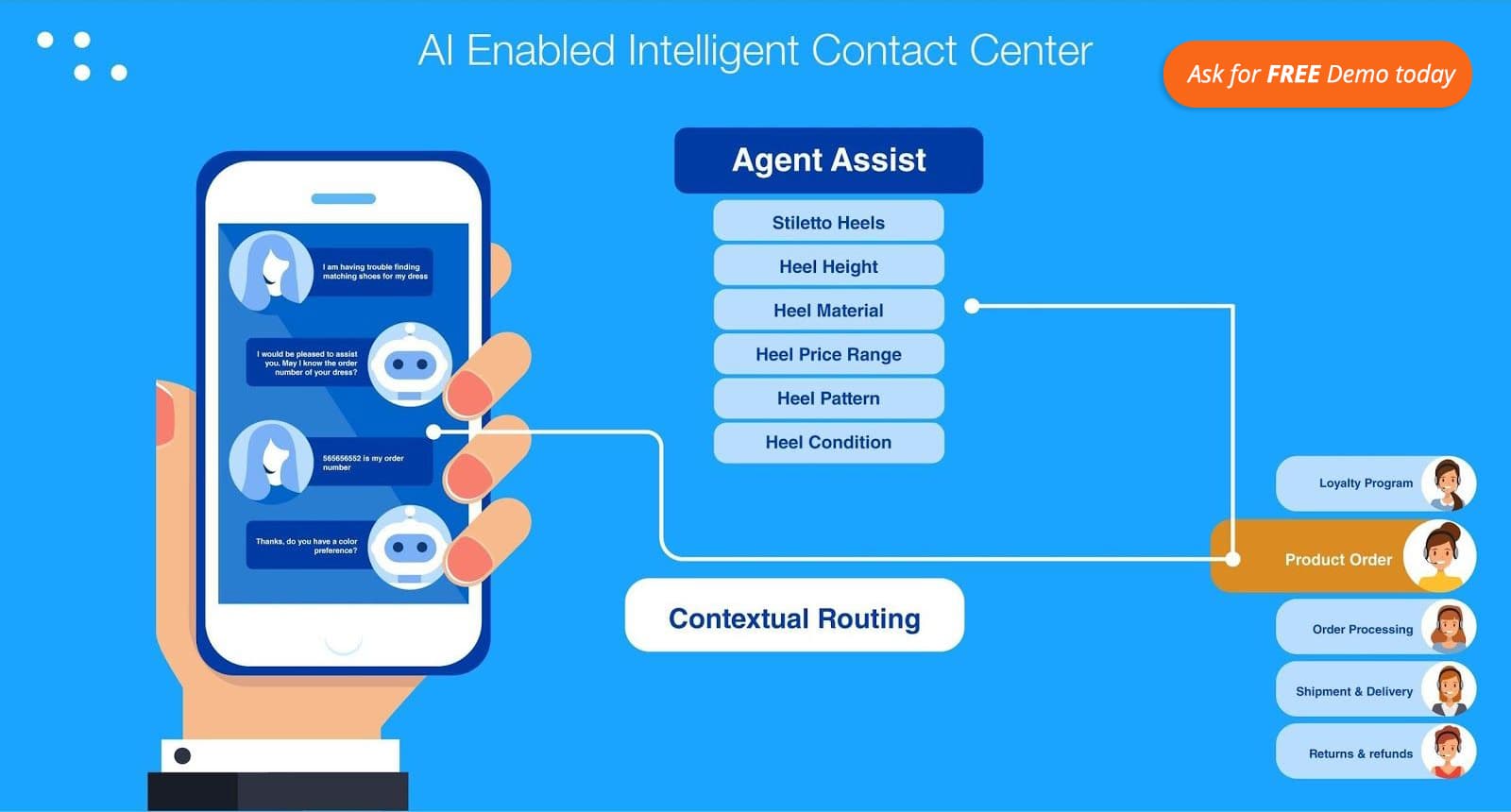
The modern healthcare contact center is no longer just a help desk. It’s a critical touchpoint for clinical coordination, financial guidance, and patient support. AI enables this shift by introducing intelligent automation, predictive analytics, and natural language understanding across channels.
At the core of this shift are intelligent virtual agents and AI-enabled workforce tools that work in tandem with human teams—not in place of them. These solutions can absorb a large portion of routine inquiries, freeing up live agents to focus on complex or emotionally sensitive cases that require a human touch.
How AI Enhances Patient and Member Experience
With AI handling the repetitive and predictable, patients and members gain quicker access to the information they need:
-
24/7 self-service
Patients can schedule appointments, check coverage, or get updates on claims—without waiting on hold.
-
Faster answers, fewer delays
Intelligent automation verifies eligibility and processes prior authorizations in real time, speeding up resolution.
-
Personalized support
AI uses interaction history to guide smarter conversations, anticipate needs, and improve resolution speed.
This isn’t just about digitizing a call center—it’s about building an intelligent support layer that’s available across channels (voice, chat, SMS) and designed to meet people where they are.
How AI Healthcare Contact Centre Generates Measurable Outcomes
For healthcare organizations, the results are compelling:
Lower operational costs through automation of high-volume tasks
Reduced call volumes and shorter queue times
Improved workforce utilization with smarter staffing based on demand forecasting
Better patient and member satisfaction driven by convenience, speed, and relevance
But it’s important to recognize that success hinges on more than just technology. Many AI deployments underdeliver because they rely on generic models, aren’t integrated with critical systems like EHRs and CRMs, or fail to reflect the unique nuances of healthcare operations.
That’s why a tailored, healthcare-specific approach to AI isn’t just a nice-to-have—it’s essential.
Why Healthcare Leaders Choose Quantiphi for Contact Centre AI Automation
Choosing the right AI partner isn’t just about technology, it’s also about understanding the unique complexities of healthcare. At Quantiphi, we don’t offer generic solutions repackaged for healthcare. We design AI systems with healthcare at the core, from clinical language to compliance, interoperability, and patient experience.
Here’s what sets us apart:
-
Healthcare Domain-Trained AI
Many AI vendors underestimate the intricacies of healthcare and can interpret clinical terms, follow payer workflows, and understand policy nuances with precision.
Quantiphi’s AI models are trained on real-world healthcare data, giving them fluency in medical terminology, insurance structures, and care coordination logic. Whether supporting a provider network or a payer contact center, our virtual assistants adapt to each organization’s policies, escalation rules, and communication standards.
-
Seamless System Integration
In healthcare, data rarely lives in one place. Contact center agents often juggle between EHRs, CRMs, and claims systems—slowing response times and increasing the risk of error.
Quantiphi’s AI solutions are built to work across your existing IT ecosystem. We ensure seamless integration with core platforms so that patient and member information can be accessed, updated, and referenced in real time. That means fewer manual lookups, faster issue resolution, and a more connected experience for both agents and patients.
-
Compliance First
In healthcare, protecting sensitive data is non-negotiable. That’s why every Quantiphi solution is designed with security and compliance at the foundation.
From HIPAA to SOC 2 to ISO 27001, our AI-powered tools adhere to rigorous industry standards. Whether it’s a virtual agent handling patient queries or automation workflows routing sensitive claims data, you can be confident that privacy and security are baked in.
-
Tangible Savings and Performance Gains
AI shouldn’t just improve the user experience—it should make a clear operational difference. Quantiphi’s solutions are built to do both.
- Up to 40% cost reduction in contact center operations through intelligent automation, self-service enablement, and smart call routing
- 20% decrease in average handle time (AHT) thanks to AI-assisted agent workflows and knowledge surfacing
- 10% reduction in training overhead as AI systems support agents in real time, flattening the learning curve
-
Proven Experience in Healthcare and Beyond
With over 2,500 AI deployments across industries—including a significant footprint in healthcare and life sciences—Quantiphi brings unmatched experience to the table.
Our award-winning partnerships with Google Cloud, AWS, NVIDIA, and Microsoft Azure ensure that your AI solutions are not only cutting-edge but also scalable, secure, and built on industry-leading infrastructure. Whether you’re modernizing a contact center or launching a multilingual virtual agent, we’ve done it before—and we know what success looks like.
Real Outcomes from Real Clients: Healthcare Contact Centre AI Automation
Implementing AI in healthcare contact centers isn’t just a theoretical strategy—it’s a practical step that’s already delivering real, measurable results. At Quantiphi, we’ve partnered with providers, payers, and life sciences organizations to bring intelligent automation into daily operations. These examples show how thoughtfully designed AI can drive outcomes that matter—for patients, staff, and the business.
-
Wake Forest Baptist Medical Center: Navigating Clinical Trials with Ease
For cancer patients and their families, finding the right clinical trial is often an overwhelming task. Wake Forest Baptist Medical Center addressed this challenge by implementing an AI-powered virtual assistant built by Quantiphi. Available across chat, SMS, and voice channels, the assistant guides users through clinical trial options in real time—any time of day.
Impact:
- Reduced call durations by 67%
- Resolved 85% of inquiries without human intervention
- Personalized responses based on patient profiles
- Decreased reliance on nursing staff after hours
This solution not only increased access to potentially life-saving information but also preserved clinician bandwidth for more complex care needs.
-
COVID-19 Virtual Assistant: Scaling Patient Support in a Crisis
During the pandemic, Summa Health, a patient-centered population health management organization, faced a surge in patient questions around symptoms, vaccines, and scheduling. Quantiphi deployed a dual-mode (chat and voice) virtual assistant capable of handling these high-volume, time-sensitive interactions.
Impact:
- Handled over 28,000 inquiries
- Delivered responses in under 2 seconds on average
- Increased total query volume by 45%
- Enabled real-time scheduling and concern tracking
By reducing manual workloads, the solution helped frontline teams focus on critical patient care during peak periods of uncertainty.
-
AI-Powered Contact Center Insights: Enhancing Efficiency Through Intelligence
For another healthcare organization, the goal was to streamline operations and unlock visibility into patient engagement patterns. Quantiphi introduced a telephony-based virtual agent backed by advanced analytics through Contact Center AI (CCAI) Insights.
Impact:
- Achieved 70% successful intent recognition
- Reduced word error rates to below 15%
- Delivered actionable analytics to guide future automation strategies
This combination of automation and data-driven insight improved overall service quality while easing pressure on live agents.
-
Member Services Virtual Agent: Elevating Payer Operations
A leading U.S. health insurer partnered with Quantiphi to improve its member services line by automating high-volume inquiries through a voice-enabled AI agent.
Impact:
- Enabled accurate routing to care coordinators
- Integrated speech analytics and knowledge assist for smarter support
- Enhanced member satisfaction through quicker resolutions
- Ensured 24/7 availability across key touchpoints
The solution’s conversational intelligence allowed for a more empathetic, consistent experience—without increasing headcount.
Addressing Common Concerns regarding Healthcare Contact Centre
Adopting AI in healthcare contact centers can feel daunting—but it doesn’t have to be. At Quantiphi, we’ve seen the same questions come up time and again. Let’s break them down:
“Our current system works fine. We don’t see the need for AI right now.”
It might work for now—but expectations are changing fast. Patients and members increasingly expect 24/7 support, shorter wait times, and consistent communication across digital channels. AI helps meet these demands without increasing headcount, enabling your organization to stay competitive and prepared for future growth.
“We tried AI before, and it didn’t work well.”
That’s a common story—and one we’ve helped rewrite. Early AI deployments often stumbled because they weren’t built with healthcare in mind. At Quantiphi, our models are trained on real industry data, fine-tuned for clinical workflows, and designed to integrate seamlessly with existing systems like EHRs, CRMs, and claims platforms. The result? AI that actually works the way your teams do.
“AI is too expensive.”
It’s more affordable than you might think—and the returns are tangible. Our clients have seen up to a 40% reduction in operational costs and a 20% boost in agent productivity within the first year. By automating repetitive tasks and increasing self-service adoption, AI becomes a tool that saves money while improving outcomes.
“AI will replace our agents.”
Not at all. AI supports your team by offloading routine inquiries, allowing live agents to focus on more complex or sensitive conversations. This not only improves service quality but also reduces burnout and turnover—two of the biggest pain points in today’s contact center environments.
“We’re worried about compliance and data security.”
You should be—and so are we. Every solution we deliver is designed to meet the highest regulatory standards, including HIPAA, SOC 2, and ISO 27001. From encryption to access controls, security and audit-readiness are built in from day one.
Where to Go from Here: The Future of AI Healthcare Contact Centre
AI isn’t a one-size-fits-all solution, and skepticism is healthy—especially in healthcare. But with the right partner, the path to AI-powered contact center modernization is more straightforward, secure, and beneficial than ever before.
The future of healthcare contact centers is already being built. It’s a future where patients get faster, more accurate responses, where agents feel empowered, and where healthcare organizations operate with greater agility and confidence.
If your contact center is still running on yesterday’s tools, now is the time to reimagine what’s possible.