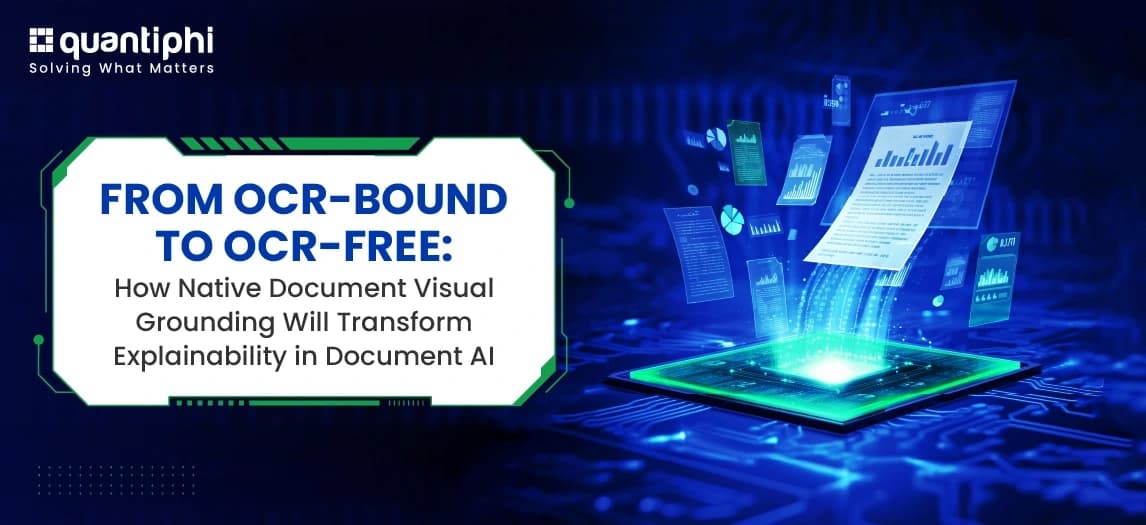
From OCR-Bound to OCR-Free: How Native Document Visual Grounding Will Transform Explainability in Document AI

Introduction: When Accuracy Isn’t Enough
Imagine this:
A healthcare auditor is reviewing structured outputs from an AI system that processes hundreds of diagnostic reports. One field stands out: “Blood Pressure: 160/110 mmHg”. It looks correct — but the auditor’s next question is immediate:
Where exactly in the report did this value come from? Was it from the patient’s vitals section on page two? An annotation in the doctor’s handwritten notes? Or a reference value in a chart that doesn’t even belong to this patient?
Without a clear link back to the exact location in the source document, even the most accurate AI output is just a claim. For regulated sectors like finance, healthcare, and legal, that’s not enough.
This is where Document Visual Grounding (DVG) becomes critical: providing the missing link between extracted information and its verifiable origin in the document.
Document Visual Grounding (DVG)
DVG is the capability to return both the answer and its precise location in the original document [ref], typically as a bounding box or region highlight. It’s the difference between “trust me” and “here’s the proof.”
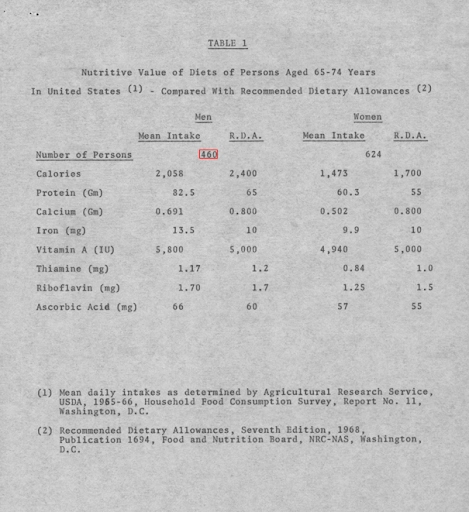
Question: What is the total number of men?
Answer: {“value”: “460”, “location”: [[32, 11, 433, 272]]}
DVG Isn’t New — But It’s Still OCR-Bound
Almost every document AI platform today has some form of DVG. But the way it’s achieved today is almost always dependent on OCR for the grounding stage, even in systems that don’t need OCR for the answer itself.
Here’s how it typically works:
- OCR processes the document, extracting every word and its corresponding bounding box coordinates.
- Answer extraction happens:
- In OCR-dependent Information Extraction models like the LayoutLM family, OCR text and coordinates are core inputs to the model.
- In modern multimodal LLMs (VLMs), the model can read directly from the document image without OCR — producing highly accurate answers.
- Bounding boxes are then assigned by matching the answer text back to OCR tokens.
The problem?
Even when the answer doesn’t depend on OCR, the grounding almost always does, making it just as vulnerable to OCR’s well-known issues: misreads, missing tokens, layout misalignment, multi-language struggles, and errors in low-quality scans.
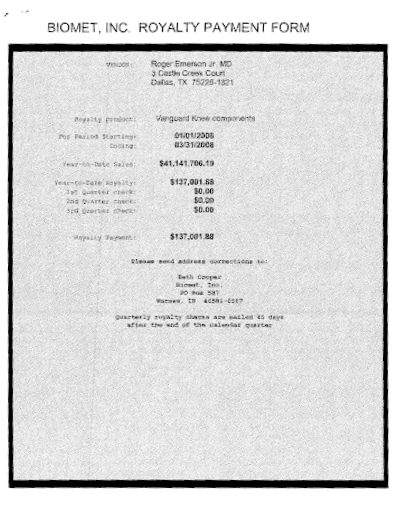
Question: What is the year to date sales amount?
VLM Answer: $41,141,706.19
Location: ? (Since the OCR recognized the word as 41,141,706,19 as it misread the dot as comma due to poor document quality, the bounding box assignment failed)
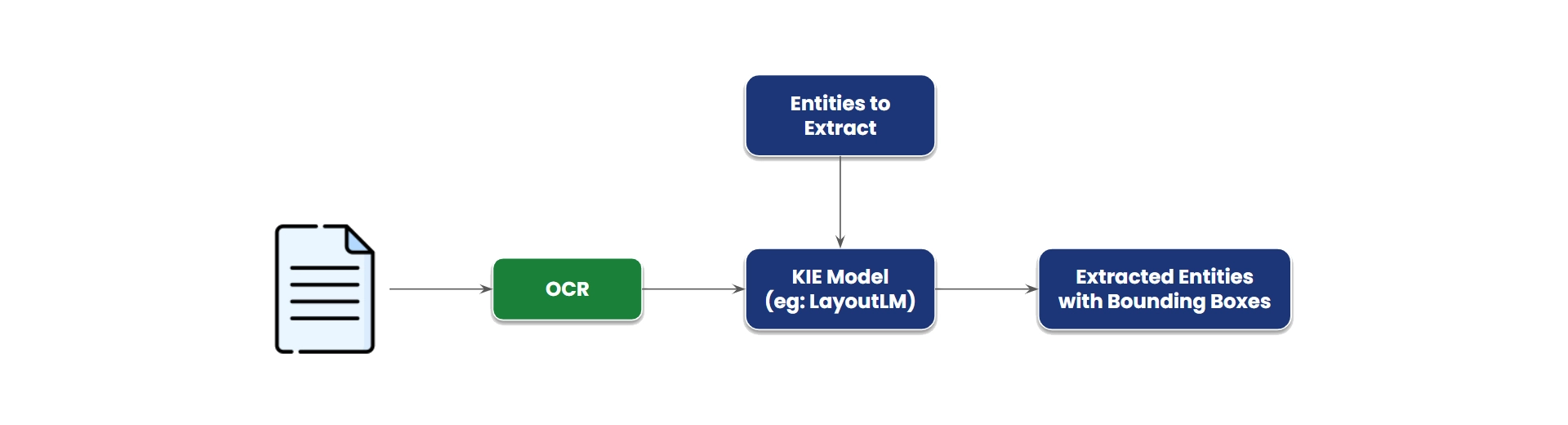
(A) OCR-dependent Information Extraction Model
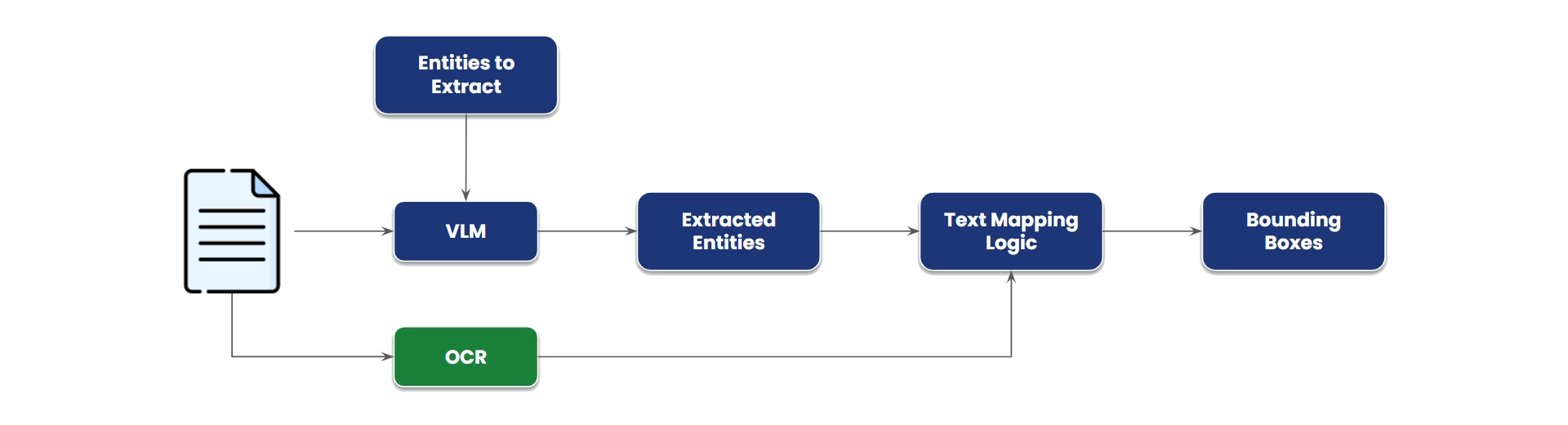
(B) VLM extracting answer from image but using OCR mapping for BBOX
The Paradigm Shift: Native DVG Without OCR Reliance
We are now in the era of powerful generative multimodal AI models that can parse, understand, and extract structured information from complex documents directly from images, no OCR needed for text comprehension.
The next leap?
Equipping these models with native DVG capabilities so they can identify and return the exact location of extracted information directly from the document image, without OCR mapping.
This changes the game:
- No propagation of OCR errors into grounding.
- Higher resilience to noisy scans, handwriting, or mixed languages.
- True alignment between the visual understanding that produced the answer and the location provided for verification.
Why Businesses Should Care
-
Explainability Becomes a First-Class Citizen
When a reviewer or analyst sees an AI-extracted field, they can instantly trace it to its true origin in the document — making trust a built-in feature, not an afterthought.
-
Regulatory and Audit Readiness
In finance, healthcare, and legal contexts, showing your work isn’t optional. Native DVG enables outputs that meet compliance standards without manual verification.
-
Faster Decision Cycles
Analysts don’t waste time hunting for sources — they see the evidence immediately and can move to action faster.
Native DVG vs OCR-Based Grounding: Key Differences
| VLM with Native DVG | VLM without Native DVG |
| Directly returns bounding boxes from the document image, aligned with its visual reasoning process | Relies on OCR token matching to assign bounding boxes after answering |
| Immune to OCR errors, works on low-quality scans and non-standard layouts | Vulnerable to OCR misreads, missing tokens, and misaligned layouts |
| Faster end-to-end pipeline, fewer components to maintain | Additional OCR step increases latency, cost, and complexity |
| Stronger alignment between the answer and the location | Possible mismatch between the model’s reasoning and the assigned bounding box |
| Enables new evaluation metrics for holistic accuracy (answer + location) | Evaluation typically focuses on text accuracy only |
Research Challenges to Unlock Native DVG
Achieving reliable OCR-free DVG at scale will require advances in:
- Training Data: Large, diverse datasets pairing document images with ground-truth locations for extracted answers.
- Unified Metrics: Benchmarks and evaluation metrics that assess both answer accuracy and localization quality.
- Multi-Granular Localization: Supporting block-, line-, word-level grounding for different business contexts.
- Model Architectures: Enhancing multimodal attention and visual reasoning modules to support direct spatial localization.
Closing: From Claims to Certainty
DVG has always been part of the Document AI story — but for too long, it has been tethered to the fragility of OCR. Even the most advanced systems still inherit OCR’s limitations in the grounding stage, leaving trust vulnerable to text recognition errors, missing tokens, and layout misalignments.
At Phi Labs, the R&D arm of Quantiphi, we see this as one of the most critical frontiers in Intelligent Document Processing. We are not simply observing this shift — we are engineering it.
Our research focus is clear:
- Build OCR-free native DVG capabilities in VLMs
- Align extracted answers with their true visual origin in the document.
- Eliminate the dependency chain that compromises explainability.
This isn’t just about better models. It’s about redefining trust in AI-driven document workflows — in healthcare, finance, insurance, and every domain where decisions demand proof. In the coming blogs, we’ll share our experimental results, benchmarks, and architectural approaches — setting the stage for an industry-wide leap from claims to certainty.
Because for us, the future of Document AI isn’t just about delivering the right answer — it’s about showing exactly where it came from.