Why Stress-Testing Document AI Requires a Diversified Portfolio Approach

In high-stakes fields like finance, insurance, and healthcare, companies use “Intelligent Document Processing” (IDP) systems to automate reading thousands of documents, such as tax forms and medical records. These systems use advanced AI to extract information, and they usually perform perfectly on standard, clean test datasets.
However, there is a problem: These systems sometimes do not work as intended when they face real-world documents.
When a model fails in the real world, it isn’t just a minor glitch. It can lead to serious errors in patient care or financial losses. This blog explores why standard testing is no longer enough and how a “diverse portfolio” approach can help fix these hidden vulnerabilities before they cause damage.
The Problem: Why Standard Testing Isn’t Enough
Most companies test their AI by giving it a fixed set of documents to see if it gets the answers right. Think of this like a student who memorizes a textbook to pass a predictable exam. They might get an A on the test, but if you give them a real-world problem they haven’t seen before, they may struggle.
Real-world documents are messy. They have scanner noise, tiny fonts, weird page breaks, or unexpected layouts. Because standard tests don’t include these noisy, “edge-case” documents, companies gain a false sense of confidence. They don’t realize how the AI will behave until it is already running in production and failing on a user’s document.
Exhaustive manual testing is impractical due to prohibitive time and computational costs. For example, a system spanning a 24-bit binary configuration space yields 16,777,216 unique possible combinations; this combinatorial explosion necessitates the use of more efficient, automated testing strategies.
Our work, “Search-Based Risk Feature Discovery in Document Structure Spaces under a Constrained Budget”, redefines how we approach Document AI validation. By framing system validation as a Search-Based Software Testing (SBST) problem, we introduce an active, budget-efficient framework designed to proactively hunt down and uncover systemic failure mechanisms before production-level deployment.
Our Approach: Validation as Search-Based Software Testing (SBST)
Documents do not fail in just one predictable way; they fail due to a combinatorial explosion of structural risk features.
Currently, when teams do stress-test, they usually hunt for the “worst-case scenario”, a single, extreme document configuration that maximally degrades model performance. But optimizing testing to find the deepest point of failure means we miss the widest array of vulnerabilities. To build true systemic resilience, we cannot rely on static datasets or single-point failure hunts. We must proactively search the vast, unseen spaces of document configurations. We need to stop asking, “What breaks our model the most?” and start asking, “How many different ways can our model break before we deploy it?”
To solve this validation crisis, we introduce a fundamental paradigm shift. We formalize IDP validation not as a standard accuracy-checking exercise, but as a Search-Based Software Testing (SBST) challenge.

Figure 1. Constructing the document configuration space
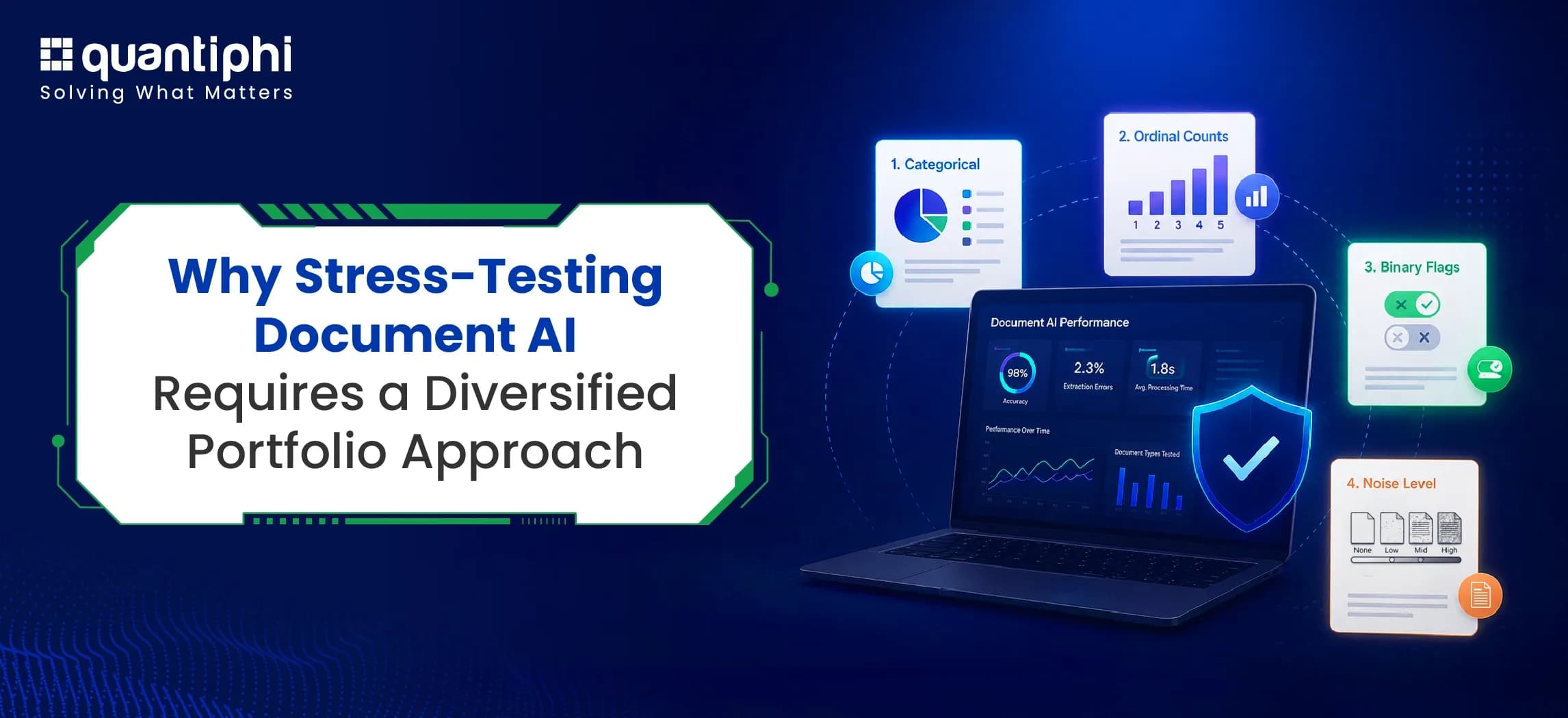
Instead of randomly sampling documents from a static test set, we define a document configuration space (Z) of “Risk Features”, categorical and ordinal variables, that serve as blueprints for synthetic test cases.
These are encoded into unified binary vectors (as shown in Figure 2), mapping the problem onto a binary hypercube. Since Z is too vast for exhaustive enumeration, we employ efficient search heuristics to isolate sparse, high-risk failure regions.
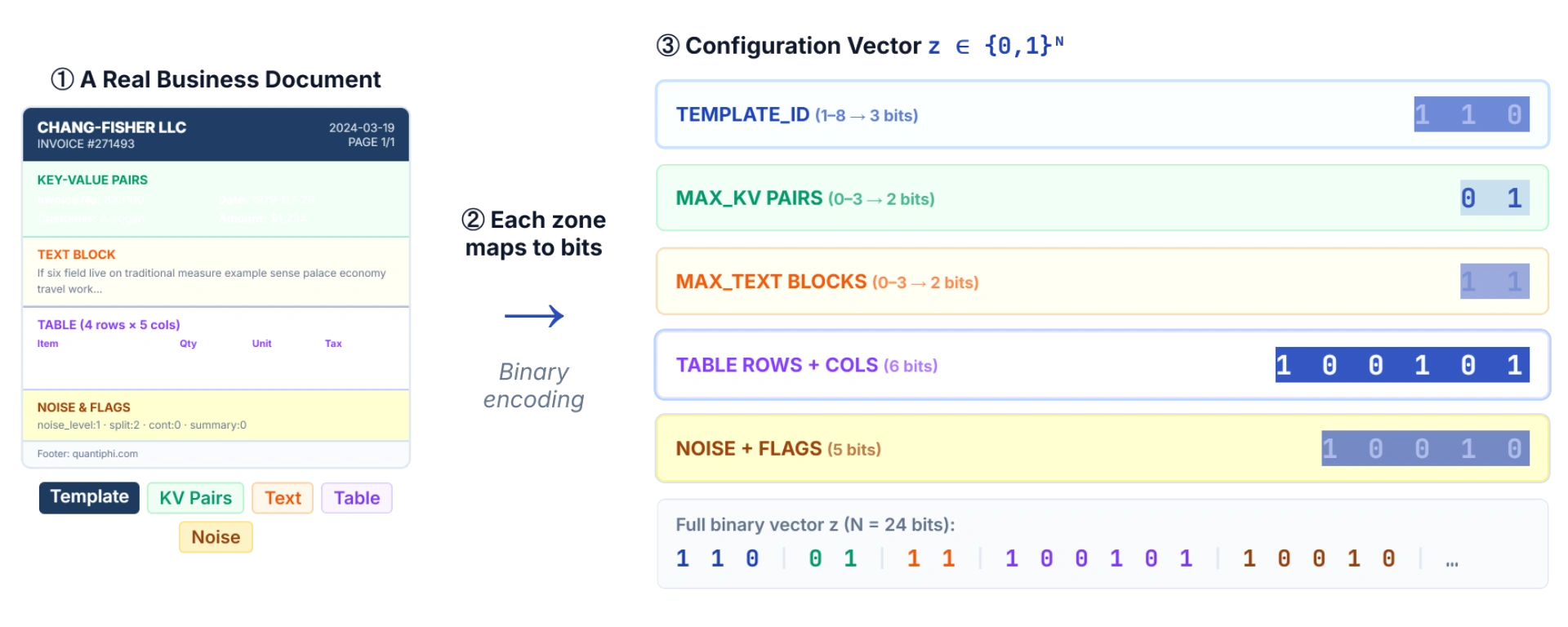
Figure 2. Representing a document in the form of search vectors
We then built a Document Generator capable of rendering diverse Document Configuration Space as can be seen below.
Sample input of an document configuration
{
  template_id: 1
  n_pages: 1
  kv_pairs: 1
  text_lines: 3
  table_rows: 4
  table_cols: 5
  summary_rows: 0
  summary_cols: 0
  noise_level: 1 (introduces blurry)
  table_cont_pages: 0
  block_split_mode: 2
  summary_on_last_page: 0
  ===== GT HEADER TEXT =====
  ['CHANG-FISHER', 'INVOICE #271493', '2024-03-19']

  ===== GT KV PAIRS (first block) =====
  [{'key': 'Invoice Number', 'value': '833180'}, {'key': 'Invoice Date', 'value':
  '1979-07-29'}, {'key': 'Customer Name', 'value': 'Antonio Logan'}]

  ===== GT TABLE HEADERS FIRST BLOCK =====
  ['Item', 'Description', 'Qty', 'Unit Price', 'Tax']
}
Sample output of the above document configuration

Figure 3. Sample rendered document via Document Generator
We then evaluated these against a system-level IDP oracle to capture distinct, structured Failure Signature and Risk Score. Our primary objective here is to maximize the number of distinct failure types discovered within a strictly fixed computational evaluation budget. This constraint perfectly mirrors the reality of enterprise AI engineering, where compute, time, and human oversight are finite, expensive resources. This integrated validation workflow is detailed in Figure 4.
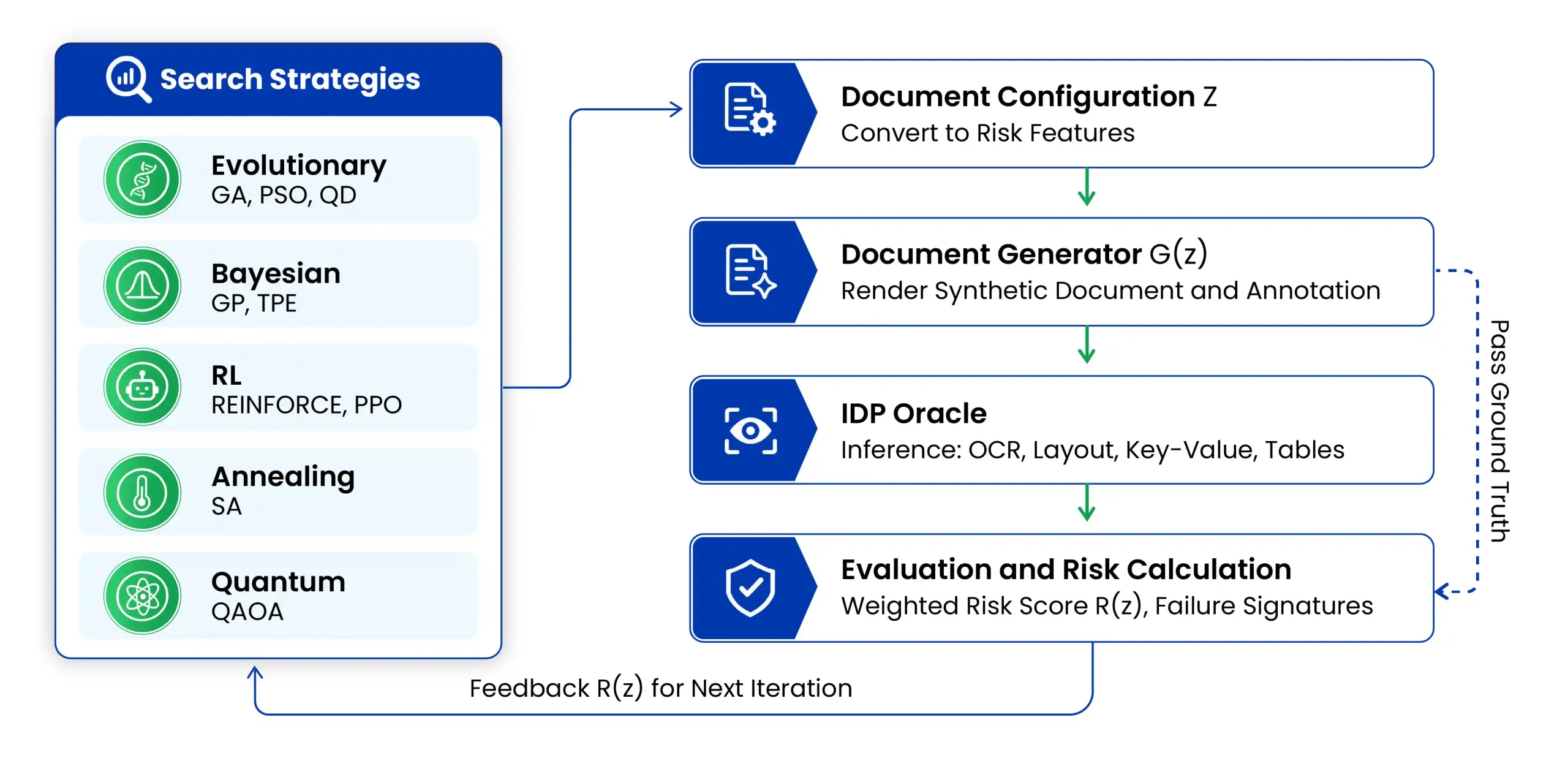
Figure 4. Schematic of the Risk Feature Discovery Pipeline
The Experiments: Benchmarking a Portfolio of Solvers
To navigate this highly complex risk landscape of document structures, relying on a single algorithmic search approach would leave critical blind spots. Therefore, we constructed a combinatorial space of document configurations and benchmarked a highly diverse portfolio of search strategies under strictly identical budget constraints. Our solver portfolio included:
- Evolutionary and Swarm-based Solvers (e.g., Genetic Algorithms, Particle Swarm)
- Quality-Diversity Methods (e.g., MAP-Elites)
- Learning-based Optimization (e.g., Bayesian Optimization, Reinforcement Learning)
- Hybrid Quantum-Classical Solvers (e.g., Quantum Approximate Optimization Algorithm)
By forcing all these distinct solvers to operate under the same constraints, we assessed their performance using complementary metrics that captured both risk severity (top-decile risk statistics) and dynamic discovery behavior over time. We conducted these experiments across two primary configurations: 24-dimensional single-page document generation and 27-dimensional multipage generation, capped at a maximum budget of 1,000 document iterations per solver.
Key Findings: Unpacking Solver Complementarity
The empirical results of our study dismantle the idea of a “silver bullet” in AI validation. By deploying rigorous analytical frameworks, we found that different solvers possess deeply distinct structural biases:
-
Configuration-Level Exclusivity:
Each solver in our portfolio discovered distinct, high-risk configurations that remained entirely hidden from the other algorithms, even when operating under identical budget constraints. This confirms that no single strategy is dominant, as each approach captures unique failure modes that its peers consistently overlook.
-
Cross-Temporal Overlap:
We tracked how each solver discovered risks over iterations, revealing that they explore entirely different search trajectories. For instance, QAOA and REINFORCE identified unique configurations early on. Crucially, a risk uncovered by one solver remained undiscovered by the other even after it exhausted its entire testing budget, proving that their search paths are fundamentally distinct.
-
The Necessity of the Union:
Our analysis proved that while the union of all solvers eventually recovered the full observed failure space, reliance on any individual method systematically delayed the discovery of critical risks. This establishes our core concept of intrinsic solver complementarity.
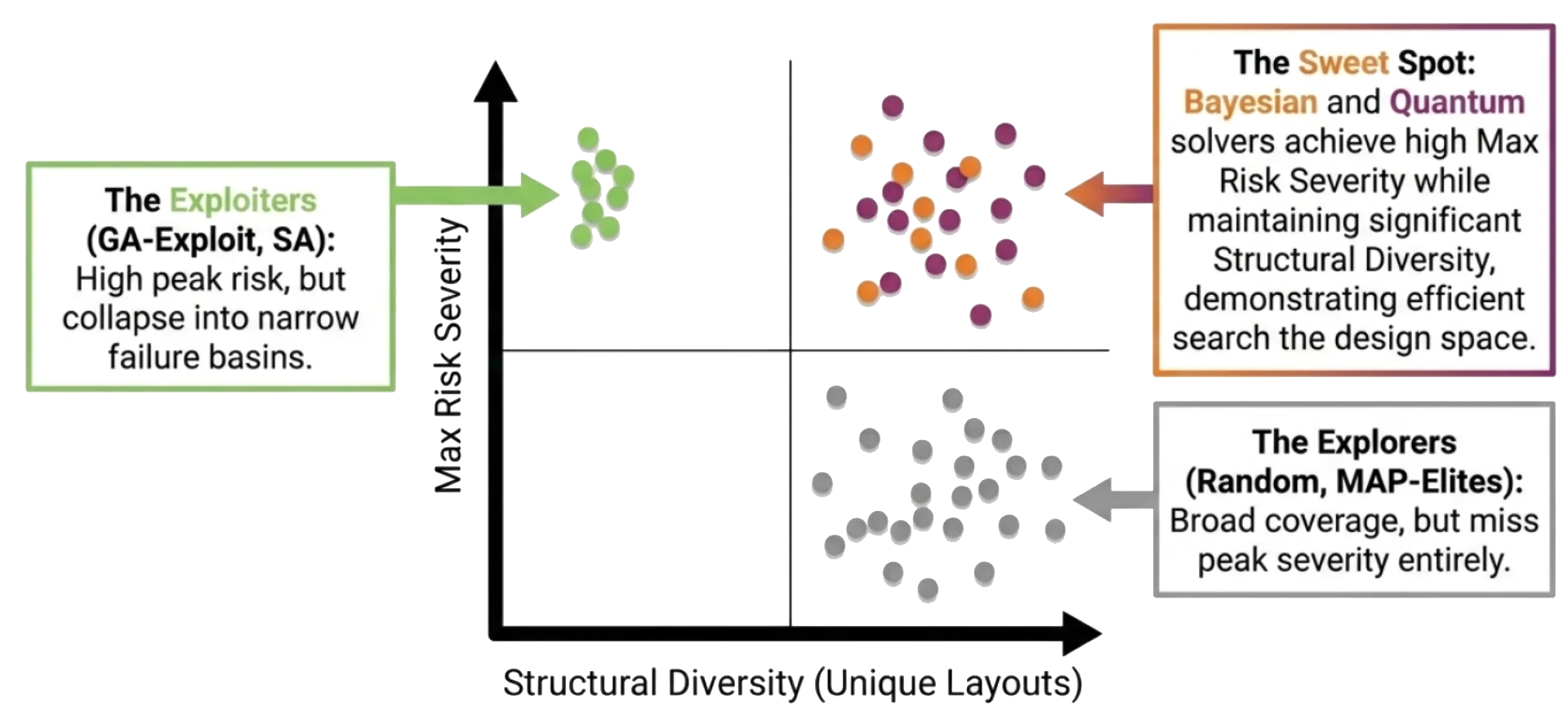
Figure 5. Solver complementarity for discovery of high risk and unique layouts
-
Predicting Future Risk:
Moving beyond mere discovery, we introduced a discrete abstraction of these failures into recognizable “risk modes.” Using the accumulated search data, we trained lightweight predictive regressors (such as Random Forest) and demonstrated that future document risk could be accurately predicted based solely on structural features, achieving an impressive R2 > 0.91. Further, the portfolio (taking the early-phase 200 discovered samples per solver) across all methods yields superior generalization compared to full discovery of any single solver with 1000 samples.
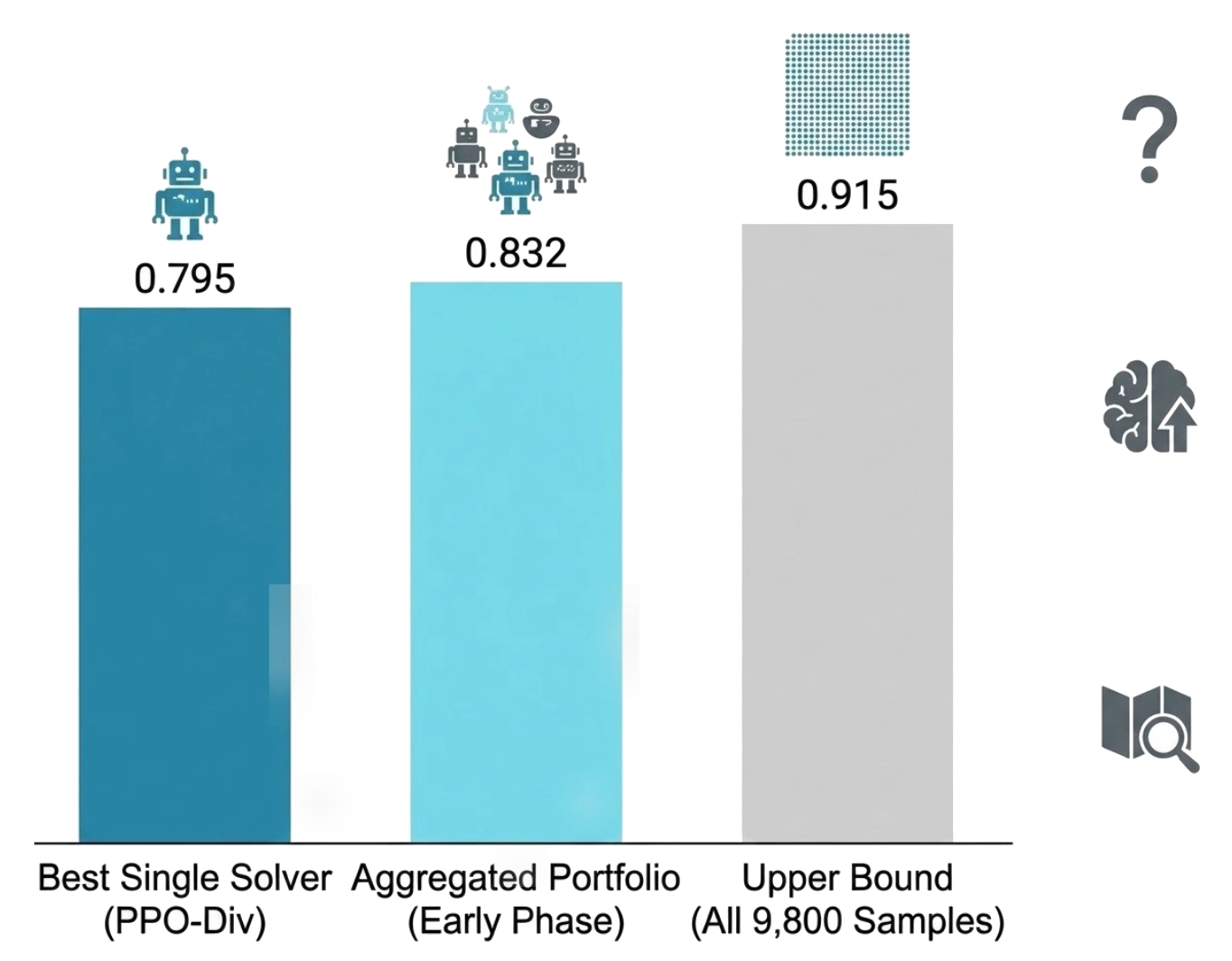
Figure 6. Regressor trained on early-phase portfolio of solvers > full run of a single solver
Why It Matters: Strategic Imperatives for Enterprise AI Leaders
Based on these findings, we recommend the following strategic shifts for AI engineering teams and business leaders aiming to scale IDP solutions:
-
Prioritize Diversity Over Severity in QA:
Shift your validation KPIs. Finding 50 distinct, moderate failure mechanisms is vastly more valuable for early-phase system hardening than finding one extreme, catastrophic failure.
-
Adopt Portfolio-Based Testing:
Abandon reliance on single optimization methods or static red-teaming for model validation. Incorporating a mix of evolutionary, learning-based, and quantum search strategies yields a vastly more comprehensive risk profile.
-
Leverage Anticipatory Risk Assessment:
The ability to predict document failure with high accuracy means enterprises can now proactively flag structurally problematic documents before they enter the processing pipeline, saving millions in downstream manual review and remediation costs.
-
Optimize Budget-Aware Validation:
Confronted with combinatorial explosion, we pivot from exhaustive coverage to budget-aware validation. By leveraging a diverse portfolio of solvers to dynamically navigate the search space, we maximize systemic risk discovery within a strictly constrained limit of 1,000 document iterations. This proves that high-impact risk coverage is achievable even under strict compute limitations when utilizing a complementary suite of search strategies.
Conclusion
As Intelligent Document Processing systems continue to ingest the world’s most critical unstructured data, we can no longer afford validation blind spots hidden within static datasets. By adopting Search-Based Software Testing and leveraging a complementary portfolio of solvers, we can transform model validation from a reactive guessing game into a proactive, predictive science.
While our current study focuses on structured IDP systems, the applicability of this search-based validation framework extends to broader document domains—such as complex legal contracts or medical imagery reports. We note that the efficacy of the solvers in new domains may depend on the definition of domain-specific risk features and the discovery of these risk feature schemas to reduce manual configuration requirements.
For those interested in the technical details, the full research paper, “Search-Based Risk Feature Discovery in Document Structure Spaces under a Constrained Budget,” is published at ACM GECCO’26.