How Agentic AI is Transforming Telecom from Reactive to Predictive

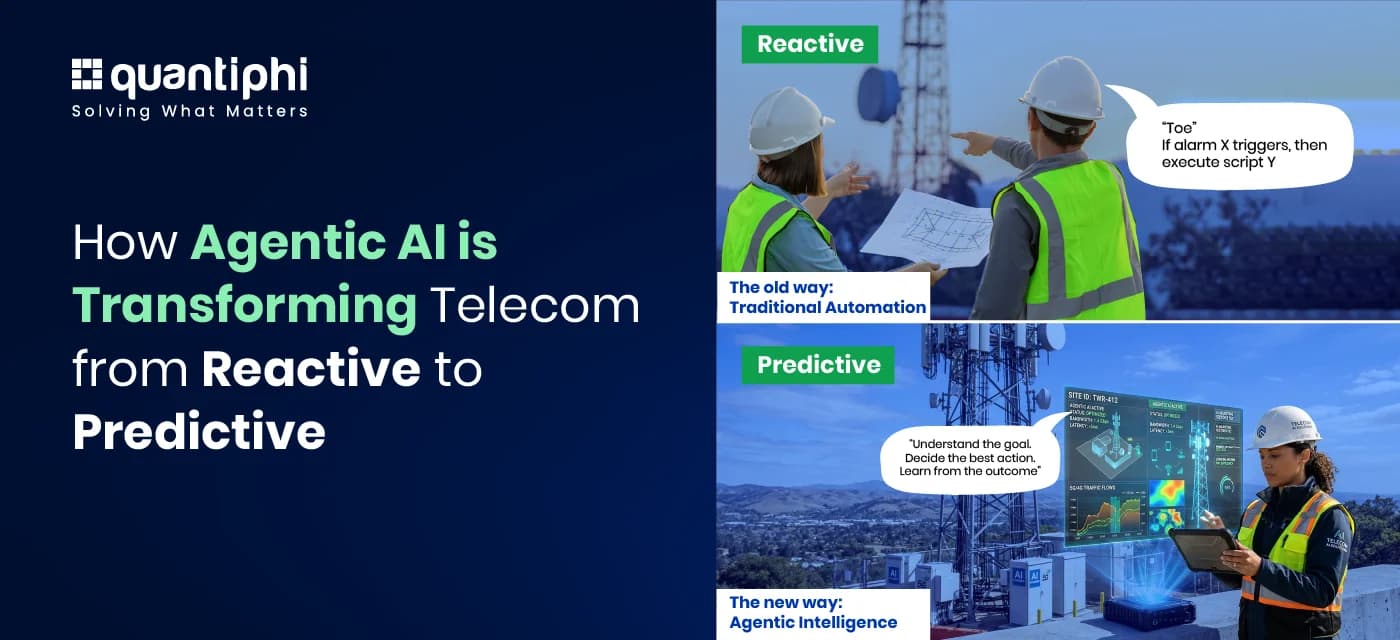
The telecom industry is shifting from reactive workflows to predictive, autonomous ecosystems, where networks don’t just respond, but anticipate and act. Agentic AI enables telecom operators to automate field operations, drive intent-based service fulfillment, and personalize the customer lifecycle. Explore the top use cases for Agentic AI in telecom and how it reduces operational overhead while maximizing network integrity.
The long-sought objective of a smarter, more predictive telecom network is no longer a future prospect; it is actively being realized today. We’re now seeing networks that heal themselves before an outage occurs, field technicians who arrive with AI-prescribed solutions, and fraud attempts being neutralized before the first dollar is lost. This is the tangible impact of Agentic AI, transforming telecom operations from reactive to truly predictive.
These intelligent systems move beyond task automation to intent interpretation and dynamic decision-making, bridging fragmented domains across networks, operations, and customer touchpoints to become autonomous ecosystems capable of self-optimization and predictive action.
Agentic AI for Telecom: From Fragmented Automation to Adaptive Intelligence
Telecom automation has historically relied on scripting, workflows, and rules-based orchestration, effectively acting as incredibly fast and precise robots. This approach has delivered value in areas such as back-office tasks, fault management, and provisioning for many years. They excel at repetitive tasks, follow workflows flawlessly, and never take coffee breaks. Yet when the unexpected happens such as a novel network configuration, an unprecedented service demand, or a complex multi-vendor failure, etc. these systems freeze, waiting for human intervention like digital deer in headlights.
This is where agentic AI fundamentally rewrites the playbook. Unlike traditional automation that asks “How do I execute this task?”, agentic systems ask “What outcome am I trying to achieve, and what’s the smartest way to get there?”
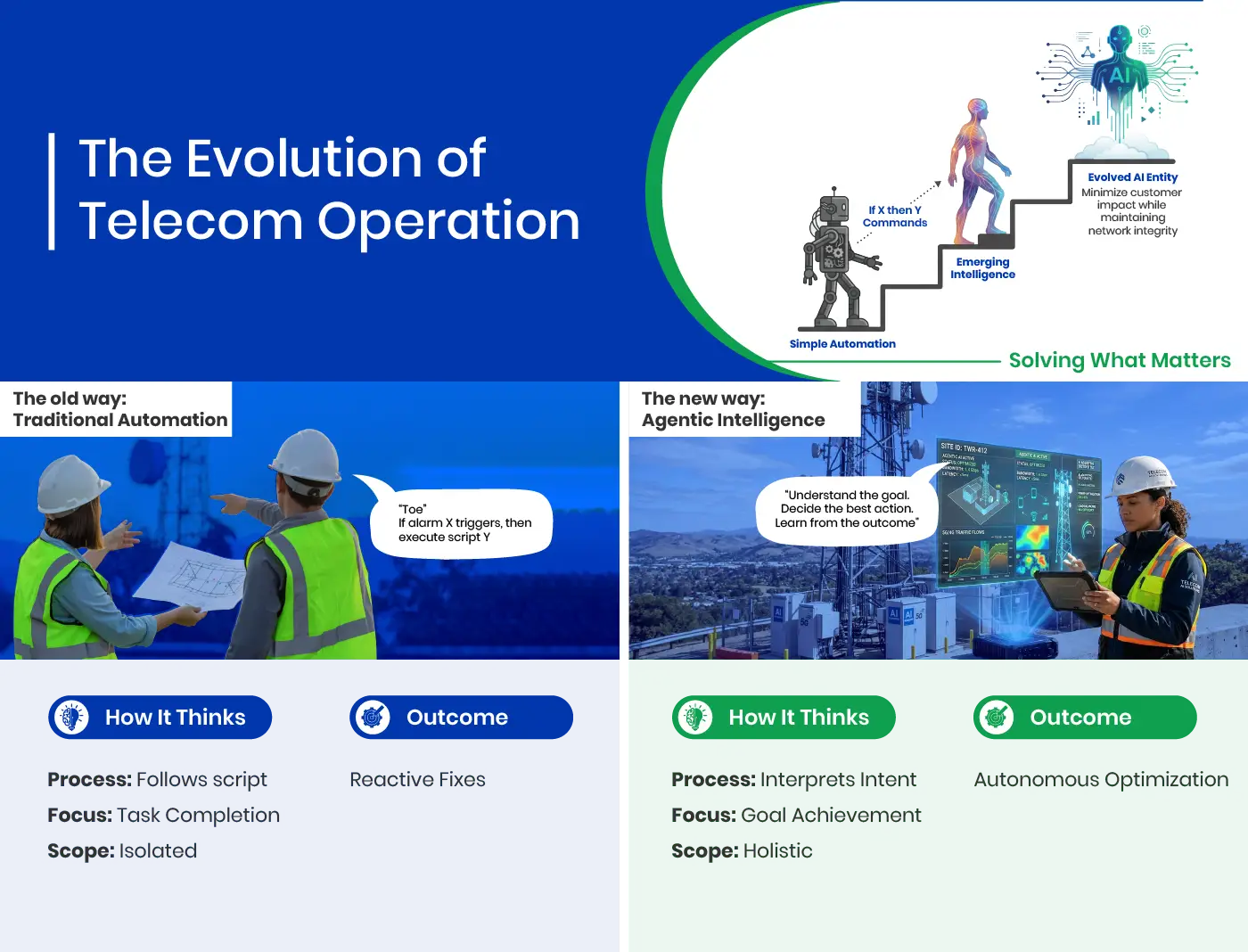
This shift from task completion to goal achievement represents the most significant operational evolution in telecom since the transition from circuit-switched to packet-switched networks.
Agentic systems, in contrast, are designed to:
- Understand business intent, not just execute pre-coded tasks
- Coordinate across disconnected domains like NOC, field ops, CX, and assurance
- Continuously learn and optimize based on feedback and evolving goals
Discover how Quantiphi’s custom Agentic AI solutions and GenAI Centers of Excellence can help you slash operational overhead, empower your field technicians, and unlock new telecom revenue streams.
What are the Use Cases for Agentic AI in Telecom?

-
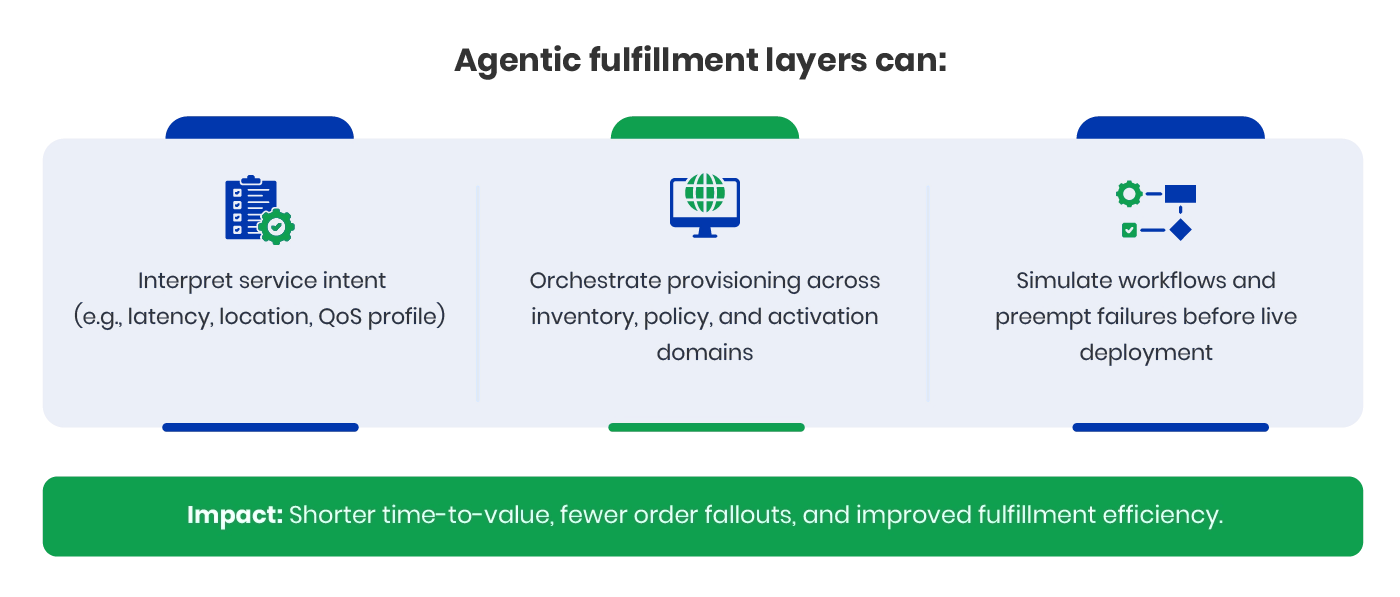
Intent-driven service fulfillment starting from order-taking to outcome-delivery
Remember when provisioning a new enterprise service meant weeks of coordination between multiple teams, each working from different playbooks? Agentic fulfillment systems have turned this multi-act drama into a seamless process.
Delivering differentiated services like enterprise-grade 5G slicing or rural broadband often requires bespoke provisioning logic.
-
How to automate telecom field operations using AI
Field service has always been telecom’s most human-intensive operation. Now, agentic systems are becoming the ultimate co-pilot for field technicians, transforming every service call into a data-driven mission.
Before a technician even leaves the depot, agentic systems have analyzed the customer’s service history, current network conditions, parts availability, and even traffic patterns to optimize the entire service journey. On-site, augmented reality guides provide real-time troubleshooting assistance, while the system continuously learns from each resolution to improve future interventions.
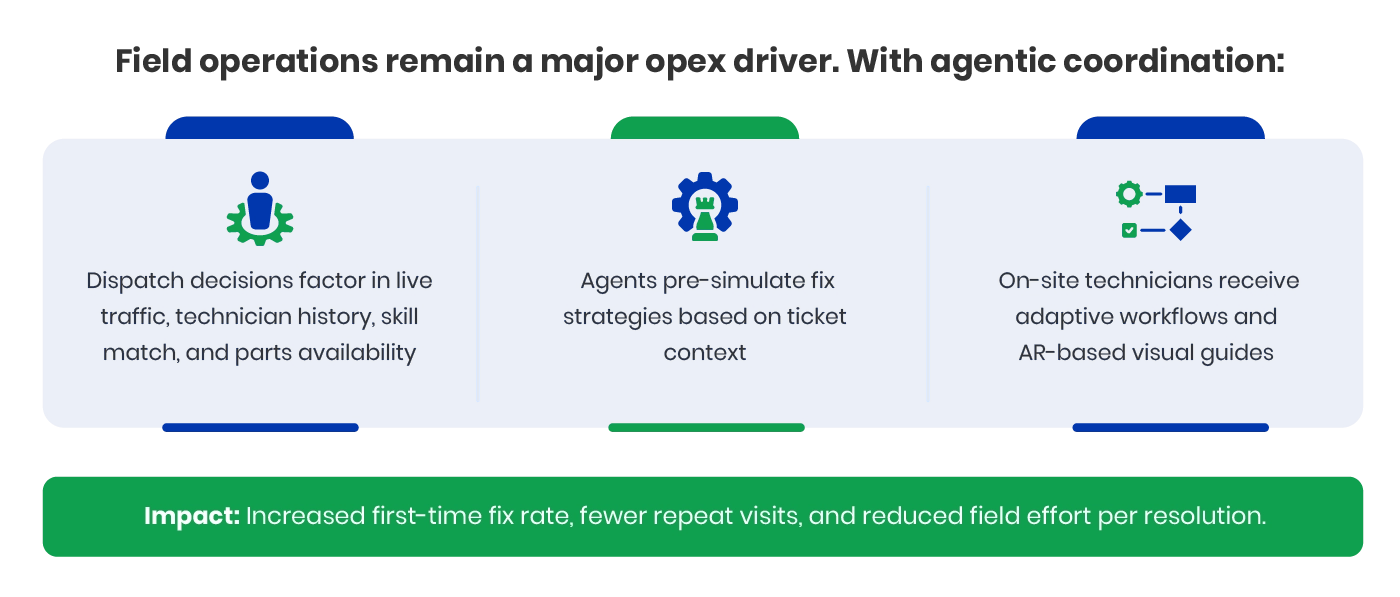
Increased first-time fix rates, fewer repeat visits, and reduced field effort. By empowering technicians with agentic workflows and real-time diagnostics, major operators are accelerating resolution times and reducing customer-reported issues by 25%.
-
AI-Native CX and lifecycle personalization anticipating needs before they’re expressed
Agentic systems are redefining customer engagement, shifting from reactive support to predictive, personalized experiences. These agents monitor hundreds of behavioral, network, and transactional signals to understand not just what customers are doing, but what they’re likely to need next.
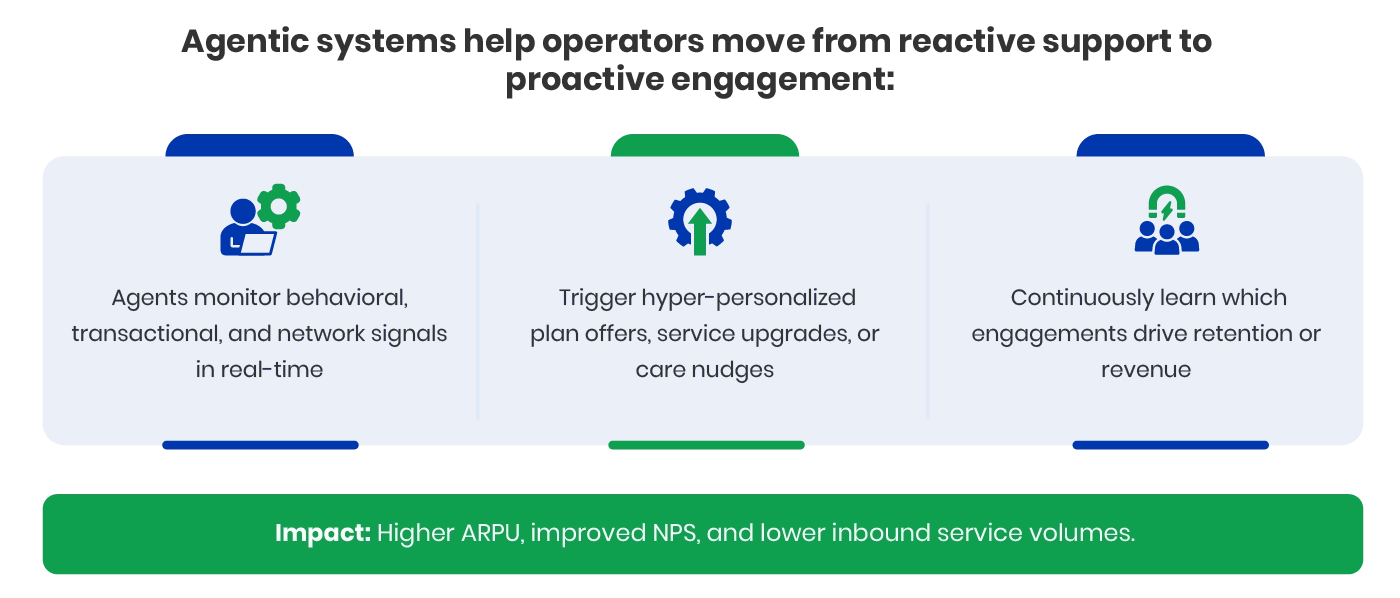
Higher ARPU and lower inbound service volumes. Gartner’s 2026 data shows 91% of service leaders are deploying AI to drive first-contact resolution, enabling over 80% of organizations to automate routine tasks and optimize their traditional agent workforce within 18 months.
-
Agentic Revenue Forecasting & Business Scenario Intelligence
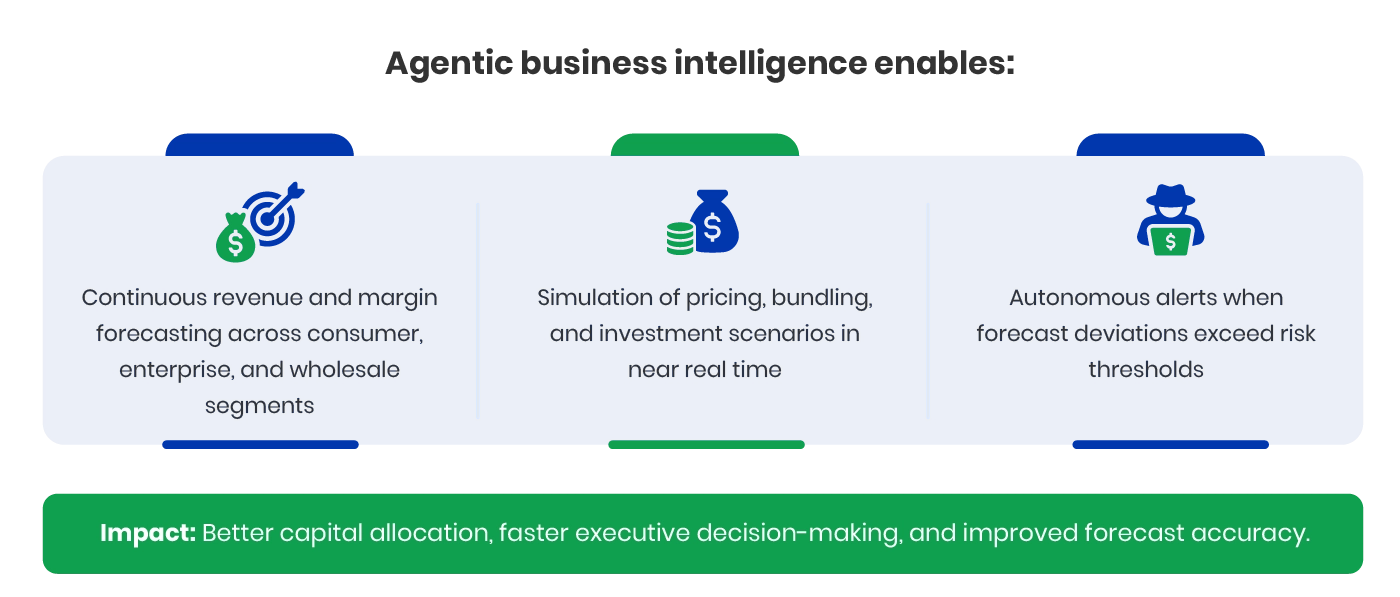
Telecom planning cycles have traditionally relied on static forecasts, lagging indicators, and manual assumptions. Agentic systems are transforming this by acting as a living business model, continuously recalibrated by real-world signals.
These systems ingest network usage, customer behavior, pricing actions, partner performance, and macro signals to anticipate revenue and margin shifts before they appear in financial reports.
-
Real-time security and revenue integrity operates like a digital immune system
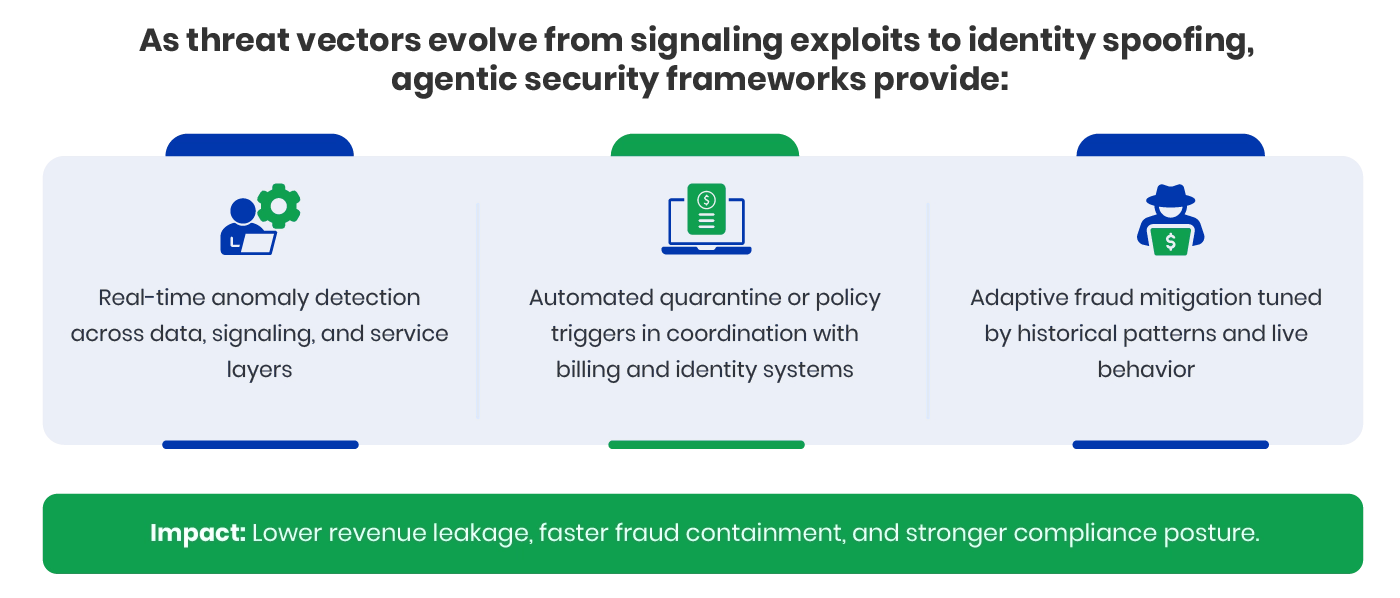
In cybersecurity, the difference between detection and prevention can mean millions in revenue protection. Agentic security systems operate like a digital immune system, continuously detecting, learning, and adapting to threats in real time. These systems don’t just identify anomalies but they also understand context, assess risk levels, and implement graduated responses that balance security with service continuity.
A Path Toward Self-Evolving Telecom Operations
The telecom industry stands at an inflection point. Networks are becoming more complex, customer expectations are rising exponentially, and competitive pressures demand both operational excellence and innovation velocity. On the other hand, the traditional approaches such as hiring more analysts, adding more monitoring tools, creating more processes, etc. are reaching their limits.
As telecom networks continue to virtualize, scale, and diversify, the operating model must evolve too. Agentic AI provides a pragmatic path forward while ensuring it’s not replacing the teams or systems, but to enable:
- Faster, data-driven decisions across the value chain
- Reduced operational overhead through intelligent coordination
- Agile responses to shifting customer needs, threats, and market demands
Quantiphi is helping leading telecom enterprises move from experimentation to production-scale agentic AI adoption and GenAI Centers of Excellence (CoE). Our solutions are designed to be bespoke, modular, and governed systems aligned with real-world operational complexity for enterprise-grade businesses.
At Quantiphi, we turn the promise of agentic AI into an operational reality for telecom leaders. Schedule a call to know more!
Wrapping Up!
The first wave of AI gave the telecom industry a better rearview mirror, enabling analysis of past performance.Agentic AI changes that. It puts an intelligent, autonomous decision-maker in the driver’s seat. If AI 1.0 was about seeing the board, Agentic AI is about making the winning move.
The Operational Leap: The industry goal for agentic systems is to automate 80% of service fault diagnoses. Doing so enables real-time responses to fault queries, ultimately leading to a 60% improvement in operations and maintenance efficiency.
This marks the dawn of the sentient, self-driving network that represents a fundamental shift in how telecom companies will operate, adapt, and compete. The transformation is inevitable and it’s here. The networks of tomorrow won’t just connect people and devices; they’ll think, learn, and evolve. The only question is: are you ready for it?