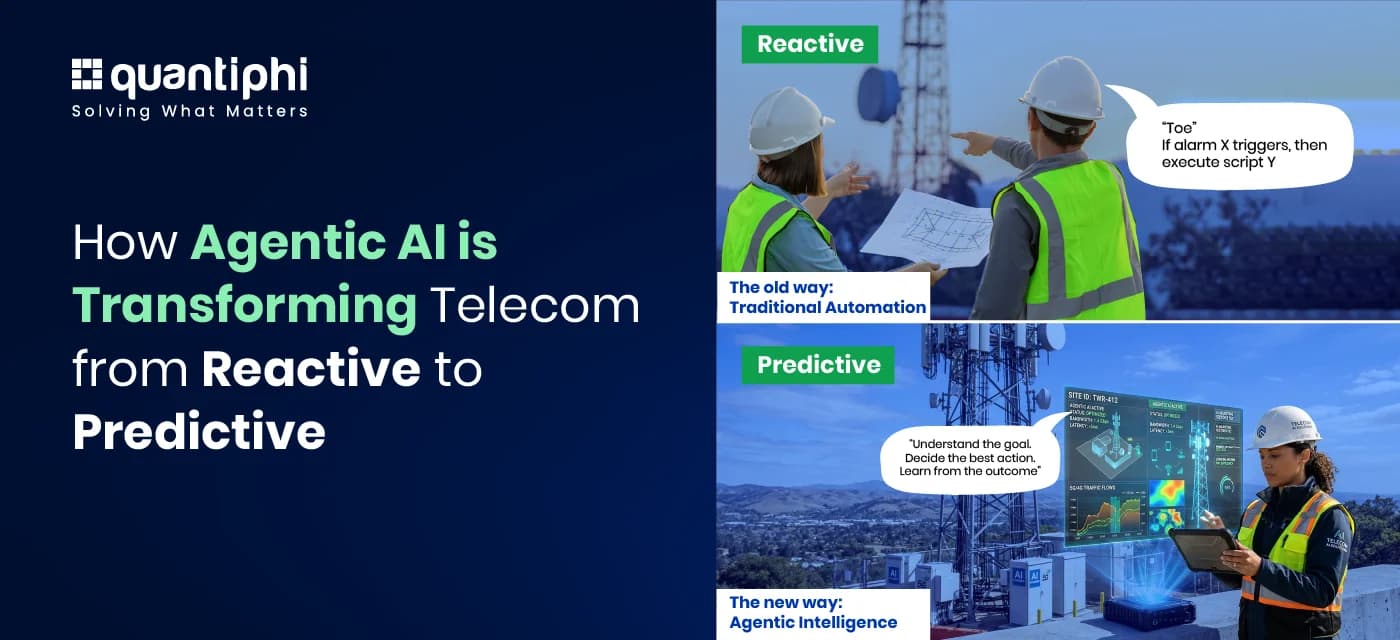
Industrializing Intelligence: Reimagining Life Sciences with the AI Factory Model

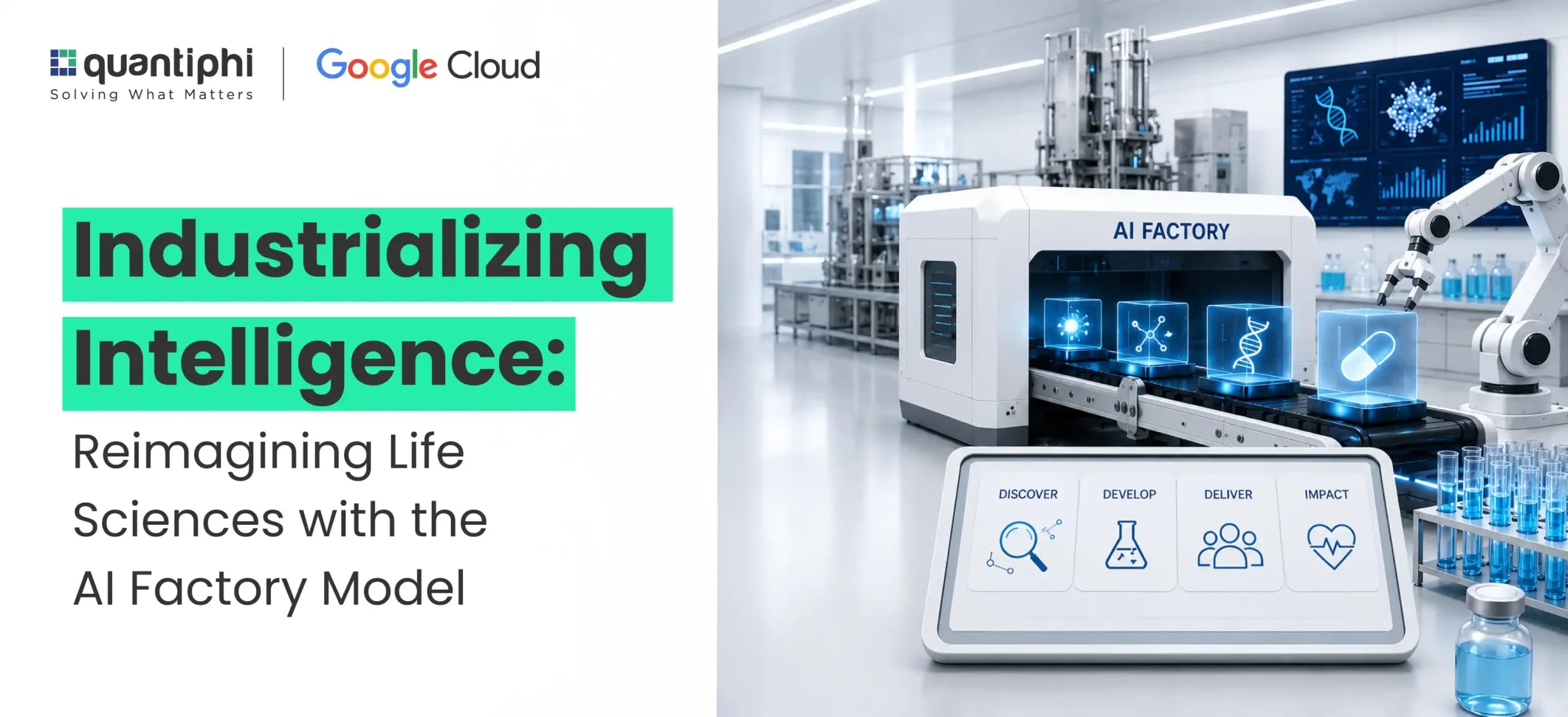
The life sciences industry is undergoing a critical shift, moving away from isolated technological experiments toward organization-wide, AI-driven transformation. To escape pilot purgatory and scale innovation without incurring unmanageable overhead, forward-thinking biotech enterprises are adopting an “AI factory” model. This approach combines strong governance, a deliberate cultural change management, and strategic performance metrics to successfully embed artificial intelligence into daily operations and accelerate the delivery of patient outcomes.
The gap between completing a successful artificial intelligence pilot and operating as a truly AI-powered enterprise is where many organizations stall. The initial excitement of experimenting with emerging technologies often leads to fragmented efforts that fail to deliver enterprise-wide value. According to recent industry research, the phenomenon known as “pilot purgatory” remains a massive hurdle, with data showing that up to 95% of enterprise AI pilots fail to deliver measurable results or cross the chasm into full-scale production.(1) Often, this is not because the technology itself is flawed, but because it is treated as an isolated IT experiment rather than a core component of a broader business strategy.
However, the blueprint for overcoming this hurdle is becoming clear: transitioning from small incubator teams to a scalable, industrialized AI framework. This pivotal shift is detailed in depth in “Phi Moments Podcast Episode 5 – The AI Factory Transformation.“ In this episode, Biplab Mahadani, Practice Head – Global Industry Solutions at Quantiphi, speaks with Christopher Colucci, Vice President – Information Technology at Insmed Incorporated, to discuss how the company successfully engineered its AI-first roadmap.
As Christopher explains, organizations often begin with incubator teams of experienced AI engineers focused on testing, learning, and delivering quick wins on simple use cases before attempting to scale. This focused, early-stage testing allows organizations to validate technical capabilities rapidly without overcommitting resources. But the real challenge emerges when it is time to move those successful proofs-of-concept across the enterprise.
Listen to the full podcast episode on YouTube here
Watch or Listen on Your Favorite Platform:


The Shift to the AI Factory Model
Emerging organizations do not always have the luxury of hiring massive, dedicated AI teams to build out every idea. The solution to this resource constraint is the “AI factory” model.
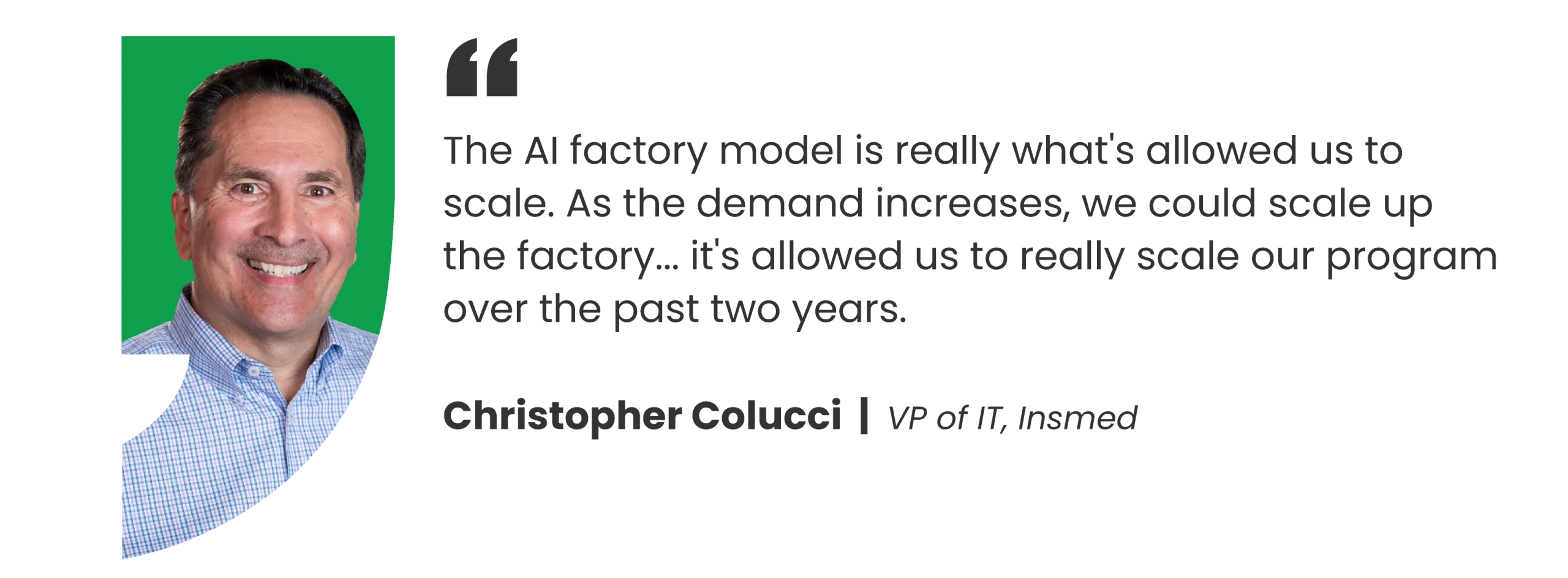
This operational framework acts as a centralized, automated system designed to rapidly and reliably build, test, and deploy AI models across the organization, effectively turning custom model creation into a repeatable production line. This allows a company to flex its resources efficiently, scaling the factory up as demand increases and scaling it back down when necessary. By treating AI implementation as an industrialized process rather than a series of one-off projects, organizations can safely deploy dozens of AI applications across the enterprise within a matter of years.
Furthermore, the factory model directly addresses the infrastructure bottlenecks that often kill pilot programs. Rather than wrestling with fragmented “data spaghetti” where biological data is trapped in disconnected legacy laboratory systems and inconsistent formats, the AI factory relies on centralized, high-performance infrastructure and reliable Machine Learning Operations (MLOps) pipelines. This ensures that as an organization moves from a small test model to a large-scale deployment, the underlying data remains clean, governed, and ready for action, minimizing the technical drift that plagues poorly scaled AI workflows.
Governance as an Accelerator
An influx of enthusiasm means a surplus of ideas, but it is impossible to execute every proposal that comes across the desk. To filter the noise, successful AI initiatives rely on an evolving governance process. Ideas are typically submitted alongside a simple, one-page business case and evaluated through three distinct lenses:
- Transformative Potential: Is the idea a true game-changer for the business, capable of fundamentally altering how operations are conducted?
- Productivity: Does it make employees demonstrably more productive and eliminate bottlenecks?
- Automation: Can it automate mundane, repetitive tasks to free up human talent for value-added activities?
These proposals are vetted by cross-functional operating committees representing legal, compliance, quality, and information security. This ensures that rapid innovation does not compromise strict industry guardrails, particularly in highly regulated fields like biotech where patient data and compliance are paramount. In fact, proper governance is essential for survival; without it, organizations struggle with data privacy risks and opaque ROI frameworks that stall executive buy-in. By building safety guardrails directly into the evaluation process, the AI factory model turns governance from a traditional bottleneck into a strategic accelerator, moving approved, funded projects rapidly into production. If a project requires advanced funding or deeper strategic review, it is escalated to a specialized AI council composed of senior leadership to ensure alignment with top-down mandates.
Defeating “AI Theater” Through Adoption
Even with the best engineering talent in the world, technology that goes unused is nothing more than “AI theater”. Adoption must be treated as a massive change management initiative rather than a simple IT rollout. Recent statistics highlight just how critical this is: while AI tools can increase average productivity by 14% across industries, novice workers can experience up to a 34% performance jump when properly equipped and trained to use AI to bridge skills gaps.(2) If users do not embrace the tools, the investment is entirely wasted.
To embed AI into the cultural DNA of the enterprise, organizations are deploying robust educational programs and establishing ambassador networks. These ambassadors-employees who possess a strong aptitude and interest in innovation, help share success stories, analyze failures, and spread collaborative ideas across different departments. This focused effort drives a critical paradigm shift: moving away from a purely bottom-up generation of ideas to a culture where functional leaders actively shape their own AI roadmaps based on real-world needs. When leaders ask, “What can AI do for my function?”, the enterprise transitions from merely testing technology to actually transforming how work is accomplished.

Defining True Value
In life sciences, the ultimate North Star for all AI initiatives remains clear: getting products to patients faster. While traditional metrics like revenue and direct cost savings are important, true value is often found in strategic impact. Success is measured by the ability to drastically reduce the time it takes to complete critical regulatory workflows. For example, reducing a specific compliance or data-gathering task from 35 days down to just two hours can have a massive cascading effect on the speed of drug development and regulatory filings.
Value is also measured by the capacity to reapply saved employee hours to higher-level work, turning automated efficiencies into strategic advantages. Furthermore, the true hallmark of an industrialized AI program is reusability. Instead of building disconnected, single-use solutions, the AI factory focuses on developing models and workflows that can be successfully reused across entirely different departments and use cases, compounding the return on investment over time.
Empowering the Next Generation of Biotech Innovation
Scaling artificial intelligence from a promising pilot to an enterprise-wide reality requires more than just internal alignment and cultural shifts; it requires the right technology partners to bring the vision to life.
The strategic partnership between Quantiphi and Google Cloud is specifically designed to accelerate this AI-powered innovation in the life sciences sector. As a premier delivery partner for Google Cloud’s advanced healthcare and life sciences solutions, Quantiphi combines deep, specialized industry expertise with cutting-edge, scalable cloud infrastructure. Together, we help enterprises operationalize agentic AI, streamline complex drug discovery workflows, and deploy digital engineering frameworks that are built for strict regulatory compliance and speed. By leveraging the power of this partnership, organizations can safely navigate the complexities of data modernization, establish their own robust AI factories, and move confidently from pilot purgatory to production-grade intelligence.
Ready to move beyond pilot purgatory and build an AI-native systems that modernize platforms, transform engagement, and deliver outcomes you can quantify? Contact Quantiphi today to learn how our solutions and the AI factory model can accelerate your transformation journey.