Agentic AI in Healthcare: Enabling Intelligent Care and Operations

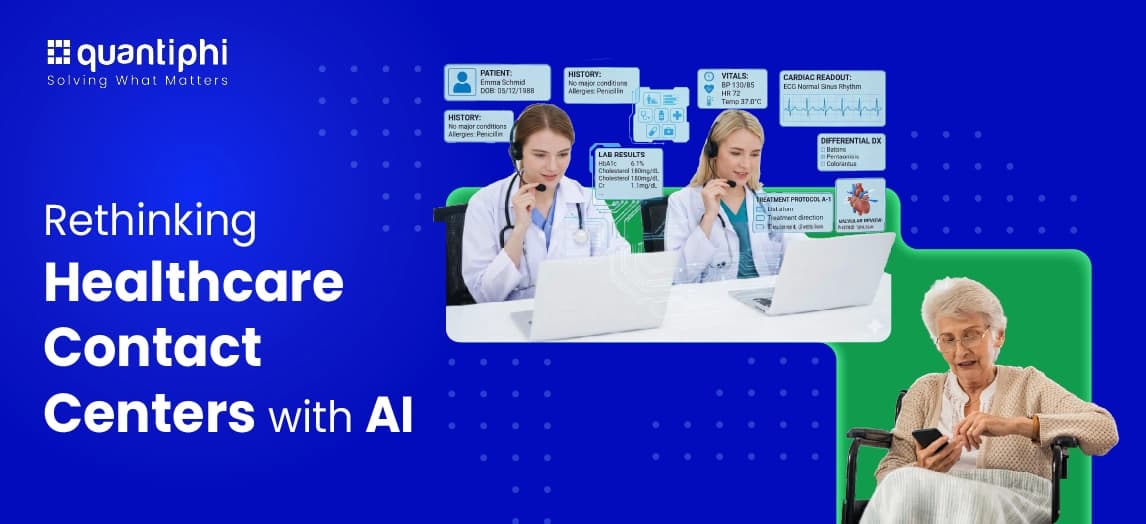
What if AI could think like a teammate—understanding context, anticipating needs, and acting with purpose across clinical and operational settings? Agentic AI makes that possible, empowering payers and providers to move from reactive workflows to intelligent, adaptive systems that enhance care delivery and improve outcomes.
Agentic AI systems aren’t just task-based tools. They perceive context, reason through complexity, and act independently to achieve defined goals. Unlike traditional automation, these agents adapt in real time, collaborate with care teams, and orchestrate workflows that evolve with patient and organizational needs.
collaborate with care teams, and orchestrate workflows that evolve with patient and organizational needs.
In an industry strained by clinician burnout, complex data, and rising expectations, Agentic AI is emerging as a transformative force. This blog explores how it works, where it’s already delivering value, and how healthcare leaders can harness it to drive smarter, safer, and more efficient care.
What is Agentic AI?
Agentic AI refers to artificial intelligence systems designed to operate with autonomy, purpose, and contextual awareness. Unlike traditional automation, which executes predefined tasks, Agentic AI agents can make goal-directed decisions, adapt to new information in real time, and interact with other systems or humans to optimize outcomes. These agents continuously learn, respond to complex environments, and act independently to support workflows and improve care delivery.
In healthcare, this means digital teammates that can interpret unstructured data, coordinate across departments, and respond proactively to patient needs—all while maintaining compliance, safety, and transparency.
From Automation to Intelligence: How Agentic AI is Reshaping Healthcare Operations
Enabling Autonomous Action
Agentic AI systems go beyond task automation, offering context-aware decision-making and dynamic workflow orchestration. This translates to unprecedented efficiency and responsiveness in both clinical and administrative healthcare functions.
- Adaptive Execution: Agents carry out complex tasks—like summarizing patient histories or reconciling EHR entries—based on evolving inputs and context.
- Intelligent Orchestration: AI connects siloed systems, teams, and data to enable coordinated action—think discharge planning, prior authorization, or referral management.
- Continuous Learning: These systems improve over time, using feedback from users and outcomes to refine their decisions.
Why Healthcare Needs Agentic AI Now
The case for Agentic AI is rooted in urgency. Health systems are under strain from cost pressures, workforce shortages, and information overload.
Physicians spend up to two hours on administrative tasks for every hour of patient care, with EHR-related duties alone accounting for 40% of clinician burnout. Agentic AI can alleviate these burdens, shifting time and energy back to patients and outcomes.
Agentic AI helps address these challenges head-on:
- Administrative Relief: Agents manage form generation, claims validation, and scheduling, freeing human teams to focus on complex cases.
- Risk Detection: Agents surface early warning signs, analyze patient risk factors, and suggest timely interventions.
- Data Prioritization: With inputs from EHRs, wearables, and unstructured notes, agents highlight critical insights.
Real-World Impact: Agentic AI Across the Healthcare Ecosystem
Agentic AI is already reshaping clinical care, operations, and patient experience—whether at the bedside, in the back office, or across payer networks. Here’s how it’s delivering tangible results today:
For Providers
- Clinical Decision Support: Real-time recommendations during diagnosis and treatment.
- EHR Streamlining: Agents automate data entry and reconciliation.
- Virtual Nursing Assistants: Self-service tools triage symptoms and guide patients.
- Post-Discharge Engagement: Personalized follow-ups and check-ins improve adherence.
- Clinical Trial Execution: Agents manage recruitment and safety monitoring.
For Payers
- Claims Automation: AI processes clean claims instantly and flags anomalies.
- Prior Authorization: Agents gather evidence and submit pre-auths.
- Member Support Agents: Personalized virtual assistants help with benefits and care navigation.
- Risk Stratification: Analyze SDOH and medical records to assess risk more accurately.
Impact Delivered
- Faster decision cycles
- Reduced manual workload
- Higher member/patient satisfaction
- Improved data-driven outcomes
Quantiphi’s Approach to Building Agentic AI Solutions in Healthcare
At Quantiphi, we help healthcare organizations move from AI potential to measurable impact. We bring deep industry expertise and proven success across 2,500+ AI implementations to develop responsible, scalable Agentic AI solutions that integrate seamlessly into existing clinical, operational, and administrative workflows.
Our work is built on strong cloud partnerships with AWS, Google Cloud, NVIDIA, and Microsoft Azure, and is guided by our commitment to ethical AI and regulatory readiness.
We don’t just implement technology—we co-create solutions that solve what matters, accelerating innovation while safeguarding trust.
Our Core Pillars for Agentic AI in Healthcare:
- Responsible AI Frameworks: Emphasize commitment to ethical AI, bias mitigation, and transparency.
- Deep Healthcare Domain Expertise: Highlight understanding of regulations (HIPAA, GDPR), clinical workflows, and industry challenges.
- Scalable Cloud-Native Architectures: Focus on building robust, high-performance systems.
- Human-in-the-Loop Design: Stress that agents augment, not replace, human intelligence.
- Accelerated Deployment & Measurable ROI: Mention rapid piloting and tangible business outcomes.
Learn more about Quantiphi’s Agentic AI capabilities and explore our healthcare success stories.
Core Technologies Powering Agentic AI in Healthcare
- Advanced Machine Learning: Reinforcement learning, deep learning, LLMs, and federated learning power adaptive, privacy-preserving decision-making.
- Natural Language Processing & Generation: Enables understanding of unstructured text and personalized communication.
- Real-Time Data Streaming & Event Processing: Supports proactive, in-the-moment interventions.
- Cloud and Edge Computing: Combines scalable cloud training with low-latency, on-device inference.
- Multi-Agent Systems & Orchestration Platforms: Coordinates tasks across diagnostics, scheduling, and documentation.
Future Outlook: Where Agentic AI is Headed
In the near future, Agentic AI will become foundational to both payer and provider operations — not as isolated tools, but as intelligent collaborators embedded across workflows.
- Integrated, Intelligent Operations
AI agents will manage end-to-end tasks in clinical care, claims processing, and member engagement, operating as digital teammates that augment human decision-making. - Real-Time, Multimodal Data Use
Agents will continuously interpret data from EHRs, wearables, imaging, genomics, and sensors — providing a dynamic, personalized understanding of patient health. - Predictive & Personalized Care
Digital twins will simulate individual treatment responses and disease trajectories, helping clinicians and payers make smarter, faster, and more proactive decisions. - Global and Always-On
Around-the-clock virtual agents will expand access, facilitate global care coordination, and provide real-time support for patients and members — regardless of geography. - Ethical AI Becomes Standard
Industry-wide frameworks for transparency, bias mitigation, and accountability will emerge, with third-party certification becoming a core requirement for AI tools in healthcare.
Strategic Imperatives for Healthcare Leaders: Deploying Agentic AI Effectively
Agentic AI has the potential to transform healthcare — but only if implemented with clarity, oversight, and alignment. Here’s a practical roadmap for leaders navigating the shift.
-
Prioritize Use Cases That Align with Business Goals
Don’t start with the tech. Start with the problem. Identify high-impact areas where Agentic AI can directly support strategic objectives — whether it’s reducing administrative overhead, improving clinical throughput, or enhancing member engagement.
-
Assess Data Infrastructure and Interoperability
Clean, real-time data is the lifeblood of any AI agent. Audit your existing systems for data silos, inconsistencies, or integration gaps. Invest in interoperability layers that let agents pull from multiple sources reliably and securely.
-
Engage Stakeholders and Build Internal Champions
Bring in clinicians, care managers, operations, and IT teams early. Identify internal advocates who can test early pilots, share feedback, and build trust across departments. Adoption increases when people feel ownership.
-
Design for Safe Collaboration: Oversight, Escalation, Trust
Agentic AI doesn’t mean autonomous AI without guardrails. Ensure all systems include human-in-the-loop functionality, escalation logic, and explainability — so users can override or question agent decisions with confidence.
-
Pilot with Clear Metrics, Then Iterate
Start small. Launch a pilot with defined KPIs around accuracy, efficiency, user satisfaction, or ROI. Use feedback loops and quantitative results to improve before scaling. Focus on proof, not perfection.
-
Establish Governance for Ethics, Compliance, and Transparency
Form a cross-functional governance group to oversee data privacy, bias monitoring, regulatory compliance (e.g., HIPAA, CMS), and third-party validation. Create protocols for continuous auditing and accountability.
-
Support Adoption with Change Management and Training
AI doesn’t just change workflows — it changes culture. Invest in clear communication, role-specific training, and support resources. Frame Agentic AI as a collaborator, not a replacement.
Ready to explore Agentic AI for your healthcare organization? Quantiphi’s experts are here to help.
Conclusion: The Future of Health is Agentic
Agentic AI is not about replacing healthcare professionals—it’s about supporting them with intelligence that enhances every decision, action, and workflow. By applying AI that thinks and acts in context, we can make healthcare more responsive, more efficient, and more human.
Quantiphi is already helping leading enterprises build Agentic AI solutions that deliver measurable outcomes. Let’s imagine what AI can help you do—then build it, together.
Agentic AI in Healthcare FAQs:
What are the key benefits of Agentic AI?
Agentic AI delivers measurable value across clinical, operational, and administrative domains, including:
- Operational Efficiency: Automates time-consuming, repetitive tasks across claims, scheduling, triage, and more.
- Improved Outcomes: Enhances clinical decision-making with real-time, data-driven insights.
- Cost Reduction: Lowers administrative burden and reduces unnecessary procedures or errors.
- Personalized Care: Tailors treatment and engagement strategies based on patient-specific data.
- Data Integration: Seamlessly pulls from EHRs, wearables, imaging, and unstructured data to inform decisions.
- Clinician Enablement: Frees up providers to focus on human connection and high-value care.
How is Agentic AI different from traditional AI?
Traditional AI systems are typically rules-based and task-specific — they analyze data and return outputs within a fixed logic.
Agentic AI goes further:
- Acts with purpose, pursuing defined goals in dynamic environments.
- Adapts to new data in real time and modifies its approach as needed.
- Collaborates with humans, escalates when uncertain, and explains its reasoning.
It’s not just smarter — it’s more autonomous, flexible, and useful in complex healthcare workflows.
Is Agentic AI only for large healthcare enterprises?
No. While large systems may see broader deployment, Agentic AI is modular and scalable.
- Smaller practices or regional payers can implement focused solutions (e.g., pre-auth automation, digital front door agents) without needing full-scale transformation.
- Cloud-native platforms and partner ecosystems make it easier than ever to start small and grow based on ROI.
Will Agentic AI replace human jobs?
No — and it shouldn’t.
Agentic AI is designed to augment, not replace.
- It handles repetitive, low-value tasks like documentation, scheduling, and claims routing.
- This frees up staff for more complex, human-centric work — whether it’s clinical care, case management, or patient communication.
It’s a digital co-worker, not a replacement.
How do healthcare organizations ensure ethical use?
Responsible adoption starts with governance by design:
- Bias Mitigation: Train and test models using diverse, representative datasets.
- Transparency & Explainability: Ensure outputs are interpretable by clinicians, patients, and regulators.
- Human Oversight: Build in escalation paths, auditability, and the ability to override.
- Compliance Alignment: Design for HIPAA, GDPR, and relevant regional regulations.
Ultimately, Agentic AI should operate with the same ethical rigor expected of any healthcare professional or system.