What Are AI Agents?

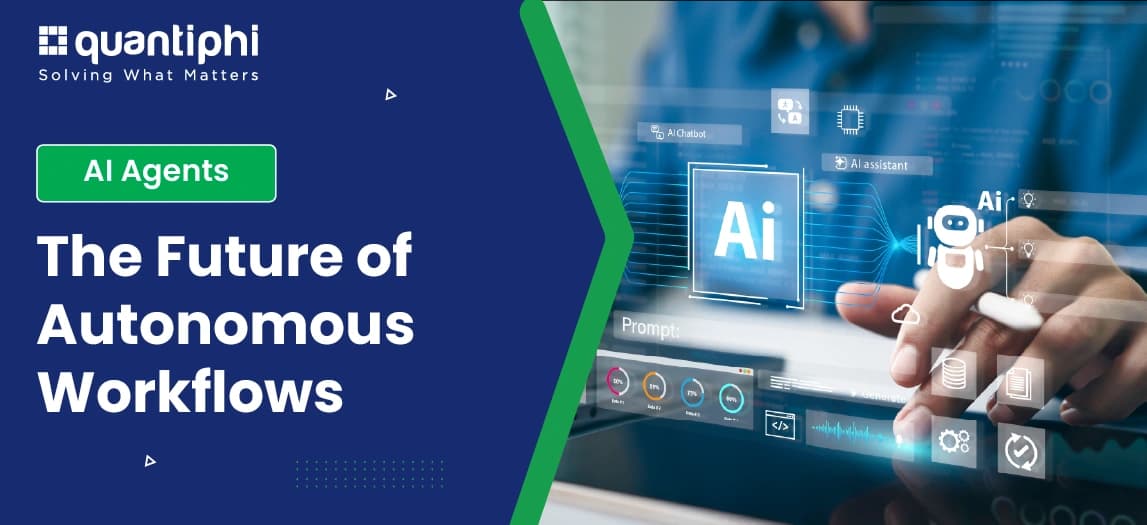
Imagine a world where your customer service is powered by an AI that doesn’t just answer questions but anticipates them. That’s the promise of AI agents. These intelligent, autonomous systems don’t just execute commands—they think, adapt, and act based on dynamic environments.
Unlike traditional AI models that require explicit user commands, AI agents operate dynamically by planning workflows, utilizing external tools, and adapting their strategies based on real-time inputs. They can process multimodal information—text, audio, video, and code—allowing them to handle a wide range of tasks across various industries.
AI agents are commonly used in enterprise applications such as customer support, software development, IT automation, and business process optimization. By leveraging generative AI and large language models (LLMs), they can understand context, engage in step-by-step reasoning, and collaborate with other AI agents to complete complex workflows.
For instance, a customer query about a delayed shipment might trigger an AI agent to scan the order database, flag a possible delay, send a notification to the customer, and escalate the issue to a human only if needed—all in seconds.
AI agents represent the next evolution of AI-powered workflows, offering businesses unparalleled efficiency, intelligence, and adaptability. By leveraging generative AI and large language models (LLMs), these agents can understand context, engage in step-by-step reasoning, and collaborate with other AI agents—paving the way for more autonomous, intelligent enterprise operations.
How AI Agents Work?
Agentic AI functions by combining memory, tools, goals, and reasoning powered by large language models (LLMs).
Key Components of AI Agents
Persona
Each AI agent has a distinct persona, shaping how it communicates and behaves. Over time, it adapts based on experience and interactions.
Memory
AI agents retain context using different types of memory:
- Short-term: Handles immediate interactions.
- Long-term: Stores historical data.
- Episodic: Remembers past interactions.
- Consensus: Shares knowledge among agents.
Tools
AI agents use various tools to gather information, process data, and control systems. These tools can be physical, graphical, or program-based, enabling agents to complete complex tasks.
Model
Large Language Models (LLMs) power AI agents, allowing them to understand, reason, and generate responses. They act as the “brain,” while other components guide decision-making and actions.
AI Agents Process
-
Set Goals
AI agents break down user instructions into actionable steps.
-
Gather Information
They pull data from logs, online sources, or other AI models.
-
Execute Tasks
They complete tasks step by step, adjusting as needed.
-
Learn & Adapt
AI agents refine their performance through experience and feedback.
Workflow
-
Perception & Data Collection
AI gathers insights from interactions and external sources.
-
Decision-Making
It analyzes data to determine the best response.
-
Action Execution
The agent performs the necessary task, whether answering a question or processing a request.
-
Continuous Learning
It improves over time, ensuring better accuracy and relevance.
By following this structured approach, AI agents automate tasks, make smarter decisions, and enhance efficiency across various applications.
Types of AI Agents
AI agents can be categorized based on their level of intelligence, capabilities, and the complexity of tasks they can perform. These agents operate in diverse environments, from simple automation to complex decision-making systems. Below are the primary types of AI agents:
1. Simple Reflex Agents
Simple reflex agents function based on predefined rules and current percepts. They do not store past experiences or learn from them, making them effective in fully observable environments but limited in adaptability.
Example: A thermostat that turns on heating when the temperature drops below a set threshold.
2. Model-Based Reflex Agents
These agents maintain an internal model of the world to handle partially observable environments. By using past percepts, they make more informed decisions compared to simple reflex agents.
Example: A robot vacuum that maps its environment to avoid repeatedly cleaning the same area.
3. Goal-Based Agents
Goal-based agents go beyond reflexive actions by considering future consequences. They use search and planning to determine the best sequence of actions to achieve a specific goal.
Example: A GPS navigation system that calculates the fastest route to a destination based on traffic conditions.
4. Utility-Based Agents
These agents optimize actions based on a utility function, selecting the best possible outcome from multiple options. They are ideal for complex decision-making scenarios where trade-offs are involved.
Example: A ride-sharing app that assigns a driver based on distance, price, and estimated time of arrival.
5. Learning Agents
Learning agents improve over time by interacting with their environment and adjusting their behavior based on feedback. They typically include a learning element, a critic to evaluate performance, and a problem generator to explore new strategies.
Example: A recommendation system that suggests products based on a user’s browsing and purchasing history.
6. Hierarchical Agents
Hierarchical agents operate within a structured framework where higher-level agents oversee and direct lower-level agents. This system enhances efficiency by breaking down complex tasks into manageable subtasks.
Example: A customer service chatbot that escalates difficult queries to a human representative while handling common questions independently.
7. Multi-Agent Systems (MAS)
Multi-agent systems involve multiple AI agents collaborating or competing to achieve a goal. These agents can be homogeneous (with similar capabilities) or heterogeneous (with different capabilities).
Example: A swarm of drones coordinating for search and rescue operations.
8. Explainable AI Agents (XAI)
Explainable AI agents focus on transparency, providing understandable reasons for their decisions. This is crucial in regulated industries where accountability is essential.
Example: An AI used in medical diagnostics that explains why it recommends a specific treatment based on patient data.
9. Interactive and Background Agents
- Interactive agents engage directly with users through conversation or actions.
- Background agents operate without direct user interaction, automating tasks in the background.
Example: A chatbot assisting with customer inquiries (interactive) vs. an AI system optimizing energy consumption in a smart home (background).
AI agents vary in complexity, from simple rule-based systems to advanced, learning-based entities capable of optimizing decision-making. The choice of an AI agent depends on the task’s requirements, the environment’s complexity, and the desired level of autonomy.
Agentic vs. Non-Agentic AI Chatbots
AI chatbots use NLP to automate responses, but their level of agency determines their autonomy and intelligence.
Non-Agentic AI Chatbots
These chatbots lack tools, memory, and reasoning, relying on user input for each response. They follow pre-set patterns, struggle with unique queries, and cannot learn from past interactions.
Agentic AI Chatbots
Agentic chatbots adapt over time, autonomously handling complex tasks by breaking them into subtasks, planning dynamically, and self-correcting. They leverage tools and resources to provide more intelligent responses.
AI Agents vs. AI Assistants vs. Bots
| Feature | AI Agent | AI Assistant | Bot |
| Purpose | Autonomous task execution | Assists users with tasks | Automates simple interactions |
| Capabilities | Multi-step reasoning; self-adapting | Responds, recommends actions | Follows pre-set rules |
| Interaction | Proactive, goal-driven | Reactive, user-guided | Reactive, command-based |
| Autonomy | High | Medium | Low |
| Complexity | Handles advanced workflows | Supports guided tasks | Manages basic automation |
| Learning | Adapts via ML | Limited learning | Minimal to none |
Choosing the right AI solution depends on automation needs—bots handle simple tasks, AI assistants offer guided help, while agentic AI chatbots enable intelligent, autonomous workflows.
Benefits of AI Agents
-
Automating Tasks, Saving Time
AI agents handle repetitive and complex tasks, freeing up human teams to focus on bigger priorities. They work fast, scale easily, and cut costs by reducing manual effort.
-
Smarter Decision-Making
AI agents learn from data, analyze trends, and make informed recommendations. Whether optimizing an ad campaign or streamlining workflows, they help businesses move faster and smarter.
-
Personalized, Accurate Responses
Unlike traditional AI models, AI agents adapt, learn, and personalize interactions. They provide quick, relevant, and human-like responses, improving customer experiences and engagement.
-
Boosting Productivity
By taking over routine work, AI agents let teams focus on strategy, creativity, and innovation. Businesses get more done with fewer resources.
-
Cutting Costs
AI agents eliminate inefficiencies, reduce human errors, and automate workflows—saving businesses time and money.
-
24/7 Availability
AI agents don’t sleep. They provide instant support around the clock, ensuring businesses stay responsive and customers stay happy.
-
Scaling Made Easy
As businesses grow, AI agents scale effortlessly to handle increased workloads without dropping the ball.
-
Data-Driven Insights
AI agents analyze customer interactions, preferences, and behaviors, helping businesses refine strategies and improve offerings.
-
Consistent and Reliable
AI agents deliver accurate, reliable information every time, building trust and ensuring a seamless customer experience.
Risks & Challenges of AI Agents
Multi-Agent Dependencies
AI agents often work together, but if they share flaws in their foundation models, a single failure can bring down the whole system. Strong data governance and rigorous testing help mitigate these risks.
Infinite Loops & Over-Reliance
AI agents can get stuck in repetitive loops if they lack proper planning skills. Some level of human oversight can prevent inefficiencies and ensure meaningful progress.
High Computational Costs
Building and running AI agents isn’t cheap. Training powerful models takes time, money, and significant computing resources, making them impractical for smaller organizations.
Key Challenges in AI Deployment
Lack of Emotional Intelligence: AI struggles with empathy and human nuance, making it unreliable for roles like therapy or conflict resolution.
Ethical Risks: AI can make biased decisions, especially in high-stakes fields like law enforcement and healthcare. Human oversight is crucial.
Handling Unpredictable Environments: AI isn’t great at adapting to real-world chaos—think disaster response or complex surgeries.
Data Privacy & Security: AI needs vast amounts of data, raising privacy concerns. Strong security measures are a must.
Technical Complexity: Deploying AI agents requires deep expertise in machine learning and software integration.
Limited Compute Resources: On-premise AI deployment demands expensive, high-performance infrastructure.
Organizations need to be mindful of these challenges to use AI agents effectively and responsibly.
Use Cases for AI Agents
Organizations have been deploying AI agents to address a variety of use cases, which we group into six key broader categories:
Customer Agents
Customer agents deliver personalized customer experiences by understanding customer needs, answering questions, resolving customer issues, or recommending the right products and services. They work seamlessly across multiple channels, including the web, mobile, or point of sale, and can be integrated into product experiences with voice or video.
Employee Agents
Employee agents boost productivity by streamlining processes, managing repetitive tasks, answering employee questions, as well as editing and translating critical content and communications.
Creative Agents
Creative agents supercharge the design and creative process by generating content, images, and ideas, assisting with design, writing, personalization, and campaigns.
Data Agents
Data agents are built for complex data analysis. They have the potential to find and act on meaningful insights from data, all while ensuring the factual integrity of their results.
Code Agents
Code agents accelerate software development with AI-enabled code generation and coding assistance and help developers ramp up on new languages and code bases. Many organizations are seeing significant gains in productivity, leading to faster deployment and cleaner, clearer code.
Security Agents
Security agents strengthen security posture by mitigating attacks or increasing the speed of investigations. They oversee security across various surfaces and stages of the security life cycle: prevention, detection, and response.
Examples of AI Agents in Action
AI agents are already making a big impact across industries like:
-
Healthcare
AI agents automate routine tasks, analyze medical data, and assist in diagnosis and treatment planning
-
Manufacturing
AI agents optimize production processes, monitor equipment health, and predict maintenance needs, reducing downtime and improving efficiency.
-
Financial Services
AI agents help financial institutions detect fraudulent activities, automate transactions, and enhance customer service through personalized interactions.
-
Retail & E-commerce
AI agents optimize supply chains, manage inventory, and enhance customer experiences. They predict demand trends, personalize marketing campaigns, and automate customer service interactions through chatbots.
-
Energy & Utilities
AI agents optimize electricity generation and distribution, manage smart grids, and predict equipment maintenance needs. They also assist in energy trading and demand forecasting.
-
Transportation & Logistics
AI agents optimize routes, manage fleet operations, and predict vehicle maintenance. They also enable self-driving cars to make real-time decisions and streamline warehouse management.
-
Telecommunications
AI agents optimize networks, automate customer service, and predict maintenance of infrastructure, helping telecom companies reduce downtime and enhance customer experiences.
-
Education
AI agents personalize learning experiences, automate administrative tasks, and provide real-time feedback to students through AI-powered tutoring systems.
Best Practices for Using AI Agents
AI agents are powerful, but using them responsibly is key. Here’s how to get it right:
Stay in Control – Set clear guidelines, ensure compliance, and keep AI accountable.
Protect Data – Use encryption, access controls, and regular security checks.
Keep Humans in the Loop – AI should assist, not replace. Monitor, refine, and approve high-stakes decisions.
Be Transparent – Make AI decisions explainable to build trust and avoid black-box risks.
Think Scalability – Design AI to adapt and grow with your needs.
Prioritize Ethics – Avoid bias, ensure fairness, and implement fail-safes to prevent unintended harm.
With the right approach, AI agents can enhance efficiency while staying safe, fair, and effective.
The Future of AI Agents
AI agents are evolving at an unprecedented pace, and their influence will only grow in the years ahead. As they become smarter and more autonomous, their ability to continuously learn, personalize interactions, and autonomously act will redefine the future of work.
However, responsible implementation is key—ensuring transparency, maintaining human oversight, and adapting to ethical and regulatory shifts will be critical to their success. With advancements in machine learning and personalization, AI agents will not only boost efficiency but also enable more intuitive, human-like interactions. The future of AI agents isn’t just about automation—it’s about intelligent collaboration, where humans and AI work together to drive innovation. By thoughtfully embracing these advancements, businesses can harness AI’s full potential while maintaining control over its impact.
Quantiphi’s Take: Building AI Agents That Truly Solve What Matters
Agentic AI represents the next frontier in enterprise automation—a shift from passive, command-driven systems to autonomous, self-optimizing agents capable of reasoning, planning, and executing complex tasks. Quantiphi envisions a future where enterprise processes—whether in customer support, risk underwriting, or claims processing—are handled by a swarm of intelligent agents working in harmony. These agents are context-aware, goal-driven, and dynamically adaptable, creating a new layer of enterprise intelligence that accelerates outcomes.
Quantiphi leads the industry in deploying industrial-scale Agentic AI solutions built on robust, modular frameworks. Whether it’s through enhancing productivity with Google Agentspace, transforming healthcare with DART, enabling scalable document intelligence with Dociphi, or unlocking developer productivity with Codeaira, Quantiphi’s Agentic AI solutions are designed to think, act, and adapt—just like humans, but faster, safer, and smarter.
What sets us apart?
- Applied R&D at Phi Labs: Our dedicated research hub explores frontier innovations in agentic workflows, cognitive architectures, and multi-agent orchestration.
- Enterprise-Grade Deployments: From BFSI to Life Sciences, our AI agents are live and driving results at scale.
- Responsible AI Built In: Every AI agent we build comes with explainability, ethics, and human-in-the-loop controls by design.
As AI agents continue to redefine how work gets done, Quantiphi stands at the intersection of innovation and impact—engineering agents that don’t just automate tasks, but solve what truly matters for people, businesses, and the planet. With Quantiphi’s strategic expertise and technical depth, enterprises can harness Agentic AI securely, responsibly, and at scale.