Smarter Battery Health Monitoring: How AI Is Powering the Future of Energy Storage

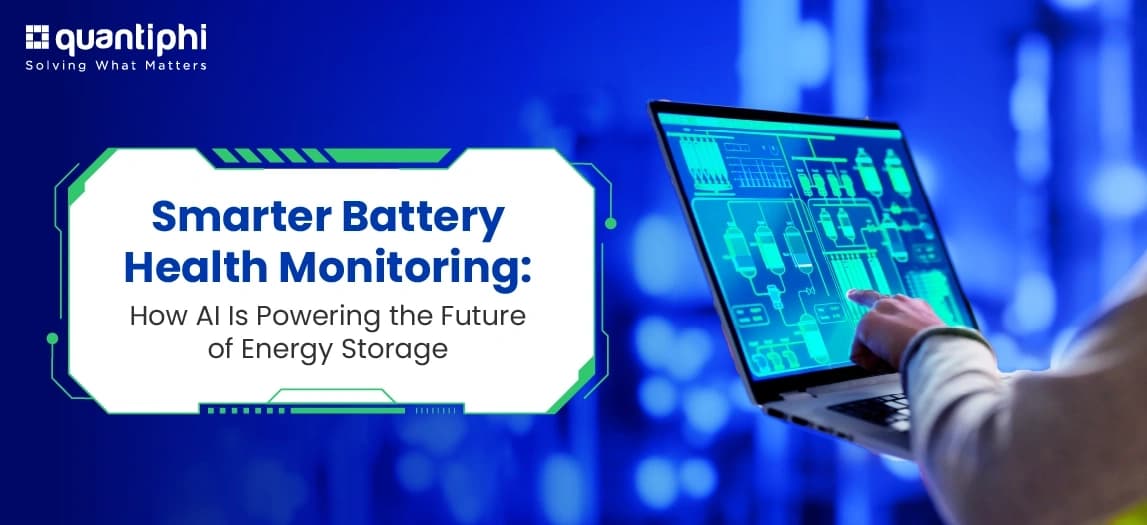
In today’s world, where everything from electric vehicles to smartphones depends on rechargeable batteries, knowing how healthy a battery is at any given moment is more important than ever. But predicting a battery’s condition over time is no easy task.
That’s because batteries don’t degrade in a simple, predictable way. Their performance can vary widely depending on how, where, and how often they’re used. This makes monitoring battery health complex — especially when decisions need to be accurate at scale.
At the center of this challenge is a key metric: State of Health (SoH) — a measure of how much capacity a battery has left compared to when it was new. If you can track SoH accurately, you can:
- Prevent unexpected failures
- Make smarter usage decisions
- Cut costs by avoiding premature replacements
Enter TIDSIT: a new model of AI built to tackle this challenge head-on.
What Is TIDSIT?
TIDSIT (short for Time-Informed Dynamic Sequence Inverted Transformer) is an AI model designed specifically for real-world battery data; the kind that’s irregular, messy, and inconsistent.
Unlike traditional systems that rely on cleaned or interpolated data, manual feature engineering, or fixed-length battery cycles, TIDSIT is built to work directly on raw battery logs, learning from the real behavior of the battery without forcing everything into a rigid mold. This makes it ideal for large-scale applications like:
- EV fleets
- Grid-scale energy storage
- Consumer electronics
Where the data isn’t always perfect but the insights need to be.
How TIDSIT Works, In Simple Terms
TIDSIT looks at battery discharge cycles, when energy is drawn from the battery, and watches how sensors (like voltage, current, and temperature) behave over time. Here’s what makes it special:
-
Understands When Data Happens, Not Just What
In the real world, battery data isn’t recorded like clockwork. TIDSIT doesn’t assume fixed intervals. Instead, it understands when each measurement happened, using continuous time embedding to find subtle signs of degradation that other models miss.
-
Connects the Dots Across Sensors
Battery signals don’t exist in isolation. Voltage affects current. Temperature affects both. TIDSIT learns how these signals interact, leading to a more complete picture of battery health.
-
Adapts to Any Cycle Length
Some battery cycles are long, others short. Unlike many models that require cutting or padding the data to fit a fixed shape, TIDSIT handles variable-length sequences natively. It doesn’t lose critical details.
-
Remembers Past Health
TIDSIT doesn’t just look at the current cycle. It also remembers what happened in previous ones. This helps it track long-term trends, just like a human engineer keeping notes over time.
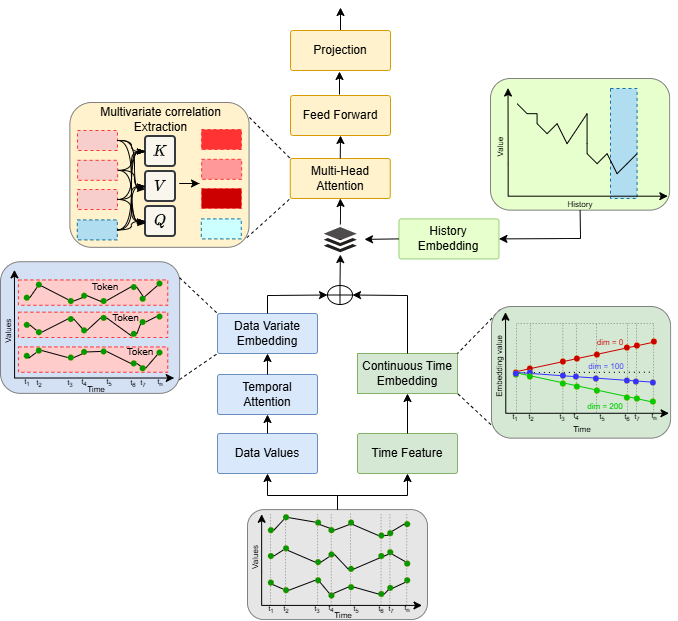
Testing TIDSIT on Real-World Data: The Results
We tested TIDSIT on multiple real-world battery datasets, including batteries it had never seen before. The results speak for themselves: TIDSIT was able to achieve up to 50% more accurate predictions compared to existing methods.
Even when the data was messy, uneven, or incomplete, TIDSIT consistently tracked degradation and predicted SoH with high precision.
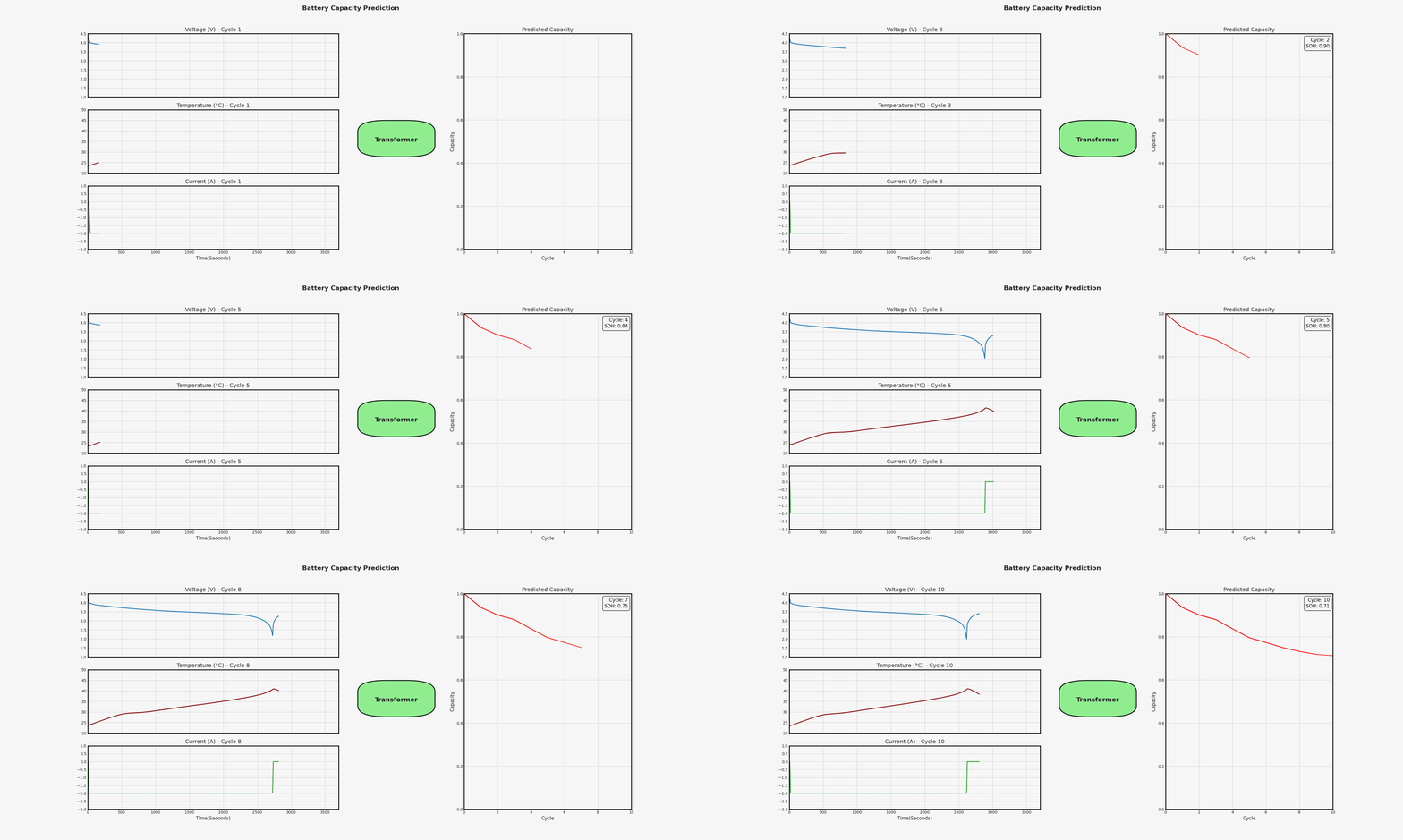
Beyond Batteries: Applications of TIDSIT
The TIDSIT model’s ability to handle messy, real-world time-series data extends beyond battery health. This same approach can be applied to other complex systems to predict degradation and improve decision-making. Key applications include:
-
Predictive Maintenance in Aerospace:
Forecast the health and remaining useful life of critical aircraft components, from engines to avionics, to prevent failures and optimize maintenance schedules.
-
Remaining Useful Life (RUL) Estimation in Manufacturing:
Estimate the lifespan of critical machinery parts on the factory floor, allowing for timely replacement and preventing costly production line shutdowns.
-
Smart Infrastructure Monitoring:
Monitor the structural integrity of bridges, pipelines, or other infrastructure by analyzing sensor data over time, providing early warnings for potential issues.
Read our research paper here: https://arxiv.org/pdf/2507.18320
Why It Matters for Your Business
Whether you’re managing a fleet of electric vehicles or maintaining batteries in industrial or consumer systems, TIDSIT offers a smarter way to monitor and manage battery health. With it, you can:
- Reduce downtime by catching issues before they become failures
- Optimize performance with data-driven insights
- Cut costs by avoiding unnecessary maintenance and premature replacements
- Make better decisions with up to 50% higher prediction accuracy
And the best part? Since TIDSIT doesn’t require complicated preprocessing, it can be integrated seamlessly into your existing data systems. Connect with our experts at Quantiphi to explore how we can leverage TIDSIT to transform your operations.