AI Agent Integration: Connecting Agents with Business Systems

In today’s business landscape, AI agents are rapidly moving from experimental concepts to core components of enterprise strategy. These autonomous systems promise to revolutionize how work gets done by reasoning, planning, and executing complex tasks. However, their true power isn’t unlocked in isolation. For an AI agent to move beyond simple conversations and create tangible business value, it must be deeply connected to the very systems that run the enterprise. This is the critical role of AI agent integration works as the bridge between intelligent automation and real-world business outcomes.
What Is AI Agent Integration?
AI agent integration represents the strategic connection of autonomous AI systems with enterprise business applications, databases, and workflows. Unlike traditional software integrations that simply move data between systems, AI agent integration creates intelligent bridges that enable AI agents to understand context, make decisions, and take actions across multiple business platforms.
At its core, an AI agent is an autonomous system that can perceive its environment, process information, and take actions to achieve specific goals. When integrated with business systems, these agents become powerful extensions of enterprise capabilities, able to access real-time data, trigger workflows, and coordinate activities across departments and platforms.
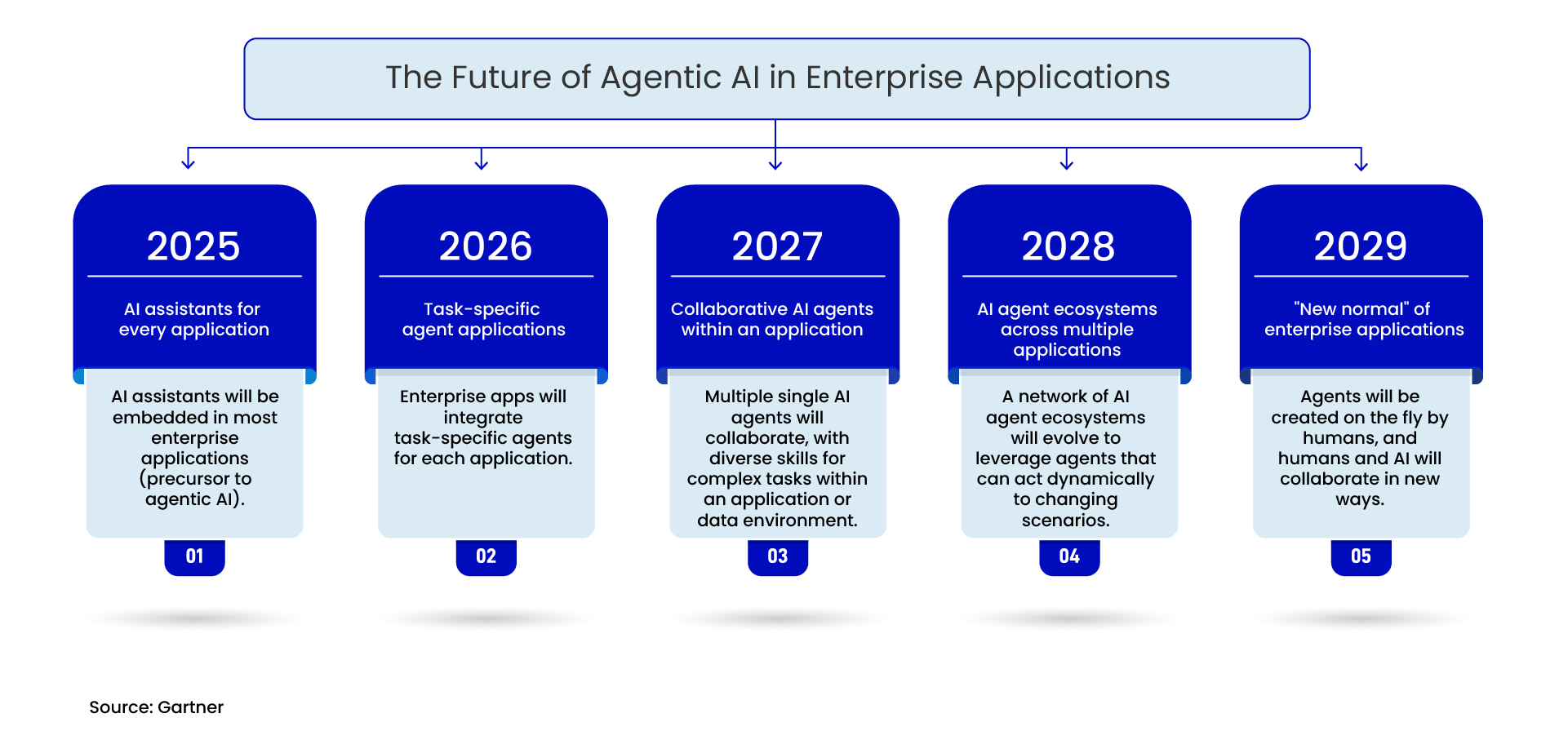
The role of AI agents in modern AI ecosystems extends far beyond simple task automation. They serve as intelligent orchestrators that can understand business context, adapt to changing conditions, and make informed decisions based on data from multiple sources. This integration capability transforms isolated AI tools into cohesive, enterprise-wide intelligence networks.
Integration is critical because modern enterprises operate through interconnected systems such as CRM platforms, ERP systems, communication tools, databases, and specialized industry applications. Without proper integration, AI agents remain isolated tools that cannot access the full context needed for intelligent decision-making or comprehensive business impact.
Why AI Agent Integration Is Essential for AI Agents
The true value of an AI agent is unlocked only when it can navigate the complex reality of enterprise operations, where business processes rarely exist within a single software ecosystem. Resolving a standard customer inquiry, for example, often requires pulling context from a CRM, checking inventory in an ERP, and updating support tickets simultaneously. By breaking down these operational silos, integrations transform AI agents from isolated query-answering tools into highly capable enterprise orchestrators.
Comprehensive Data Access
AI agents require real-time, cross-platform visibility to make informed decisions. Without integrated data pipelines, they operate on incomplete intelligence, leading to suboptimal outcomes.
Actionable Tool Connectivity
Beyond just retrieving information, integrations empower agents to execute meaningful tasks, such as updating records, sending notifications, or triggering workflows, while maintaining complete business context.
End-to-End Automation
Connectivity multiplies an agent’s capabilities exponentially, allowing organizations to move past isolated task automation and instead automate complex, multi-step processes that span disparate platforms.
Dynamic Workflow Efficiency
Seamless orchestration allows agents to intelligently prioritize tasks using multi-source data, dynamically allocate resources, and ensure uninterrupted operations even during unexpected scenarios.
Key Benefits of AI Agent Integration
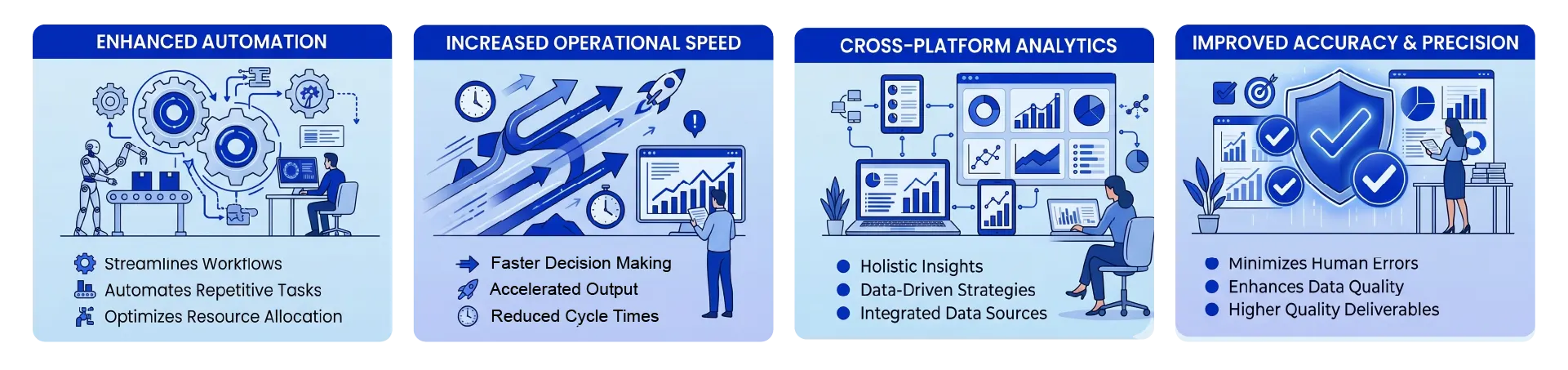
The business impact of successful AI agent integration extends across multiple dimensions of enterprise operations, delivering measurable value that justifies the investment in connectivity infrastructure. By bridging isolated platforms, organizations can evolve from sequential, fragmented processes to unified workflows. This connectivity allows AI agents to act as intelligent operators that fundamentally transform enterprise efficiency, speed, and intelligence.
Accelerated Automation and Speed
Integrated agents execute parallel operations across systems to drastically reduce manual effort. This capability can cut processing time for complex workflows by up to 40%, shrinking task durations from days to just hours or minutes For example, insurance companies using integrated AI agents for claims processing have reduced average processing time from days to hours while improving accuracy rates.
Enhanced Accuracy
Access to complete, real-time enterprise data allows agents to cross-reference information seamlessly. This comprehensive visibility drives highly informed actions and significantly reduces errors caused by incomplete data sets.
Uncovering Cross-Platform Insights
Analyzing behaviors and trends across separate business systems reveals hidden opportunities and risks. For example, connecting e-commerce, inventory, and customer service platforms can illuminate entirely new customer behavior patterns.
Strategic Decision-Making
When AI agents operate with a complete understanding of business context, they facilitate a holistic view of enterprise operations. This broader perspective ensures smarter, more strategic decisions while minimizing unintended consequences.
Common AI Agent Integration Methods
The business impact of successful AI agent integration extends across multiple dimensions of enterprise operations, delivering measurable value that justifies the investment in connectivity infrastructure. By bridging isolated platforms, organizations can evolve from sequential, fragmented processes to unified workflows. This connectivity allows AI agents to act as intelligent operators that fundamentally transform enterprise efficiency, speed, and intelligence.
Application Programming Interfaces (APIs)
Serving as the most robust integration method, APIs provide standardized and secure communication between agents and enterprise systems. Modern REST APIs deliver scalable flexibility, while GraphQL APIs offer highly efficient data querying for complex scenarios.
Webhooks
These enable real-time, event-driven connections that allow agents to respond instantly to system changes. Actions like new customer orders or profile updates can immediately trigger agent workflows to create highly dynamic business processes.
Software Development Kits (SDKs)
Major enterprise vendors supply these pre-built components to simplify the connection process. SDKs reduce technical development time by automatically managing essential functions like authentication, data formatting, and error handling.
Low-Code and No-Code Platforms
Solutions like n8n revolutionize accessibility by allowing business users to build sophisticated connections without deep technical expertise. Visual drag-and-drop interfaces make it easy to construct workflows while maintaining enterprise-level flexibility.
Integration Platform as a Service (iPaaS)
These comprehensive solutions manage multiple agents and business systems simultaneously. They are essential for enterprise deployments because they provide centralized management, system monitoring, and seamless scaling capabilities.
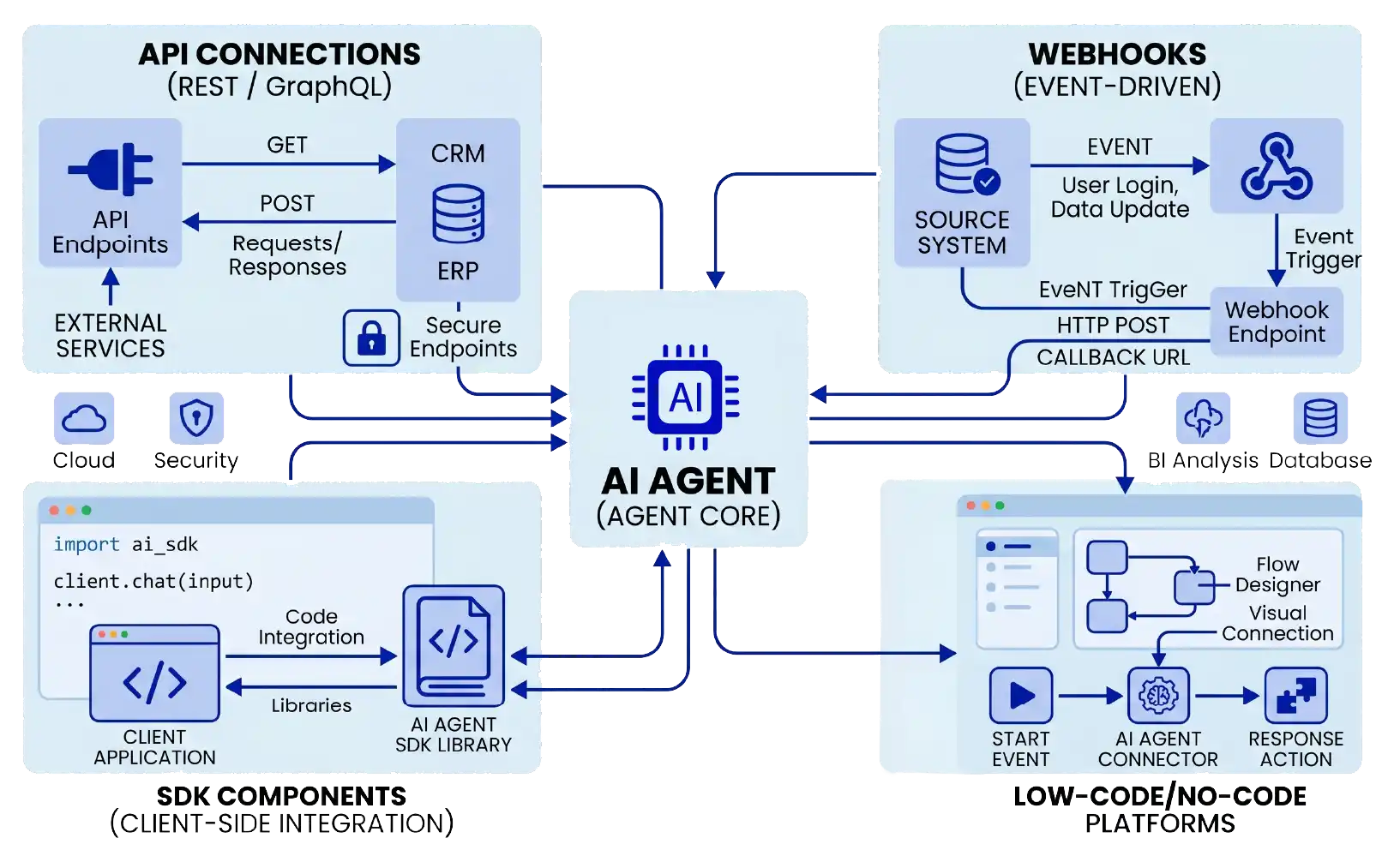
Application Programming Interfaces (APIs) represent the most common and robust method for AI agent integration. APIs provide standardized ways for AI agents to communicate with enterprise systems, enabling secure data exchange and action execution. Modern REST APIs offer the flexibility and scalability needed for enterprise-grade integrations, while GraphQL APIs provide more efficient data querying capabilities for complex integration scenarios.
AI Agent Integration Workflow: How to Integrate AI Agents Step by Step
Integrating AI agents into your existing infrastructure demands a systematic approach that balances technical capabilities with overarching business objectives. To ensure a smooth transition, organizations must carefully manage everything from the initial assessment of data flows to the final rollout. A structured implementation strategy guarantees that your integrated agents remain secure, scalable, and fully aligned with your enterprise workflows.
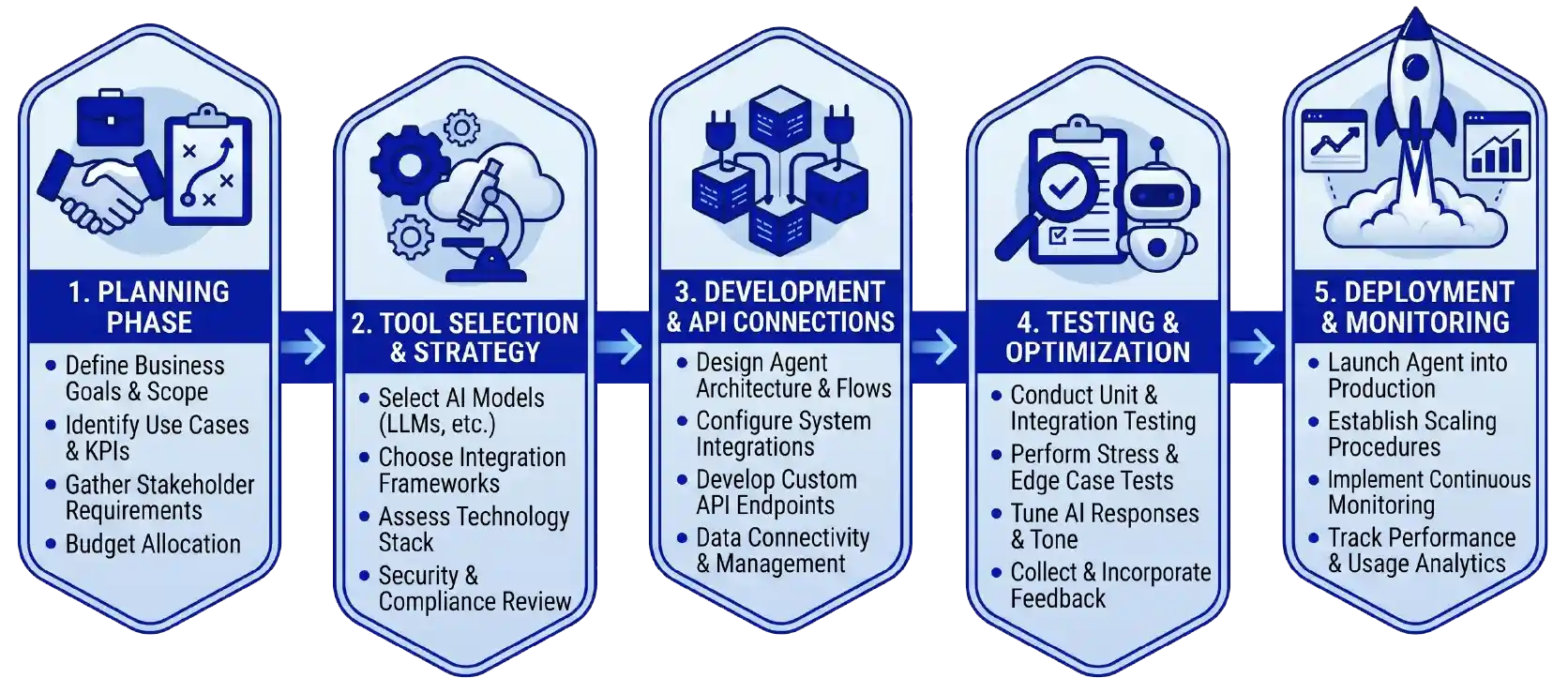
Comprehensive Planning
Planning begins with a comprehensive assessment of existing enterprise systems. Start with assessing your current enterprise systems, data flows, and workflows. Mapping out processes and consulting stakeholders will clarify exactly how AI agents fit into your existing architecture.
Strategic Tool Selection
Selecting appropriate tools and platforms requires careful evaluation of technical capabilities. Evaluate potential integration platforms based on technical capabilities, security features, scalability, and overall cost. Pay close attention to API availability, authentication methods, and vendor support.
Robust API Connections
Establish the technical foundation by securing authentication, configuring data mappings, and implementing error handling. Proper setup ensures your integrations operate reliably and perform efficiently.
Rigorous Testing
Validate functionality, security, and performance under various conditions. Your testing scenarios should cover normal operations, edge cases, system failures, and high load situations to guarantee system stability.
Coordinated Deployment
Roll out the integration in close collaboration with IT operations and business stakeholders. Ensure you have proper monitoring, user training, and comprehensive rollback plans in place for a seamless transition.
Challenges in AI Agent Integration
Enterprise AI agent integration presents complex challenges that demand careful planning, technical expertise, and ongoing management. While connecting intelligent agents to existing systems unlocks immense value, organizations must navigate various technical hurdles to ensure smooth, secure, and resilient operations. Overcoming these obstacles requires a proactive approach to system architecture and continuous oversight.
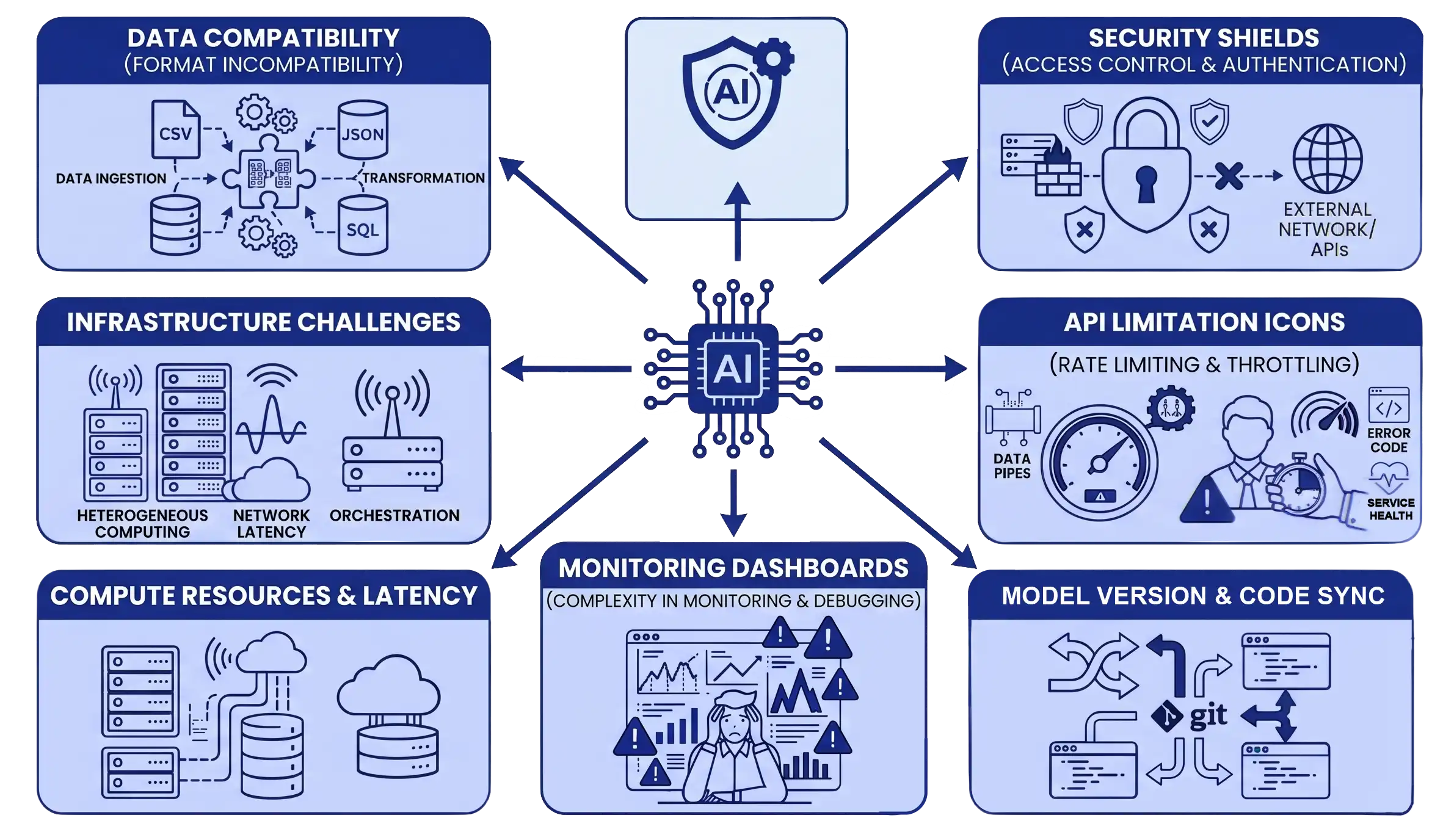
Data Compatibility
Enterprise systems often rely on varying data formats, schemas, and standards. Bridging legacy proprietary formats with modern data structures requires highly robust data mapping and transformation capabilities.
Security Considerations
Protecting sensitive enterprise data is paramount when granting access to automated agents. Organizations must implement strict authentication, encryption, and audit logging to prevent unauthorized access while adapting security frameworks to monitor unique AI behavior patterns.
API Limitations
Rate limits and data volume restrictions can easily constrain an agent’s performance. Designing successful integrations requires strategic planning and creative solutions like request batching or smart caching strategies.
System Versioning
As enterprise platforms evolve, their underlying APIs and data structures frequently change. Integrations must be engineered to handle these updates gracefully through thorough testing and proactive migration procedures.
Monitoring and Observability
Maintaining deep visibility into integration performance is critical for long-term success. Comprehensive tracking of error rates, data quality, and overall business impact ensures optimal operations and allows for rapid issue resolution.
Advanced AI Agent Integration Techniques
Large-scale enterprise adoption of AI agents demands sophisticated approaches capable of handling complex scenarios, dynamic business requirements, and multiple operating units. To ensure seamless scalability and responsiveness, organizations must move beyond basic connections and deploy advanced integration frameworks that optimize performance across the entire digital ecosystem.
Event-Driven Integrations
These frameworks allow agents to respond to business triggers in real time. By utilizing event streaming platforms and message queues, agents can react instantly to changes in system status, customer behavior, or market conditions.
Multi-Agent Orchestration
Achieving complex business objectives often requires coordinating several specialized AI agents. This technique relies on advanced workflow management, conflict resolution, and precise resource allocation to ensure different agents collaborate effectively without interference.
Hybrid Integrations
Combining multiple integration methods optimizes overall system performance, security, and functionality. A robust architecture might leverage APIs for core data access alongside webhooks for immediate notifications and message queues for reliable task distribution.
Microservices Architectures
Building integrations as modular, independently scalable services ensures the system can handle varying load patterns gracefully. This approach empowers organizations to deploy and update individual components without jeopardizing overall system stability.
Real-World Use Cases of AI Agent Integration
The practical application of connected AI agents across various industries showcases the truly transformative potential of a well-executed integration strategy. By seamlessly bridging multiple enterprise systems, these intelligent agents go beyond simple task execution to deliver measurable, large-scale improvements in efficiency, accuracy, and overall business performance.
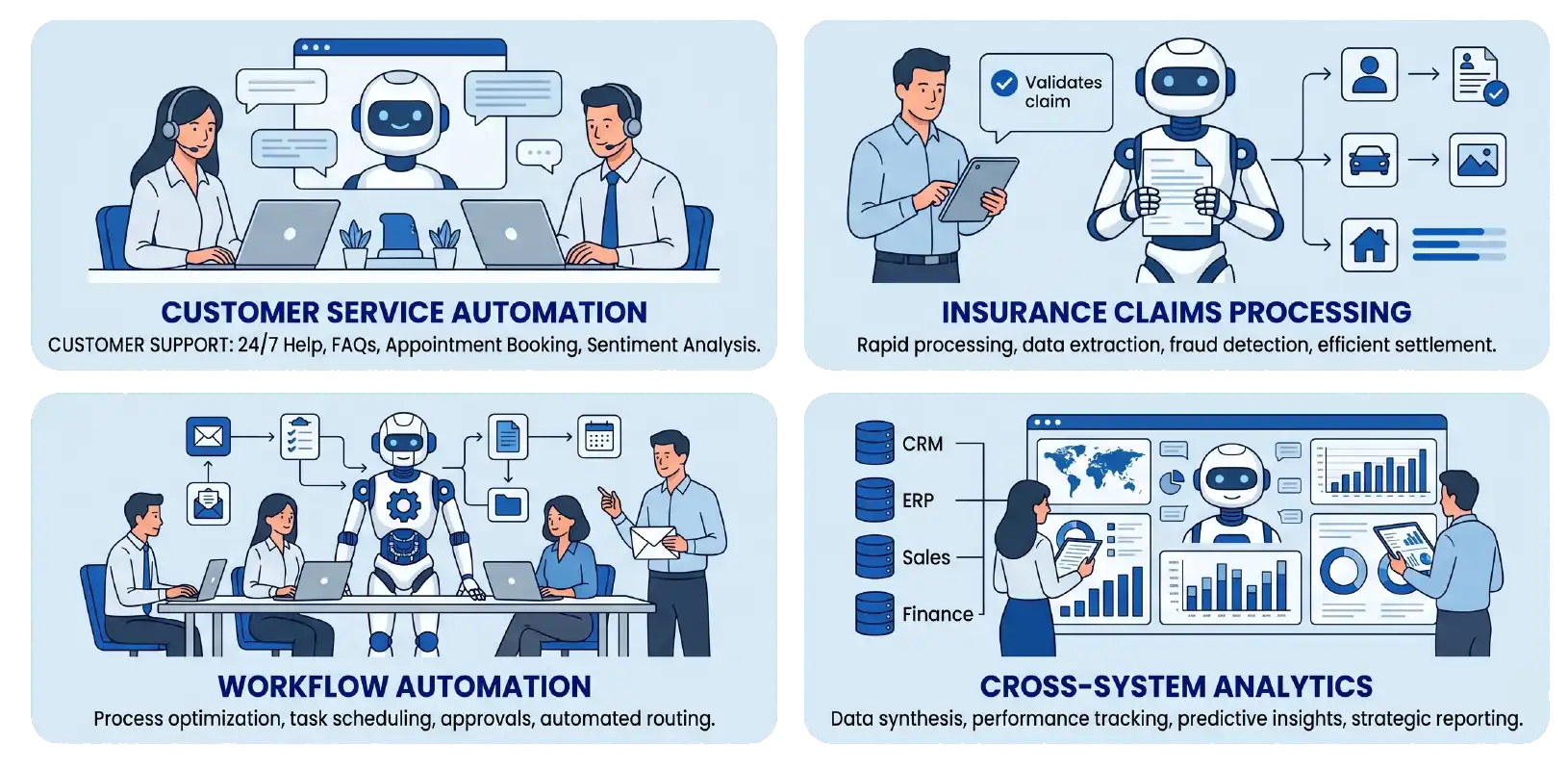
Customer Service Automation
Connecting agents with CRM systems, knowledge bases, and communication platforms allows for a complete view of customer history and faster issue resolution. Organizations utilizing this approach report up to a 60% reduction in average resolution times and a 35% boost in customer satisfaction scores.
Accelerated Claims Processing
In the insurance sector, integrating agents with policy management, fraud detection, and payment platforms automates complex, multi-step workflows. This comprehensive connectivity has helped major insurers cut processing times from 15 days to just two days while increasing fraud detection rates by 25%.
Enterprise Workflow Orchestration
Manufacturing companies leverage connected agents to seamlessly coordinate production planning, inventory management, and supply chain operations. Unifying these historically siloed processes can lead to a 20% reduction in operational costs alongside significantly improved delivery performance.
Cross-System Intelligence
Retail organizations use integrated agents to correlate consumer behavior data across e-commerce channels, inventory databases, and marketing platforms. Analyzing these diverse data streams together enables highly effective customer personalization and smarter inventory optimization.
Note: The statistics provided above serve as standard industry benchmarks.
Best Practices for AI Agent Integration
Successful enterprise AI agent integration requires adherence to proven practices that ensure sustained scalability, reliability, security, and maintainability. By embedding these foundational principles into your integration strategy, organizations can build robust architectures that handle current demands while adapting seamlessly to future business requirements.
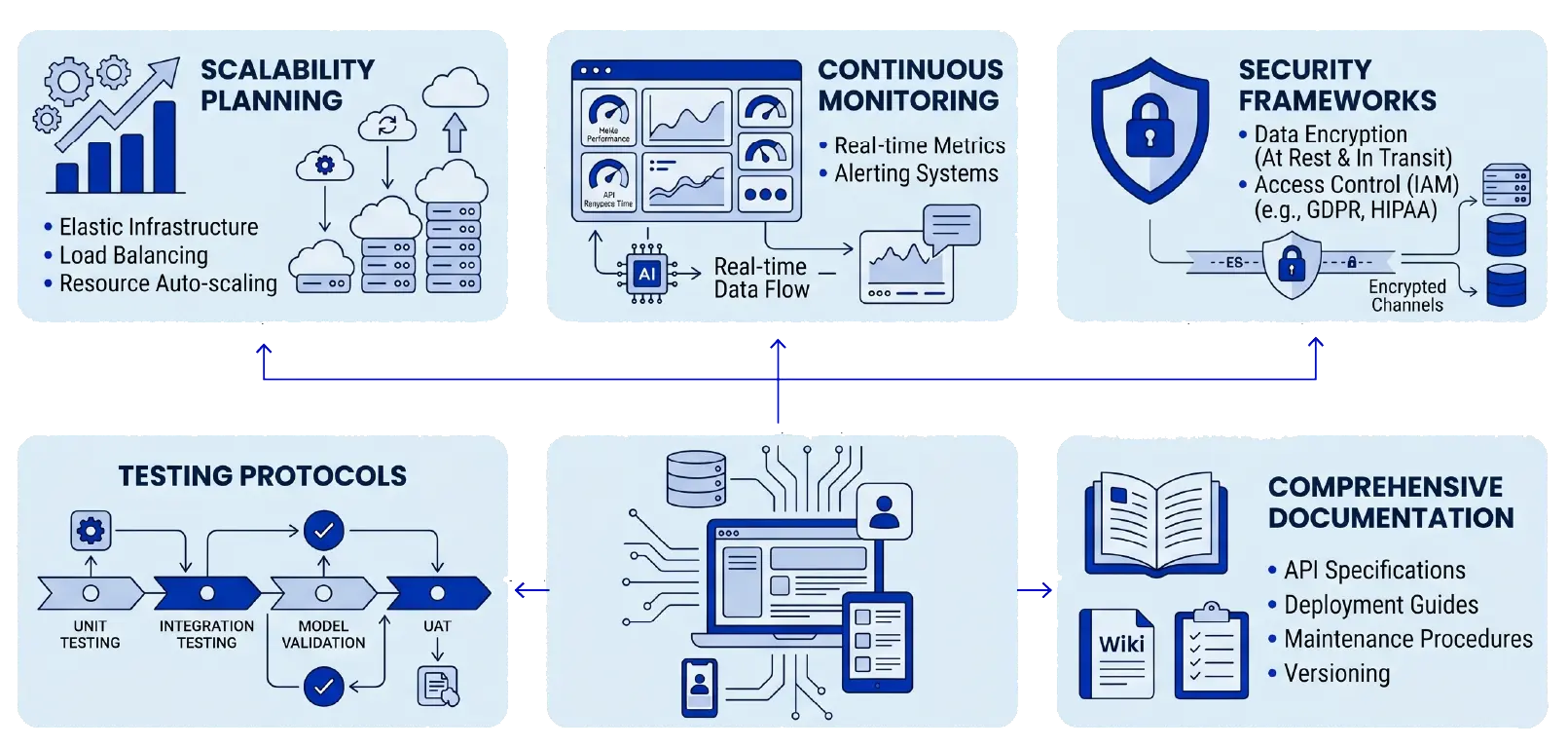
Strategic Scalability Planning
Architect integration systems to accommodate growing data volumes and an expanding roster of AI agents. Design frameworks that satisfy current needs while offering clear pathways for future growth without requiring a complete system overhaul.
Comprehensive Monitoring and Logging
Establish deep visibility into system performance by tracking technical metrics like response times and error rates alongside business outcomes such as process completion rates and user satisfaction.
Security by Design
Embed defense in depth strategies directly into the integration architecture from the very beginning. Implement robust network security, application safeguards, data encryption, and strict access controls tailored to the sensitivity of your enterprise data.
Rigorous Testing Strategies
Deploy automated functional testing, performance validation, and security vulnerability assessments. Regular testing guarantees that your integrations remain stable and functional as connected systems continually evolve.
Thorough Documentation
Maintain extensive records of technical specifications, business logic, and operational procedures. Proper knowledge management ensures your team can easily maintain, update, and troubleshoot the integration infrastructure over time.
Quantiphi’s AI Agent Integration Services
At Quantiphi, our AI-First Digital Engineering approach recognizes that AI agent integration isn’t just a technical step; it’s the foundation for building intelligent, autonomous enterprises. By connecting AI agents to your existing business systems, you transform them from siloed tools into proactive digital team members that drive efficiency, accuracy, and growth.
Our enterprise-ready AI agent solutions are designed specifically for large-scale deployments that require robust security, scalability, and reliability. We understand the complexities of enterprise environments and design integrations that work seamlessly with existing systems while providing clear paths for future expansion.
Customization capabilities ensure that AI agent integrations align perfectly with unique business requirements and existing technology investments. Our team works closely with enterprise stakeholders to understand specific needs and design solutions that maximize business value while minimizing disruption to existing operations.
Integration expertise spans multiple industries and technology platforms, enabling us to deliver solutions that leverage best practices while addressing specific industry requirements. Our experience with healthcare, financial services, manufacturing, and other industries ensures that integrations meet regulatory requirements and industry standards.
Ready to transform your enterprise operations with intelligent AI agent integration? Contact us today to learn how our AI agent integration services can help you achieve your digital transformation goals while maximizing return on your technology investments.