Data Modernization in Healthcare: Turning Data into Actionable Care

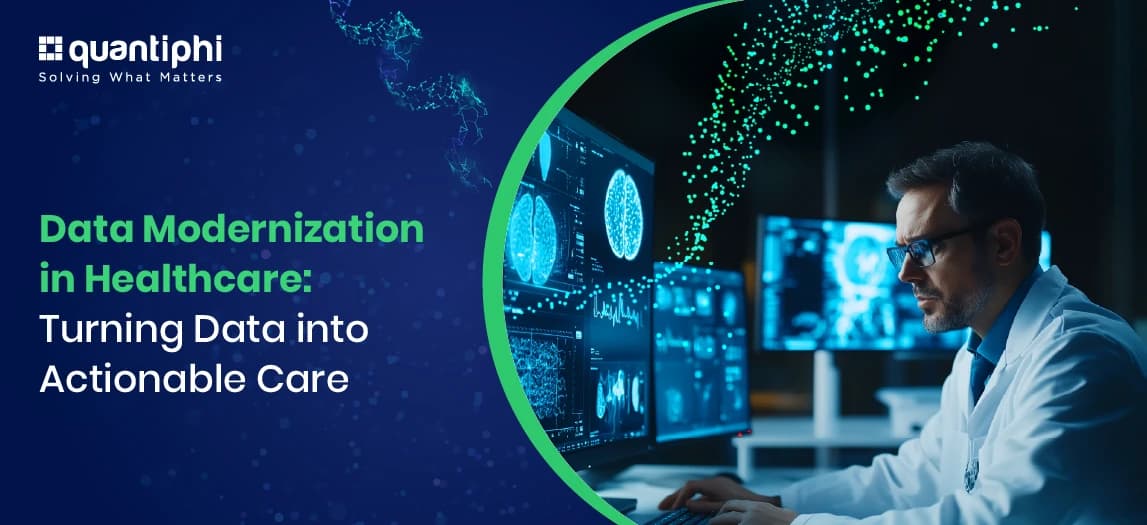
Healthcare data is growing at an unprecedented pace—from EHRs and insurance claims to wearables and genomics—yet much of it remains trapped in siloed systems. This fragmentation leads to inefficiencies, increased costs, and missed opportunities for better care. Data modernization in healthcare is no longer just a technical upgrade; it’s a strategic foundation for unlocking real-time insights, driving compliance, and enabling intelligent applications. In fact, modern healthcare applications depend on clean, connected data to deliver value at the point of care. In this blog, we’ll explore the challenges of legacy systems, the benefits of a modern data infrastructure, real-world use cases, and how organizations like Quantiphi are helping healthcare unlock a healthier, smarter future.
The Imperative for Change: Why Healthcare Needs Data Modernization Now
Healthcare is at a tipping point. The industry is generating more data than ever, but legacy systems and outdated infrastructure are holding it back. Here’s what’s driving the urgent need for modernization:
- Clinicians Overwhelmed by Information: Doctors and care teams are struggling to navigate scattered patient records across multiple systems. This not only causes delays in diagnosis but also adds to provider burnout.
- Tighter Regulations and Evolving Standards: With frameworks like HIPAA and GDPR becoming stricter, healthcare organizations must now ensure data privacy, interoperability, and traceability—something older systems aren’t built to handle.
- Patients Expect More: Today’s patients want digital-first experiences and personalized care. Meeting those expectations means having unified, accessible data to support every step of the health journey.
- Operational Pressures Are Growing: Rising costs and administrative inefficiencies are squeezing margins. Data modernization helps automate workflows, reduce duplication, and free up resources for patient care.
- AI and Machine Learning Demand Better Data: From clinical decision support to business intelligence, advanced analytics only work if the underlying data is clean, connected, and available in real time.
- Cyber Threats Are Escalating: With cyberattacks on healthcare rising, securing sensitive patient data is critical. Modern infrastructure strengthens defenses with better controls, monitoring, and encryption.
Modernizing healthcare data isn’t just about keeping up—it’s about moving forward with purpose, resilience, and innovation.
Key Components of Data Modernization in Healthcare
Modernizing healthcare data involves building a strong foundation that supports better decision-making, improved patient care, and operational efficiency. Here are the key components that make it all work:
- Unified Data Integration and Interoperability
Healthcare systems often suffer from data trapped in silos. By integrating clinical, administrative, and claims data, organizations can create a unified view of each patient. HL7 standards like FHIR and CDA make it easier to share data across systems, while real-time data streaming helps clinicians access timely insights for faster decisions. - Secure and Scalable Cloud Data Architectures
Modern cloud platforms such as Google BigQuery, Snowflake, and AWS Redshift provide a secure way to store and analyze large volumes of structured data. For unstructured data like medical images, genomics, and notes, data lakes and lakehouses offer flexibility. Hybrid and multi-cloud strategies ensure reliability, scalability, and reduced vendor lock-in. - Intelligent Data Governance and Automated Compliance
Ensuring privacy and compliance is essential in healthcare. Automated data masking and anonymization protect sensitive patient information. With policy-as-code, compliance rules are built into the system, and audit trails with anomaly detection help maintain data integrity and security. - Advanced Analytics and AI/ML Enablement
A modernized data foundation supports predictive modeling for disease progression and patient risk. NLP tools can analyze unstructured clinical notes, while computer vision enhances medical imaging analysis. These AI-driven capabilities help providers deliver more accurate, proactive care. - Intuitive Data Visualization and Reporting
Role-based dashboards provide tailored insights for clinicians, payers, and administrators. Self-service analytics tools empower business users to explore data on their own, supporting faster, more informed decisions across the organization.
Benefits of Data Modernization: Transforming Healthcare Outcomes
Modernizing healthcare data isn’t just a backend upgrade—it’s a game-changer for patients, providers, and the entire healthcare ecosystem. Here’s how it pays off:
- Modern data needs modern apps.
While upgrading your data infrastructure is critical, its full value is only realized when paired with intuitive, scalable applications that clinicians and patients can actually use. Learn how application modernization in healthcare helps bring that data to life. - Better Care and Health Outcomes
When data flows seamlessly, so does care. Clinicians can make faster, more accurate diagnoses, tailor treatment plans using a full picture of the patient, and catch potential risks early—reducing errors and improving safety for high-risk patients. - Smarter, More Efficient Operations
Say goodbye to manual processes and disconnected systems. Modern data infrastructure helps streamline claims, authorizations, and scheduling, while also cutting storage costs and optimizing use of staff, beds, and equipment. - A More Connected Patient Experience
Patients expect digital-first, personalized healthcare. With modernized data, they get timely reminders, easier telehealth visits, and faster access to their health information—all leading to greater satisfaction and trust. - Stronger Compliance and Security
Keeping up with regulations like HIPAA and GDPR is easier when your systems are built for it. Modern platforms reduce the risk of breaches, improve auditability, and help maintain trust through better data transparency. - Faster Innovation and Research Breakthroughs
Unified, high-quality data accelerates clinical research, powers smarter population health strategies, and enables the shift to value-based care. It’s the fuel that drives next-gen healthcare innovation.
Common Challenges in Healthcare Data Modernization
Modernizing healthcare data is essential, but it comes with real-world challenges. Here are some of the most common ones:
- Old Systems: Many organizations still rely on outdated, complex systems that are difficult to replace or update.
- Disconnected Data: Data is often stuck in separate systems, making it hard to get a complete view of the patient or process.
- Evolving Privacy Demands: Modern platforms are required to help healthcare organizations keep pace with stricter data protection and compliance requirements.
- Not Enough Skilled People: There’s a shortage of experts who understand cloud, data, and AI technologies.
- People Don’t Like Change: Teams may resist new tools and workflows, slowing down progress.
- High Initial Costs: It takes money to modernize, and proving the return on investment can be tough upfront.
- Poor Data Quality: If the data isn’t clean or reliable, even the best systems won’t deliver results.
With the right strategy and support, these challenges can be tackled—paving the way for better care, efficiency, and innovation.
Real-World Triumphs: Successful Data Modernization in Healthcare
- Major Hospital System: Implementing a cloud data lakehouse to unify EHRs, lab results, and genomic data for predictive analytics in oncology.
- Large Health Insurer: Modernizing claims processing with AI-driven automation on a cloud platform, reducing processing time and fraud.
- Pharmaceutical Company: Migrating research data to a cloud environment to accelerate drug discovery using advanced ML models.
- Public Health Agency: Building a real-time data streaming platform for infectious disease surveillance during a pandemic.
Explore our case studies to see how Quantiphi has helped healthcare organizations modernize their data!
The Future of Healthcare Runs on Modernized Data
- From Reactive to Proactive Care
With modern data systems, healthcare providers can spot early warning signs, personalize care plans, and help patients stay healthier—before problems escalate. - Personalized Medicine, Made Scalable
Advances in genomics, real-time health data, and AI are making truly tailored treatments possible—not just for a few, but for everyone. - Smarter Healthcare Operations with AI
From streamlining paperwork to supporting faster diagnoses, intelligent automation is helping clinicians and staff focus more on care, not admin. - Simpler, Connected Patient Experiences
Whether it’s booking an appointment or tracking recovery, integrated data ensures patients get a smoother, more coordinated journey. - A Stronger, More Agile Health System
With the right data foundation, healthcare systems can quickly adapt—whether it’s a public health crisis or the need to scale innovation.
How Quantiphi Helps Healthcare Modernize Data the Right Way
At Quantiphi, we know that healthcare data is complex—and critical. As an AI-first digital engineering company, we work closely with healthcare providers, payers, and life sciences organizations to modernize their data systems in practical, impactful ways.
From building cloud-ready architectures to enabling AI-powered insights, we help turn siloed, outdated data into a powerful asset that improves patient care, boosts efficiency, and meets compliance needs.
Our Approach to Healthcare Data Modernization
- Understand What’s Already There: We start by assessing your current systems, data maturity, and goals.
- Design a Scalable, Cloud-First Foundation: We build secure and compliant cloud architectures tailored to healthcare needs.
- Simplify Migration and Integration: We move and connect your data from legacy systems with minimal disruption.
- Unlock Value with AI and Advanced Analytics: We enable predictive insights and smarter decision-making across operations.
- Keep Data Safe and Compliant: We implement strong governance and security practices to protect sensitive data.
- Support You at Every Step: We provide ongoing optimization and support to help you adapt and grow.
Conclusion: Embrace Data Modernization for a Healthier Tomorrow
Data modernization is no longer a nice-to-have—it’s a critical foundation for the future of healthcare. As organizations face rising demands, increasing data volumes, and evolving patient expectations, modernizing data infrastructure becomes essential to deliver better outcomes, streamline operations, and stay compliant. While the journey can be complex, the rewards are significant. From enabling proactive, personalized care to building more resilient and agile systems, data modernization holds transformative potential for patients, providers, and the entire healthcare ecosystem. Embracing this shift today is an investment in a healthier, smarter tomorrow.
Ready to begin your healthcare data modernization journey? Connect with Quantiphi’s experts for a strategic consultation!
Data Modernization in Healthcare FAQs:
It’s the process of transforming fragmented, legacy data into a unified, scalable platform—enabling advanced analytics, real-time access, and compliance across clinical and operational systems.
It ensures secure data storage, access controls, and audit trails (HIPAA) while enabling standardized, API-based data exchange (FHIR) for interoperability.
Yes. The cloud offers scalability, security, compliance-ready environments, and integration with AI tools—crucial for managing and analyzing growing healthcare data.
Common challenges include data silos, outdated systems, regulatory risks, poor data quality, and resistance to change.
It unifies and analyzes patient data to enable tailored treatments, early risk detection, and more informed clinical decisions.
AI enhances diagnostics, automates admin tasks, extracts insights from records, and supports predictive care through advanced analytics.